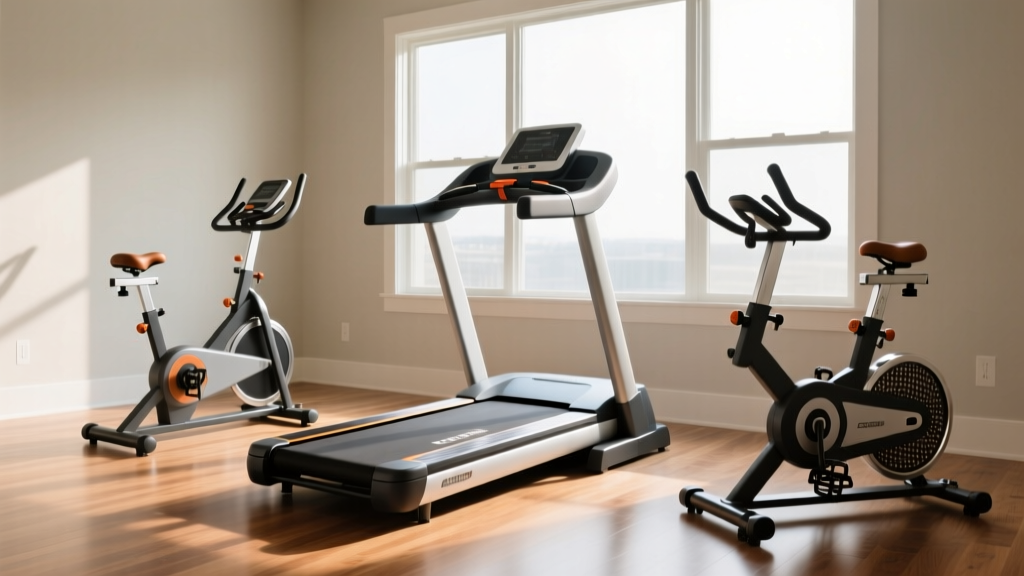
Maximize Your Treadmill Trade In: Upright vs Recumbent vs Spin Bikes
Prep your treadmill trade in for top dollar and choose the right low-maintenance upright, recumbent, or spin bike for long-term home gym longevity.

The Great Cardio Pivot: Why 2026 is the Year of the Stationary Bike
If you are reading this, you are likely tired of the relentless upkeep that treadmills demand. From belt lubrication and motor hood vacuuming to dealing with the inevitable joint impact, treadmills are the highest-maintenance cardio machines on the market. Consequently, executing a treadmill trade in to upgrade to a stationary bike has become one of the smartest home gym pivots you can make this year. Stationary bikes offer exceptional cardiovascular benefits with a fraction of the mechanical wear and tear.
However, before you haul your old treadmill to a specialty fitness retailer for store credit, you need to prep it to maximize its valuation. Furthermore, you must choose the right type of stationary bike—upright, recumbent, or spin—to ensure your new machine aligns with your biomechanical needs and maintenance tolerance. Here is your comprehensive guide to funding the switch and maintaining your new ride for the next decade.
Quick Valuation Insight
According to industry resale data, a well-maintained mid-tier treadmill (like a Sole F80 or NordicTrack T Series) can fetch $400 to $700 in trade-in credit at specialty fitness stores. A neglected machine with a frayed belt or dust-clogged motor compartment may be rejected outright or valued at under $100. Preparation is your highest ROI activity.
Prepping Your Treadmill for Maximum Trade-In Value
Retailers and private buyers evaluate treadmills based on cosmetic condition, electronic functionality, and drivetrain health. Follow these specific maintenance steps to ensure your machine appraises at the top of its market value.
- Deep Clean the Motor Hood: Unplug the machine, remove the plastic motor hood (usually secured by 3 to 4 Phillips-head screws), and use a vacuum with a soft brush attachment to remove accumulated dust. Dust acts as an insulator, causing the motor control board to overheat and fail—a primary reason trade-ins are devalued.
- Lubricate and Align the Deck: Apply exactly 0.5 oz of 100% silicone treadmill lubricant under the walking belt. Never use WD-40 or petroleum-based products, which destroy the deck coating. Power the machine on at 2 MPH and walk on it for two minutes to distribute the silicone evenly. Ensure the belt is centered and does not slip underfoot.
- Console and Cosmetic Detailing: Wipe down the console and handrails with a pH-neutral cleaner. Avoid ammonia-based glass cleaners on LCD screens, as they strip the anti-glare coating. Use a magic eraser on scuff marks along the side rails.
For more detailed baseline maintenance standards, refer to the Consumer Reports treadmill buying and care guide, which outlines how retailers assess equipment longevity.
Upright vs. Recumbent vs. Spin: A Maintenance & Biomechanics Breakdown
Once your trade-in is secured, it is time to select your replacement. The Mayo Clinic highly recommends low-impact aerobic exercises like stationary cycling for joint preservation, but not all bikes are built the same. Below is a structural comparison of the three main categories.
| Feature | Upright Bike | Recumbent Bike | Spin / Indoor Cycle |
|---|---|---|---|
| Primary Drive | Poly-V Belt / Magnetic | Poly-V Belt / Magnetic | Chain or Belt / Friction or Magnetic |
| Resistance Wear | Zero (Eddy Current) | Zero (Eddy Current) | High (Friction Pads) to Zero |
| Sweat Corrosion Risk | Moderate (Steel frames) | Low (Protected electronics) | Extreme (High-intensity output) |
| Typical Lifespan | 7-10 Years | 10-15 Years | 5-10 Years (Depending on care) |
| 2026 Top Model | Schwinn IC4 | Sole R92 | Keiser M3i |
Upright Bikes: The Compact Workhorses
Upright bikes mimic the geometry of a traditional road bike but with a wider, more supportive saddle and a stationary base. They are ideal for users with limited floor space who want a moderate-impact workout. From a maintenance perspective, modern upright bikes like the Schwinn IC4 utilize magnetic resistance. Because the magnets never physically touch the flywheel, there is zero friction and zero degradation of the resistance mechanism over time. The primary failure point on upright bikes is the reed switch (cadence sensor) losing alignment due to vibration; checking this sensor annually ensures your RPM metrics remain accurate.
Recumbent Bikes: The Joint-Savers
Recumbent bikes feature a bucket seat with a backrest and pedals positioned in front of the body. They are the gold standard for users with lower back issues, sciatica, or those undergoing physical rehabilitation. The Sole R92 is a powerhouse in this category, boasting a heavy-duty steel frame that practically eliminates wobble. Longevity Warning: The horizontal seat adjustment rail on recumbents is a magnet for dust, pet hair, and dead skin. If left uncleaned, this debris mixes with ambient humidity to form an abrasive paste that destroys the seat slider bearings. Wipe the seat rail with a damp microfiber cloth weekly to ensure smooth adjustments for the life of the machine.
Spin Bikes: The High-Intensity Tanks
Spin bikes (or indoor cycles) are designed for high-cadence, out-of-the-saddle interval training. They feature a heavier flywheel and aggressive road-bike geometry. However, they present the highest maintenance burden due to sweat corrosion. Human sweat has a pH between 4.5 and 7.0, making it highly corrosive to untreated steel and aluminum alloys. According to Peloton's official equipment care guidelines, failing to wipe down a bike after high-intensity rides can lead to severe frame oxidation and bearing seizure within 18 months. If you are a heavy sweater, invest in a bike with an anodized aluminum frame, like the Keiser M3i, which is virtually immune to sweat-induced rust, and opt for a Poly-V belt drive over a chain to eliminate the need for monthly chain lubrication.
The Ultimate Stationary Bike Maintenance Matrix
To ensure your post-trade-in investment lasts well into the next decade, adhere to this strict maintenance schedule. Consistency prevents 90% of all stationary bike failures.
- After Every Ride (Daily): Wipe down the handlebars, seat, and frame with a 50/50 mix of water and white vinegar or a dedicated fitness equipment wipe. Never spray cleaner directly onto the console; spray the cloth first to prevent liquid from seeping into the PCB (printed circuit board).
- Weekly: Inspect the pedal straps and cleat clips for micro-tears. Vacuum the floor beneath the bike, as dust kicked up by the flywheel can enter the internal bearing housing.
- Monthly: Check the pedal crank bolts. The repetitive torque of standing climbs can loosen these over time. Use a hex key to ensure they are tightened to the manufacturer's specification (typically 30-35 Nm). Inspect the drive belt for fraying or excessive dust buildup.
- Annually: Remove the plastic side shields and use compressed air to blow out the internal flywheel and magnetic resistance housing. Check all floor stabilizers and tighten the leveling feet to eliminate any frame rocking, which can warp the chassis over time.
Expert Tip: Never use a silicone-based spray lubricant on a squeaky bike chain or pedal bearing. Silicone attracts microscopic grit that acts like sandpaper, accelerating wear. Instead, use a dry PTFE (Teflon) bicycle chain lube for any exposed moving metal parts.
Final Thoughts on Your Cardio Upgrade
Executing a treadmill trade in is a financial and biomechanical win, provided you prepare the machine correctly and select a replacement that matches your maintenance bandwidth. By pivoting to an upright, recumbent, or spin bike, you are trading high-friction, high-impact treadmill upkeep for the smooth, silent, and joint-friendly longevity of magnetic resistance cycling. Prep your old gear, secure your credit, and pedal into a more sustainable fitness routine.
More gear to consider
All reviews
Home Stair Climber Guide: Avoid Sole F80 Treadmill Lube Mistakes
Does Incline Treadmill Burn More Calories? Folding Space-Saver Review

What Treadmill MPH Do You Need? Under Desk Office Budget Breakdown

Assault Air Bike vs Treadmill Exercise for Weight Loss 2026

Zwift Treadmill Compatibility & Air Bike vs Assault Bike Maintenance
