
Elliptical vs Treadmill: Budget & Treadmill Stress Test Procedure
Compare elliptical vs treadmill costs, maintenance, and biomechanics, while exploring if home cardio mimics a clinical treadmill stress test procedure.

When outfitting a home gym in 2026, the debate between an elliptical and a treadmill usually centers on joint impact versus running specificity. However, serious home athletes and biohackers often ask a more complex question: Can a home cardio machine replicate the metabolic demands of a clinical treadmill stress test procedure, and which machine offers the best long-term financial value? At FitGearPulse, we look past the marketing fluff to analyze the true Total Cost of Ownership (TCO), biomechanical ROI, and clinical limitations of both machines.
⚠️ Clinical Disclaimer
A home treadmill cannot replace a medical treadmill stress test procedure. Clinical stress tests utilize 12-lead ECG monitoring, continuous blood pressure tracking, and medical supervision to detect ischemia or arrhythmias. Home machines only estimate heart rate via optical sensors or chest straps and cannot diagnose cardiac events. Always consult a cardiologist before attempting high-intensity stress protocols at home.
The Clinical Reality: Simulating the Bruce Protocol at Home
The gold standard for cardiovascular evaluation is the Bruce Protocol, a diagnostic treadmill stress test procedure that increases speed and incline every three minutes. Many home users attempt to simulate this protocol to benchmark their VO2 max and cardiac endurance. To do this accurately, your home equipment must meet strict mechanical thresholds.
The Bruce Protocol Simulation Matrix
| Stage | Speed (mph) | Grade (%) | METs | Home Machine Requirement |
|---|---|---|---|---|
| 1 | 1.7 | 10% | 4.6 | Basic treadmill / Any elliptical |
| 2 | 2.5 | 12% | 7.0 | Mid-tier treadmill (12%+ incline) |
| 3 | 3.4 | 14% | 10.2 | Premium treadmill (15% incline, 3.0+ CHP motor) |
| 4 | 4.2 | 16% | 13.5 | Commercial treadmill (Elliptical cannot replicate grade biomechanics) |
If your goal is to mimic the exact biomechanics of a clinical stress test, an elliptical falls short. Ellipticals increase resistance and ramp angle, which elevates heart rate and METs, but they do not replicate the specific posterior-chain loading and Achilles tendon stretch required by a 14% incline treadmill walk. However, if your goal is purely cardiovascular conditioning without the orthopedic wear-and-tear, the elliptical provides equal metabolic value at a lower physical cost.
Budget Breakdown: CapEx and OpEx Analysis
To determine the true value of home cardio equipment, we must look beyond the sticker price. We compare two 2026 industry benchmarks: the Sole F80 Treadmill (Premium folding treadmill) and the Sole E95 Elliptical (Premium front-drive cross-trainer).
Upfront Capital Expenditure (CapEx)
- Sole F80 Treadmill: Retails for $1,199 in 2026. Requires a dedicated 15-amp circuit. Delivery and professional assembly average $150.
- Sole E95 Elliptical: Retails for $1,299. Heavier footprint but requires no dedicated circuit. Assembly is generally more complex due to the mast and pedal arms, averaging $175 for professional setup.
Long-Term Operational Costs (OpEx)
This is where the budget divergence becomes stark. Treadmills are high-maintenance machines with significant friction-based wear.
| Cost Metric (5-Year Horizon) | Sole F80 (Treadmill) | Sole E95 (Elliptical) |
|---|---|---|
| Belt/Deck Lubrication | $45 (Silicone spray every 6 mos) | $0 (Sealed magnetic resistance) |
| Belt/Drive Replacement | $180 (Expected year 4) | $0 |
| Electrical Draw (3 hrs/wk) | $125 (3.5 CHP motor draw) | $15 (Console display only) |
| Flooring/Matting | $60 (Heavy-duty impact mat) | $40 (Standard equipment mat) |
| 5-Year Total OpEx | $410 | $55 |
The elliptical is the undisputed winner in long-term value. The absence of a high-friction running belt and a massive continuous-duty motor means the Sole E95 operates with near-zero user maintenance. According to fitness equipment repair technicians, treadmill motor control boards and walking belts account for 78% of all out-of-warranty home gym service calls.
Biomechanical Value: Joint Loading and Caloric ROI
When evaluating the 'value' of a workout, we must consider the physiological cost. Mayo Clinic biomechanical analyses consistently highlight the difference in ground reaction forces (GRF) between these two machines.
The Impact Matrix
- Treadmill Running (6.0 mph): Generates GRF equivalent to 2.5x your body weight per stride. Over a 5-mile run, your knees, hips, and lumbar spine absorb thousands of high-impact micro-traumas. This is excellent for bone mineral density (osteogenesis) but detrimental for users with osteoarthritis or meniscus tears.
- Elliptical Striding (140 RPM equivalent): Generates near-zero impact GRF. The foot never leaves the pedal, eliminating the deceleration forces associated with heel-striking. However, because it is a partial weight-bearing exercise, it does not stimulate bone density to the same degree as treadmill running.
Spatial Footprint and Depreciation Metrics
Home gym real estate is expensive. Both machines require a similar floor footprint (approximately 80 inches long by 32 inches wide). However, the volumetric footprint differs drastically.
The elliptical features a high mast and a pedal apex that can reach 20 inches off the ground at the top of the stride. If you have a basement gym with a 7-foot ceiling, a 6-foot user on an elliptical will experience head-strike. Treadmills, conversely, have a low deck profile (8-10 inches) and only require ceiling clearance for the user's natural height plus a few inches for running bounce.
Resale Value and Depreciation
Cardio equipment depreciates faster than strength equipment. A $1,200 treadmill typically loses 60% of its value in the first 24 months due to the high perceived risk of motor and belt failure on the secondary market. Ellipticals, particularly heavy-duty front-drive models like the Sole E95, retain approximately 15-20% more of their resale value because buyers recognize the lower mechanical failure rate of magnetic resistance systems.
The FitGearPulse Value Verdict
Choosing between an elliptical and a treadmill in 2026 requires aligning your financial budget with your physiological goals.
Buy the Treadmill If:
- You are a competitive runner requiring pace-specific neuromuscular adaptations.
- You need weight-bearing exercise to maintain bone mineral density.
- You specifically want to simulate the incline-walking biomechanics of a clinical treadmill stress test procedure (Bruce Protocol Stages 1-3).
- You have the budget for ongoing maintenance (lubrication, belt tensioning, electrical draw).
Buy the Elliptical If:
- Your primary goal is Zone 2 cardiovascular base-building or high-intensity interval training (HIIT) without joint degradation.
- You want a 'buy it and forget it' machine with minimal 5-year operational costs.
- You suffer from plantar fasciitis, knee osteoarthritis, or lumbar radiculopathy.
- Your home gym has low ceilings or lacks a dedicated 15-amp electrical circuit.
Ultimately, while a home treadmill can mimic the physical output of a medical stress test, the elliptical offers a vastly superior financial value proposition for the average home user seeking lifelong cardiovascular health without the orthopedic tax.
More gear to consider
All reviews
NordicTrack T Series 6.5S Treadmill Review: Belt Lubrication & Value

Air Bike vs Assault Bike: Space Layouts & Weslo Cadence Treadmill

Running Treadmill Barefoot: Curved vs Motorized Guide
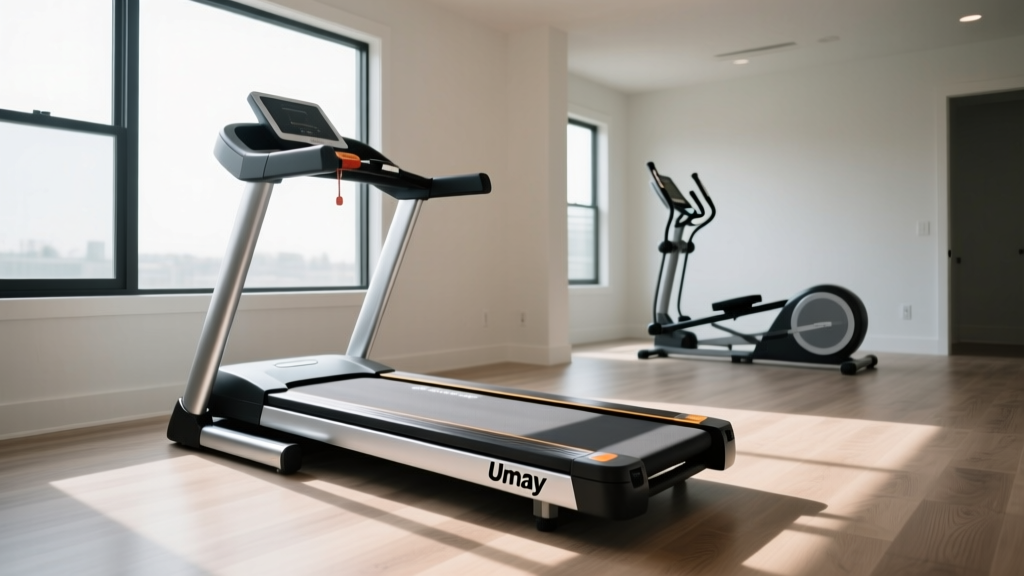
Umay Treadmill Review: Elliptical vs Treadmill Space Layout

Postnatal Treadmill Motor Guide: Sizing & Troubleshooting
