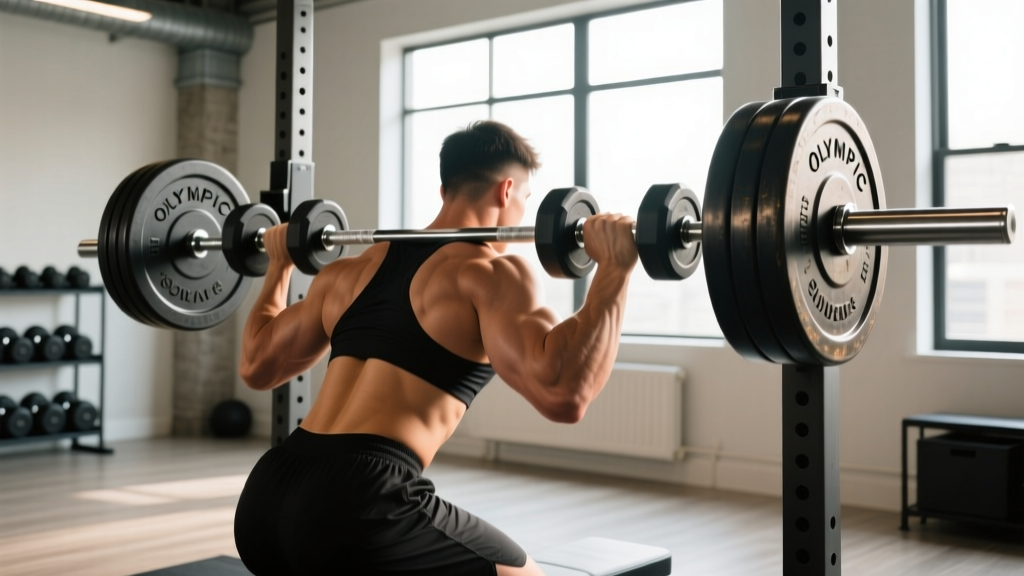
T Bar Rows With Dumbbells: Olympic vs Standard Plates
Master t bar rows with dumbbells or landmines. We compare Olympic vs standard weight plates to help you build a safe, heavy-duty home gym back setup.

The Dumbbell T-Bar Row: A Viable Back Builder?
When building a formidable, thick back, the T-bar row is an undisputed staple. However, not every home gym has a dedicated T-bar machine or a landmine attachment. This leads many lifters to improvise by performing t bar rows with dumbbells. The technique involves straddling a heavy hex dumbbell (usually 100 lbs or more), looping a V-handle or heavy-duty nylon strap under the handle, and pulling the weight toward your chest. According to biomechanics experts at ExRx.net, this horizontal pulling motion heavily targets the latissimus dorsi, rhomboids, and trapezius, making it an excellent hypertrophy movement.
While t bar rows with dumbbells are a clever workaround, they present significant limitations. First, grip width is entirely dictated by the dumbbell's handle length, preventing the wide-grip variations necessary for targeting the upper back and rear delts. Second, as you progress past 120 lbs, the physical footprint of the dumbbell head can interfere with your shins and knees during the eccentric lowering phase. Finally, balancing a massive hex dumbbell on its end to loop your handle is a precarious process that risks damaging your flooring or crushing your toes.
Pro Tip: If you must do t bar rows with dumbbells, use a rubber-coated hex dumbbell to prevent rolling, and elevate the front end slightly on a small step or plate to increase the range of motion at the bottom of the movement.The Upgrade Path: Why Plate Selection Dictates Your Ceiling
To overcome the limitations of the dumbbell variation, most serious lifters eventually upgrade to a barbell-based landmine setup or a dedicated T-bar row station. This upgrade immediately forces a critical purchasing decision: Do I buy Standard or Olympic weight plates?
The choice between Olympic and standard weight plate types is not merely about aesthetics or brand loyalty; it fundamentally alters the safety, loading capacity, and biomechanical feel of your T-bar rows. A heavy T-bar row generates immense lateral torque on the barbell sleeve and the plate hub. Understanding the engineering differences between the 1-inch standard ecosystem and the 2-inch Olympic standard is vital for building a home gym that won't fail you when you are pulling 300+ lbs off the floor.
Standard (1-Inch) Weight Plates: The Budget Trap
Standard weight plates feature a center hole measuring approximately 1 inch (25.4 mm). They are designed to fit on lightweight, solid-steel bars commonly found in big-box sporting goods stores. While they are an attractive entry point due to their low cost, they possess severe structural limitations for heavy compound pulling movements.
Material and Construction
Standard plates are typically cast from low-grade iron or, worse, filled with cement and encased in thin plastic or vinyl. The cement-filled variants are notorious for their massive physical footprint; a 25 lb cement plate can be as thick as a 45 lb cast-iron plate, severely limiting how much weight you can load onto a standard 7-foot barbell sleeve.
The T-Bar Row Failure Point
When you load a standard barbell into a landmine base for T-bar rows, the 1-inch sleeve diameter creates a high-stress concentration point. Standard bars lack the tensile strength of high-carbon spring steel. When you load past 200 lbs and apply the violent, explosive pulling force required for heavy T-bar rows, standard bars are prone to permanent bending (yielding) or catastrophic snapping at the sleeve weld.
Olympic (2-Inch) Weight Plates: The Gold Standard
Olympic plates feature a 2-inch (50 mm) center hole, designed to mate with the rotating, high-tensile sleeves of Olympic barbells. The International Weightlifting Federation (IWF) strictly governs these dimensions, ensuring a universal fit across all reputable brands. For heavy back training, Olympic plates are the only logical choice.
Calibrated Steel vs. Bumper Plates
When shopping for Olympic plates for T-bar rows, you will encounter two primary types:
- Cast Iron / Calibrated Steel: These offer the thinnest profile, allowing you to load 400+ lbs onto a standard sleeve. The dense iron keeps the weight close to the collar, reducing bar whip and lateral sway during the rowing motion.
- Rubber Bumper Plates: Made of high-density virgin rubber with a steel-inserted 50mm hub. While excellent for dropping from overhead, bumpers are incredibly thick. Loading more than three 45 lb bumpers per side on a T-bar setup can cause the plates to scrape the floor at the bottom of the row, artificially shortening your range of motion.
For dedicated T-bar rowing, thin-profile Olympic cast iron plates (like the Rogue Deep Dish or Titan Fitness Machined Iron) are vastly superior to bumpers, as they maximize sleeve space and lower the center of gravity.
Head-to-Head Comparison: Olympic vs Standard Plates
Below is a detailed matrix comparing the two plate types specifically through the lens of heavy back training and home gym longevity.
| Feature | Standard Plates (1-Inch) | Olympic Plates (2-Inch) |
|---|---|---|
| Center Hole Diameter | ~1 inch (25.4 mm) | Exactly 50 mm |
| Max Safe Load (Barbell) | 150 - 250 lbs | 700 - 1,500+ lbs |
| Plate Profile (45 lb) | 1.5' (Iron) to 3.5' (Cement) | 1.2' (Calibrated) to 3.2' (Bumper) |
| Lateral Torque Tolerance | Low (Prone to cracking) | Extremely High (Steel inserts) |
| Resale Value | Near Zero | High (Holds ~80% value) |
The Lateral Shear Hazard: Why Adapters Fail
A common mistake among budget-conscious home gym owners is purchasing standard plates and attempting to use them on an Olympic landmine base via plastic or aluminum 'sleeve adapters.' Do not do this for T-bar rows.
T-bar rows generate massive lateral shear force. As you pull the barbell up and slightly back, the plates exert a twisting, downward drag on the sleeve. Plastic adapters routinely crack under this torque, while aluminum adapters can slide off the sleeve if the collar is not tightened to an extreme degree. A 250 lb T-bar row dropping onto your feet because a $5 plastic adapter sheared in half is a catastrophic failure mode that is easily avoided by investing in native Olympic plates from the start.
2026 Market Pricing & Buying Framework
As of early 2026, the global supply chain for raw cast iron and rubber has largely stabilized, but manufacturing costs have permanently shifted. Here is what you can expect to pay when outfitting your T-bar row setup:
- Standard Cast Iron: $1.00 - $1.30 per lb. (Often found used on local marketplaces for $0.50/lb).
- Olympic Cast Iron (Economy): $1.50 - $1.80 per lb. (Brands like CAP Barbell or Bells of Steel).
- Olympic Calibrated/Machined Iron: $2.50 - $3.50 per lb. (Brands like Rogue, Eleiko, or REP Fitness).
- Olympic Bumper Plates: $2.20 - $4.50 per lb. (Varies heavily based on virgin vs. crumb rubber and durometer rating).
The Verdict: If your primary goal is heavy horizontal pulling (T-bar rows, Pendlay rows) and deadlifts, allocate your budget toward high-quality, thin-profile Olympic cast iron plates. Reserve bumpers strictly for Olympic lifts or high-rep touch-and-go floor work.
Frequently Asked Questions (FAQ)
Can I use standard plates for t bar rows with dumbbells?
If you are strictly doing t bar rows with dumbbells (straddling a single heavy dumbbell), weight plates are not involved in the exercise itself. However, if you are transitioning to a barbell landmine setup to improve your rowing mechanics, you must choose between standard and Olympic plates based on your barbell's sleeve diameter.
Do I need a landmine attachment for T-bar rows?
While dedicated landmine bases provide a smooth, 360-degree pivot, you can safely perform T-bar rows by wedging a barbell into the corner of a sturdy wall or heavy squat rack. Always wrap the barbell end in a thick towel or use a rubber barbell wedge to protect your walls and prevent the bar from slipping out during heavy pulls.
Why do my bumper plates scrape the floor during T-bar rows?
Bumper plates have a standardized 450mm outer diameter, regardless of whether they are 10 lbs or 45 lbs. When you load multiple thick bumper plates onto a landmine, the sheer width of the plates can cause the outer edges to drag against the floor before the barbell reaches full extension. Switching to thin iron plates resolves this range-of-motion issue immediately.
More gear to consider
All reviews
Barbell Collar Comparison: Best for Upper Pec Dumbbell Exercises
Power Rack vs Squat Rack: Setup & Dumbbells for Teenager

Cast Iron vs Competition Kettlebell Care: Upgrading Your Dumbbell Back Workout at Home
Space-Saving Dumbbell Racks for a Dumbbell Stability Ball Workout

Power Rack vs Squat Rack vs Stand: Full Body Dumbbell Workout for Beginners
