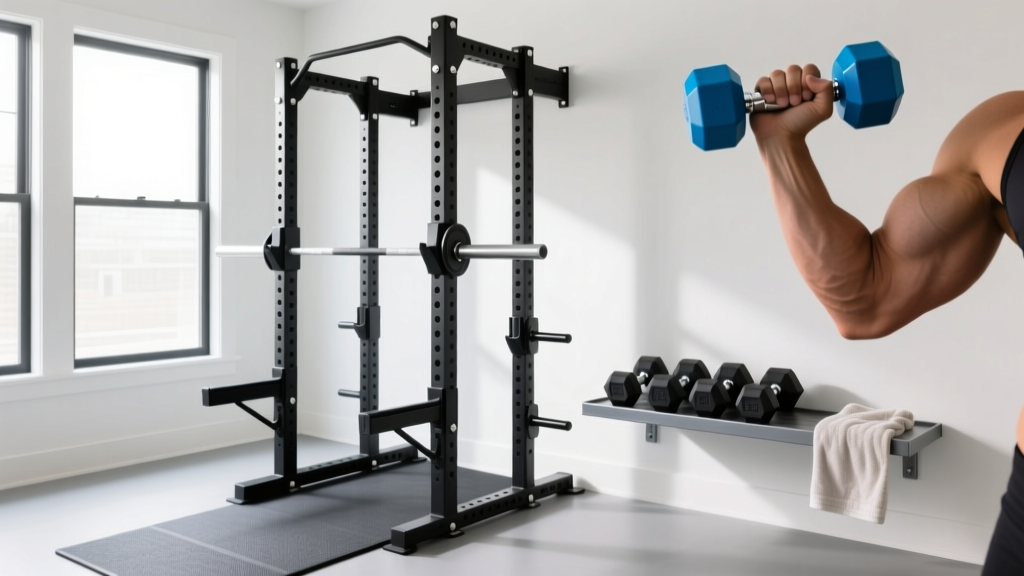
Space-Saving Storage Layouts for Your Workout with 25 lb Dumbbells
Discover space-saving dumbbell racks and layout strategies to optimize your home gym for a high-rep workout with 25 lb dumbbells. Maximize your floorplan.

The Spatial Dynamics of Moderate-Weight Training
Designing a home gym is rarely just about the equipment you buy; it is about the spatial flow you create. When your primary training modality revolves around a workout with 25 lb dumbbells, you are typically engaging in higher-repetition hypertrophy, metabolic conditioning, or mobility circuits. Unlike heavy powerlifters who interact with their weights for a few maximal sets, moderate-weight athletes pick up, rack, and swap dumbbells constantly. This high-frequency interaction demands a radically different approach to space optimization and storage layout.
In 2026, the shift toward compact, high-efficiency micro-gyms has forced fitness enthusiasts to rethink traditional storage. A sprawling 100-square-foot dedicated weight room is a luxury; most home athletes are carving out 40 to 60 square feet in garages, spare bedrooms, or finished basements. Optimizing this footprint requires matching the physical dimensions of your dumbbells to the ergonomic realities of your floorplan.
Expert Insight: The average 25 lb rubber hex dumbbell is roughly 14.5 inches long with a 5.5-inch head diameter. A standard 10-pair set (5 to 50 lbs) requires about 48 inches of horizontal shelf space. If you are using premium urethane dumbbells, the head diameter shrinks to approximately 4.25 inches, altering how they sit on rack lips and changing your required clearance depth.Rack Typology: Matching Storage to Your Floorplan
Choosing the right rack is the anchor of your layout. According to comprehensive testing by Garage Gym Reviews, the 'best' rack is entirely dependent on your available square footage and wall structure. Below is a comparison of the three dominant rack typologies for moderate-weight storage.
| Rack Type | Model Example | Approx. Cost (2026) | Floor Footprint | Best Layout Application |
|---|---|---|---|---|
| A-Frame | Rogue A-Frame Dumbbell Rack | $165.00 | ~3.5 sq ft | Central room placement; 360-degree access for circuit training. |
| 3-Tier Horizontal | CAP Barbell Solid Steel Rack | $95.00 | ~8.0 sq ft | Wall-adjacent placement; maximizes vertical air space. |
| Wall-Mounted | Titan Fitness Wall-Mount Rack | $130.00 | 0.0 sq ft | Micro-gyms; requires drilling into wooden studs or masonry. |
For a dedicated workout with 25 lb dumbbells, the 3-tier horizontal rack is often the most ergonomic choice. It places the 20 lb to 30 lb dumbbells precisely at waist height, eliminating the need to bend down or reach up during rapid superset transitions. The Rogue A-Frame is aesthetically superior and excellent for garage gyms where you might walk around the equipment, but it consumes valuable central floor space that could be used for kettlebell swings or lunges.
Designing the Ergonomic 'Strike Zone'
In industrial ergonomics, the 'strike zone' refers to the area between a worker's knees and shoulders where lifting requires the least spinal torque. Your dumbbell storage must exist entirely within this zone to prevent lower back fatigue before your workout even begins.
Calculating Shelf Heights
- Bottom Tier (5-15 lbs): Should sit no lower than 18 inches from the floor. Anything lower forces deep squatting just to retrieve light warm-up weights.
- Middle Tier (20-30 lbs): The prime real estate. For your 25 lb dumbbells, the shelf lip should be exactly 30 to 34 inches off the ground. This allows for a neutral-spine pickup.
- Top Tier (35-50 lbs): Should not exceed 54 inches. Racking a 50 lb dumbbell above shoulder height is a known failure mode for rotator cuff impingement.
'A well-designed home gym doesn't just store equipment; it choreographs the athlete's movement. If you have to take three steps and bend over to grab your next set, your layout is working against your physiology.' — Biomechanics and Gym Design Principles, Men's Health
Step-by-Step: Calculating Your Micro-Gym Footprint
Space optimization requires mathematical precision. Follow this framework to map out your layout before purchasing any steel or rubber.
- Map the Swing Radius: Stand in the center of your intended workout zone with a 25 lb dumbbell in each hand. Extend your arms fully to the sides and perform a slow squat. Measure the diameter of this circle. For an average male (5'9" wingspan), this requires a minimum clear zone of 7 feet by 7 feet (49 sq ft).
- Establish the Drop Zone: High-rep metabolic workouts inevitably lead to dropping weights. You need a dedicated impact zone. Standard 3/4-inch thick horse stall mats (4x6 feet) cost roughly $50 each and provide the necessary shock absorption to protect both your 25 lb dumbbells and your concrete slab.
- Apply the ADA Clearance Rule: The Americans with Disabilities Act recommends 36 inches of clear width for pathways. Apply this to your gym: leave exactly 36 inches of clearance between the front of your dumbbell rack and the edge of your lifting mat. This allows you to step back, hinge at the hips, and rack the weights without your heels clipping the mat edge.
Common Layout Failure Modes and How to Avoid Them
Even with the best equipment, poor spatial planning leads to abandoned home gyms. Watch out for these specific edge cases:
Warning: The Moisture Trap
If you opt for a wall-mounted rack on an exterior-facing wall (common in uninsulated garages), the dumbbells will act as thermal bridges. In humid summer months, condensation will form on the iron cores, leading to rust that transfers to your hands and floors. Solution: Maintain a 2-inch gap between the rack backing and the wall using spacer washers, and apply a silicone-based protectant to the dumbbell heads quarterly.
Floor Joist Overload
If your gym is on a second floor or over a crawlspace, a fully loaded 3-tier rack holding 500 lbs of iron concentrates immense point-load pressure on a 4-square-foot area. Standard residential floor joists are rated for 40 lbs per square foot (live load). A loaded rack can exceed 125 lbs per square foot. Always position horizontal racks perpendicular to the floor joists, ideally directly over a load-bearing wall or steel support beam.
The Hex vs. Urethane Lip Catch
Many budget racks feature a 2-inch raised lip to prevent rolling. If you upgrade from rubber hex dumbbells to urethane in 2026, you may find the sharper, denser edges of the urethane heads catch on poorly welded rack lips during one-handed racking. Always verify the rack's lip depth against your specific dumbbell head diameter before finalizing your layout.
FAQ: Fine-Tuning Your Dumbbell Storage
Can I store my 25 lb dumbbells outside on a covered patio?
While a covered patio protects against direct rain, ambient humidity will still degrade rubber hex coatings and rust chrome handles over time. If outdoor storage is your only option, invest in cast urethane dumbbells, which are virtually impervious to moisture, and use a weatherproof, zippered canvas rack cover.
How far should my dumbbell rack be from my adjustable bench?
For a seamless workout with 25 lb dumbbells, the rack should be positioned exactly 12 to 18 inches from the head of your adjustable bench. This allows you to perform a 'knee-kick' retrieval for heavy incline presses without standing up, while providing enough clearance to walk past the bench without tripping over the rack's base feet.
Are vertical dumbbell towers a good space-saving option?
Vertical towers (where dumbbells hang by their handles) save horizontal wall space but are generally not recommended for sets extending past 25 lbs. The handle-gripping mechanisms can wear down the knurling on your dumbbells, and retrieving a 25 lb weight from a high vertical peg requires unnecessary shoulder extension, increasing injury risk during fatigued circuits.
More gear to consider
All reviews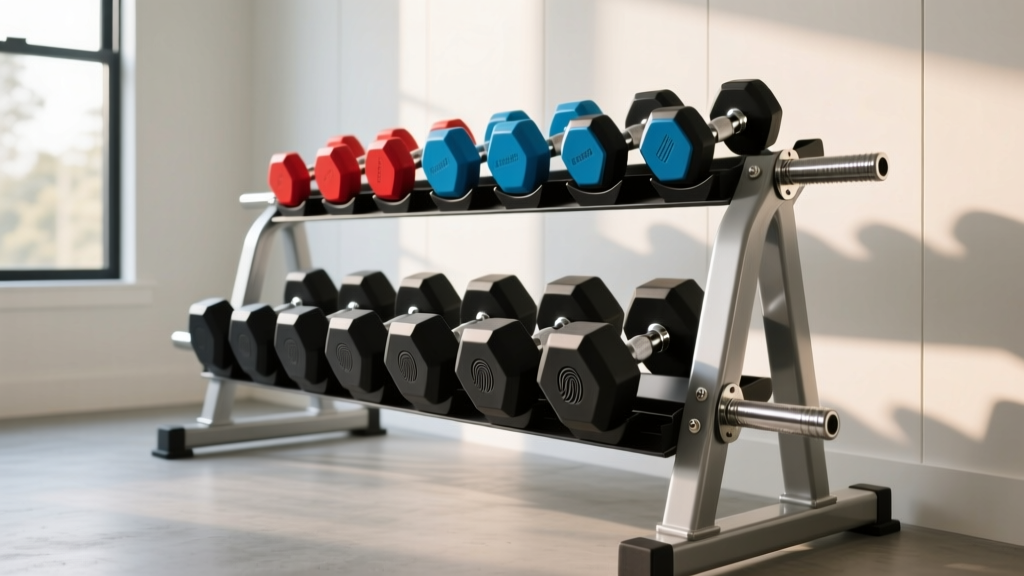
How to Store and Maintain Your Set Dumbbell Rack for Longevity
2026 Market Trends: Bumper vs Iron Plates & Lats With Dumbbells

Cast Iron vs Competition Kettlebells: Value per Dumbbell Lbs

EZ vs Straight Bar Value & Glute-Focused Split Squat Dumbbell Holds

Rubber Hex vs Urethane Dumbbells: Best for Dumbbell Rows?