EZ Curl vs Straight Bar: Arm Care & PowerBlock Dumbbells Stand Setup
Compare EZ curl vs straight bar mechanics for joint health, and learn essential maintenance tips for your bars and PowerBlock dumbbells stand.

The Intersection of Arm Biomechanics and Equipment Longevity
Building a sustainable home gym requires looking past the immediate pump and focusing on the long-term health of both your joints and your gear. When optimizing arm day, the debate between an EZ curl bar and a straight barbell is usually framed around muscle isolation. However, as of 2026, leading strength coaches and physical therapists increasingly evaluate this comparison through the lens of joint preservation and connective tissue longevity. Furthermore, the way you store and maintain your secondary equipment—specifically adjustable dumbbells and their docking stations—dictates whether your investment lasts three years or three decades.
This guide breaks down the biomechanical realities of the EZ curl bar vs straight bar comparison, outlines exact maintenance protocols for barbell knurling and sleeves, and provides a masterclass in protecting your adjustable dumbbell ecosystem with a dedicated powerblock dumbbells stand.
Biomechanical Stress: EZ Curl Bar vs Straight Bar
The primary difference between a straight bar and an EZ curl bar lies in the degree of forearm supination required during the concentric phase of the curl. A standard Olympic straight bar forces the wrists and elbows into full 180-degree supination (palms facing directly up). While this maximizes biceps brachii activation, it places immense valgus stress on the medial epicondyle and the distal radioulnar joint.
Conversely, the EZ curl bar features angled grips that allow for a semi-supinated position (typically 30 to 45 degrees). This slight pronation alleviates torque on the wrist extensors and the ulnar collateral ligament, making it the superior choice for lifters with a history of medial epicondylitis (golfer's elbow) or wrist impingements.
| Feature | Olympic Straight Bar | Olympic EZ Curl Bar |
|---|---|---|
| Grip Angle | 180° (Full Supination) | 30° - 45° (Semi-Supinated) |
| Joint Stress | High on wrists & medial elbow | Low to Moderate (Joint-friendly) |
| Primary Muscle Bias | Biceps Brachii (Short & Long Head) | Brachialis & Brachioradialis |
| Typical Sleeve Type | Bearings or Bushings | Bushings (Rarely dropped) |
| Longevity Risk Factor | Knurling wear from heavy rack pulls | Sleeve oxidation if left unracked |
Barbell Longevity: Knurling and Sleeve Maintenance
Whether you are using a premium Cerakote Rogue Curl Bar or a bright zinc REP Fitness straight bar, environmental factors and skin oils will degrade the steel if ignored. Proper maintenance ensures the knurling remains grippy and the sleeves spin freely without grinding.
1. Knurling Care Protocol
Dead skin, chalk, and sweat accumulate deep within the knurling valleys, trapping moisture and accelerating oxidation.
- Tools: Use a stiff nylon bristle brush. Never use brass or steel wire brushes, as they will strip zinc, black oxide, and Cerakote coatings, leaving bare steel vulnerable to immediate rust.
- Frequency: Brush the bar after every heavy arm or back session. Once a month, apply a few drops of mineral oil to the brush to lift stubborn chalk residue, then wipe completely dry with a microfiber cloth.
2. Sleeve and Bushing Lubrication
EZ curl bars almost exclusively use bronze or composite bushings rather than needle bearings, as they are not subjected to the violent drops of Olympic weightlifting. However, bushings still require lubrication to prevent squeaking and sleeve seizing.
- Stand the bar vertically on one end.
- Apply 3-4 drops of synthetic 3-in-One oil or specialized barbell sleeve oil directly into the seam where the sleeve meets the shaft.
- Rotate the sleeve manually for 30 seconds to work the oil into the bushing.
- Wipe away excess oil to prevent dust attraction.
Protecting Your Investment: PowerBlock Dumbbells Stand Care
While barbells demand surface-level maintenance, adjustable dumbbells require structural protection. The internal mechanisms of adjustable dumbbells—particularly the selector pins, adder weight cages, and ABS plastic end-caps of the PowerBlock Elite and Sport series—are highly susceptible to impact damage. Dropping a PowerBlock dumbbell on a hard rubber mat can easily crack the side panels or bend the selector pin, rendering the weight adjustment useless.
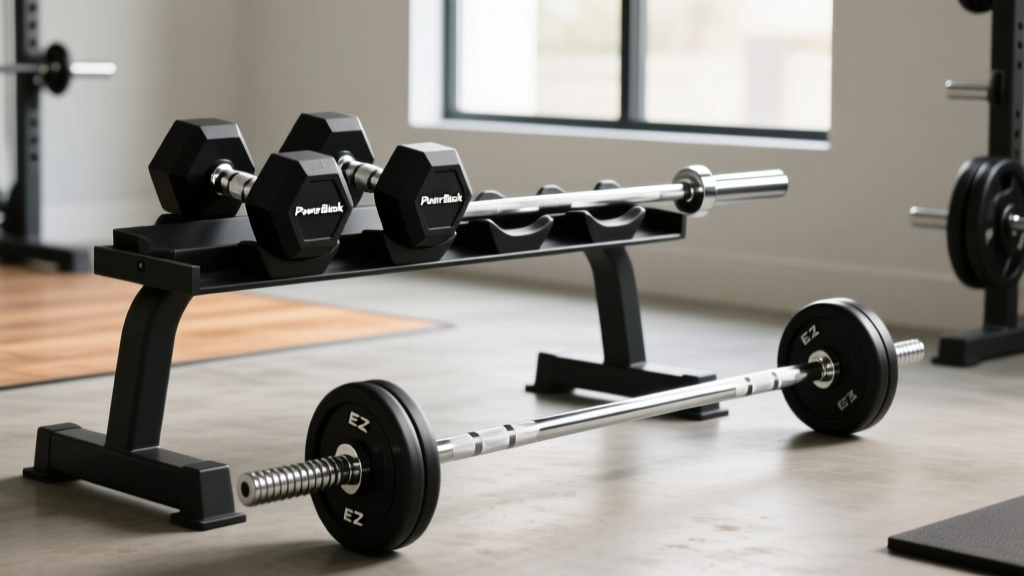
This is why integrating a dedicated powerblock dumbbells stand into your home gym is non-negotiable for equipment longevity. The stand elevates the dumbbells to an ergonomic 32-inch picking height, eliminating the need to bend over and drastically reducing the drop-distance if a dumbbell slips from your grip.
Maintaining the PowerBlock Stand and Dumbbells
To ensure your stand and dumbbells survive a decade of heavy use, follow these specific care guidelines:
- Hardware Torque Checks: The vibration from racking heavy dumbbells can loosen the M8 carriage bolts on the stand. Every 90 days, use a torque wrench to ensure all structural bolts are tightened to 25 Nm (18 ft-lbs).
- Powder Coat Preservation: Clean the stand's powder-coated steel with a damp microfiber cloth and a mild, pH-neutral dish soap. Avoid ammonia-based cleaners or bleach, which will cause the matte black or silver powder coat to chalk and fade under UV exposure.
- Selector Pin Spring Tension: The internal spring of the PowerBlock selector pin can accumulate dust and lose tension. Annually, remove the pin, wipe the shaft with a dry cloth, and apply a microscopic layer of dry PTFE (Teflon) lubricant. Avoid wet oils like WD-40, which will attract grit and jam the pin inside the weight stack.
- Urethane and Steel Cage Care: Wipe down the dumbbell cages with a 50/50 mix of water and white vinegar to neutralize acidic sweat. This prevents the urethane bumpers from degrading and the internal steel plates from developing surface rust.
'The number one cause of adjustable dumbbell failure in home gyms isn't manufacturing defects; it's improper storage and impact damage. A dedicated stand pays for itself the first time it prevents a cracked ABS casing.' — Home Gym Equipment Technician
The Monthly Arm-Day Equipment Checklist
Consistency is the key to longevity. Pin this checklist to your gym wall to ensure your bars and dumbbells remain in pristine condition year-round.
🛠️ 15-Minute Monthly Maintenance Routine
- Step 1: Brush the knurling on both your straight bar and EZ curl bar with a nylon brush and a drop of mineral oil.
- Step 2: Lubricate the barbell sleeves with synthetic oil and wipe clean.
- Step 3: Inspect the powerblock dumbbells stand for loose M8 bolts and tighten as necessary.
- Step 4: Wipe down the PowerBlock dumbbell cages and the stand's powder coat with a pH-neutral cleaner.
- Step 5: Test the selector pins on your dumbbells for smooth engagement and apply dry PTFE lube if sticking occurs.
Frequently Asked Questions
Can I use an EZ curl bar for heavy squats or bench presses?
No. EZ curl bars are typically rated for 150 to 300 lbs of static load and feature shorter, thinner sleeves designed for smaller diameter plates. Using them for heavy compound lifts risks bending the shaft and voiding the manufacturer's warranty.
Do I really need a specific stand for PowerBlock dumbbells?
While you can rest them on a standard weight bench, a purpose-built powerblock dumbbells stand is engineered to match the exact footprint and weight distribution of the blocks. Generic racks often lack the lip required to keep the rectangular blocks secure, increasing the risk of a catastrophic drop that will shatter the internal weight cages.
How often should I replace the oil on my barbell sleeves?
For a climate-controlled home gym, lubricating the sleeves every 3 to 4 months is sufficient. If your gym is in a garage or basement with high humidity and temperature fluctuations, increase this frequency to once a month to prevent internal bushing oxidation.
More gear to consider
All reviews
Bumper vs Iron Plates & A Landmine Rotation Alternative with Dumbbells
Loadable Dumbbell Maintenance for the Dumbbell Waiter's Carry
Painting Dumbbells & Barbell Collar Types: Troubleshooting Guide

Brian Shaw Dumbbell Grip vs Olympic Barbell Knurling Guide

Power Rack vs Squat Rack vs Stand: Leg Extension Alternative Dumbbell