
Space Optimization: Pairing Stationary Bike Types with a Cardio Zone Treadmill
Learn how to optimize your home gym layout by comparing stationary bike types (upright, recumbent, spin) against your cardio zone treadmill footprint.

The Spatial Math of a Dual-Machine Cardio Zone
Designing a comprehensive home gym in 2026 requires more than just purchasing top-tier equipment; it demands rigorous spatial planning. For most fitness enthusiasts, the anchor of the room is a high-quality cardio zone treadmill. However, relying solely on a treadmill neglects the low-impact, high-cadence benefits of cycling. When you decide to introduce a stationary bike to your setup, you are immediately faced with a geometric puzzle.
Choosing between upright, recumbent, and spin bikes is not just a matter of biomechanics or fitness goals—it is fundamentally a space optimization challenge. A standard treadmill commands a massive footprint and strict safety clearances. Fitting a secondary cardio machine into the remaining square footage requires an understanding of each bike type's dimensional profile, operational clearance, and electrical demands.
⚠️ Critical Safety Clearance Warning: According to the U.S. Consumer Product Safety Commission (CPSC), you must maintain a minimum clearance of 30 inches (76 cm) behind any treadmill to prevent severe friction burn injuries in the event of a fall. Never place a stationary bike directly in this rear safety zone.Footprint Matrix: Stationary Bike Types vs. Treadmills
To visualize the spatial reality of your home gym, we must compare the physical footprints and required operational clearances of popular 2026 models. The table below breaks down the exact dimensions you need to map your floor plan.
| Machine Category | Model Example | Footprint (L x W) | Required Safety Zone | Avg. Price (2026) |
|---|---|---|---|---|
| Treadmill (Anchor) | Sole F80 | 80' x 35' | 30' Rear / 20' Sides | $1,199 |
| Upright Bike | Life Fitness Club Series | 40' x 25' | 15' All Sides | $1,499 |
| Recumbent Bike | Schwinn 270 | 54' x 28' | 15' All Sides | $699 |
| Spin / Indoor Cycle | Keiser M3i | 45' x 18' | 12' All Sides | $2,395 |
Upright Bikes: Capitalizing on Vertical Space
Upright bikes mimic the geometry of a traditional road bike. From a layout perspective, their greatest advantage is their compact horizontal footprint. An upright bike typically requires less than 7 square feet of floor space, making it the ideal companion to a cardio zone treadmill in narrow or rectangular rooms.
Layout Strategy: The Side-by-Side Configuration
Because upright bikes have a narrow profile (usually 22 to 25 inches wide), you can place them parallel to your treadmill. However, you must account for the 'elbow clearance' during high-intensity intervals. The American Council on Exercise (ACE) recommends a minimum of 15 inches of lateral clearance between machines to prevent limb collision during dynamic movements.
- Ceiling Height Check: While the floor footprint is small, upright bikes demand vertical space. A 6'2' rider on a Peloton Bike+ or Life Fitness upright will have their head nearly 6 feet off the ground. Ensure your ceiling height is at least 8 feet to avoid claustrophobia and allow for standing climbs.
- Screen Placement: Upright bikes require a direct line of sight to your primary display or TV. Position the bike so the user faces the same direction as the treadmill user, minimizing visual distraction.
Recumbent Bikes: Managing the Horizontal Sprawl
Recumbent bikes are the undisputed kings of lumbar support and joint rehabilitation, but they are spatial hogs. The step-through design and extended leg trajectory mean a recumbent bike like the NordicTrack Commercial R35 stretches up to 65 inches in length.
Layout Strategy: The L-Shape or Window Placement
Never place a recumbent bike in the direct traffic path of your cardio zone treadmill. Instead, utilize the 'dead space' in your room's layout.
- The Window Nook: Recumbent bikes have a low backrest (usually under 20 inches high). This makes them perfect for placement directly under a window sill or below a wall-mounted TV, utilizing vertical dead space without blocking sightlines.
- The L-Shape Perimeter: Place your treadmill on the primary wall, and position the recumbent bike on the adjacent perpendicular wall. This creates an L-shaped cardio zone that keeps the center of the room open for stretching, yoga, or dumbbell work.
Expert Insight: When measuring for a recumbent bike, do not just measure the machine's static length. You must add 18 inches to the front of the machine to account for the user's extended knee clearance and the space required to mount and dismount the seat safely.
Spin Bikes: High-Intensity Corner Placements
Spin bikes (or indoor cycles) like the Bowflex C6 or Keiser M3i are designed for aggressive, out-of-the-saddle riding. They feature the smallest footprint of the three types—often just 18 inches wide—but they introduce a unique spatial challenge: sweat radius and flooring requirements.
Layout Strategy: The Corner Power Station
Spin bikes are best relegated to a dedicated corner of your cardio zone. Because riders frequently stand and shift their weight laterally, a corner placement provides a psychological and physical 'anchor' that allows the rider to push maximum wattage without feeling exposed to the center of the room.
- Flooring Isolation: High-cadence spinning generates a massive sweat radius. Place a specialized 3/8-inch thick rubber equipment mat (approx. $60-$90) specifically under the spin bike, separate from your treadmill mat. This prevents sweat corrosion on your subfloor and allows you to easily pull the mat out for cleaning without moving your heavy cardio zone treadmill.
- Ventilation Flow: Spin bikes generate the highest core temperatures. Map the airflow from your HVAC vents or place a dedicated floor fan in the corner. Ensure the fan's cord does not cross the 30-inch safety zone behind your treadmill.
The 2026 Layout Framework: Clearance, Power, and Flow
Optimizing your space goes beyond measuring tape; it requires an understanding of electrical loads and ergonomic flow. Here is the definitive checklist for finalizing your dual-machine layout.
1. The Electrical Load Balancing Act
A motorized cardio zone treadmill with a 3.0 CHP motor draws significant amperage, especially during startup and incline shifts. Most manufacturers require a dedicated 15-amp or 20-amp circuit. Smart stationary bikes (like those with integrated HD touchscreens) also draw continuous power. Never plug a heavy-draw treadmill and a smart bike into the same standard power strip. If your home gym is on a single 15-amp breaker, running both simultaneously risks tripping the breaker mid-workout. Position your machines near separate wall outlets on different circuits if possible.
2. The Mirror Illusion
Space optimization is also about visual perception. Installing a large, shatterproof wall mirror on the wall opposite your cardio zone treadmill and bikes instantly doubles the perceived depth of the room. Position the mirror so it reflects the window or primary light source, which reduces the 'basement gym' claustrophobia often associated with multi-machine setups.
3. The 'Drop Zone' Integration
Allocate a 12-inch wide vertical sliver of wall space between the treadmill and the bike for a wall-mounted towel rack and magnetic dumbbell holder. This utilizes the 'dead air' between machines that is too narrow for a person but perfect for accessories, keeping the floor entirely clear for safe dismounts.
Frequently Asked Questions
Can I put a folding treadmill and a bike in a small bedroom?
Yes, but with strict caveats. A folding treadmill (like the Sole F63) reduces its length by nearly 50% when stored. However, you must ensure the folding mechanism's clearance arc does not intersect with the bike's handlebars. Always leave a minimum 24-inch walkway between the stored treadmill and the bike for safe passage.
Which bike type is best for a low-ceiling basement gym?
Recumbent and spin bikes are the only viable options for basements with ceilings under 7.5 feet. Upright bikes elevate the rider's head too close to the ceiling, which can cause anxiety and limit standing climbs. A recumbent bike keeps the user's head less than 4 feet off the ground, entirely eliminating vertical clearance issues.
How do I manage the cables between my treadmill and smart bike?
Use adhesive-backed cable raceways painted to match your baseboards. Run treadmill and bike power cables along opposite walls to avoid creating a tripping hazard in the center transition zone. Never run cables under the treadmill's rear safety clearance area, as a falling user could snag the cord and pull the machine backward.
More gear to consider
All reviews
Treadmill LISS Workout Setup: Motor Size & Installation Guide
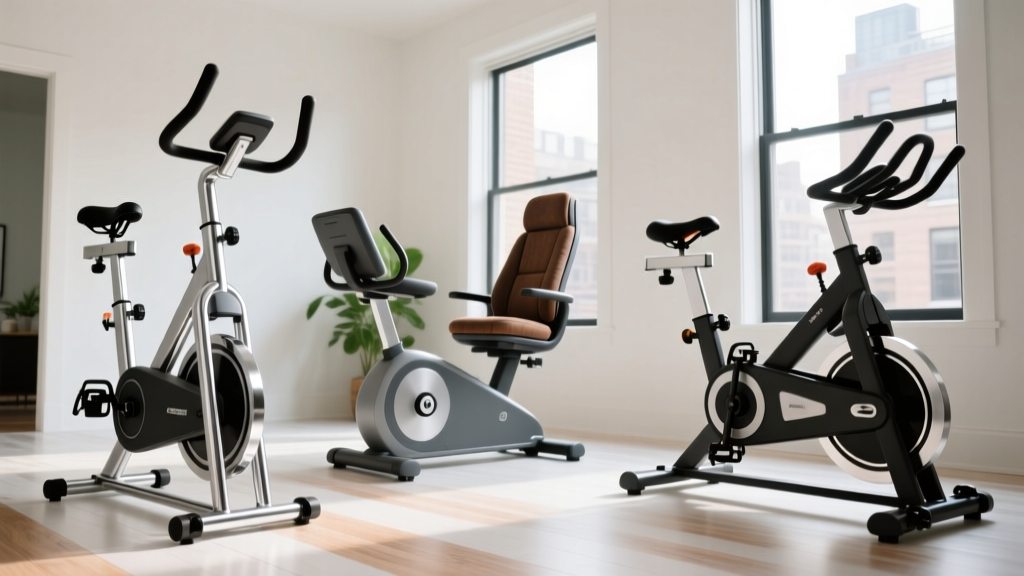
Beyond ProForm Treadmills Reviews: Space-Saving Bike Types
Curved vs Motorized Treadmill: Best for an OTF Treadmill Workout?
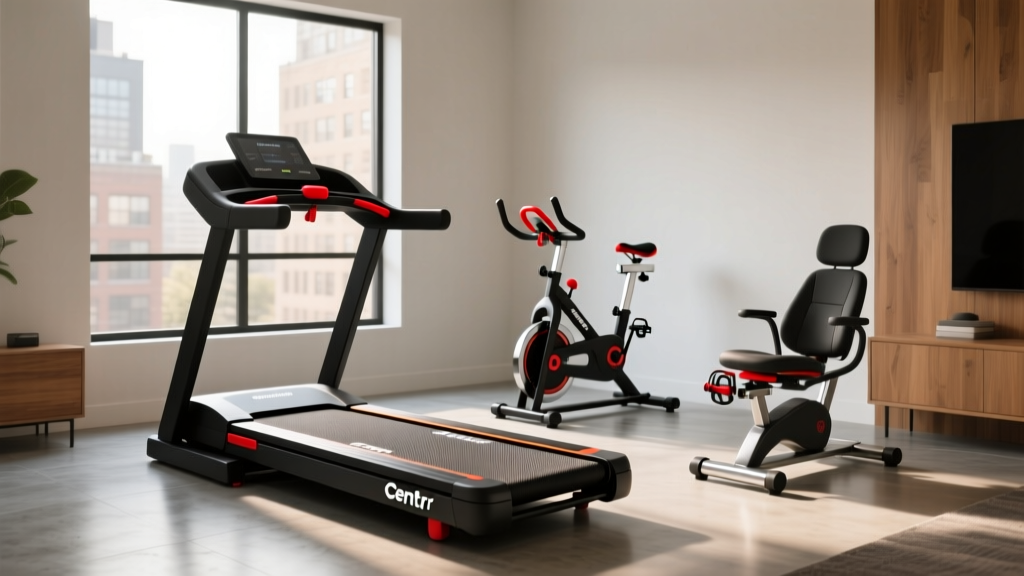
Centr Runr Treadmill Review & Space-Saving Bike Layouts

Farmers Walk on Treadmill & Stationary Bike Types: 2026 Review
