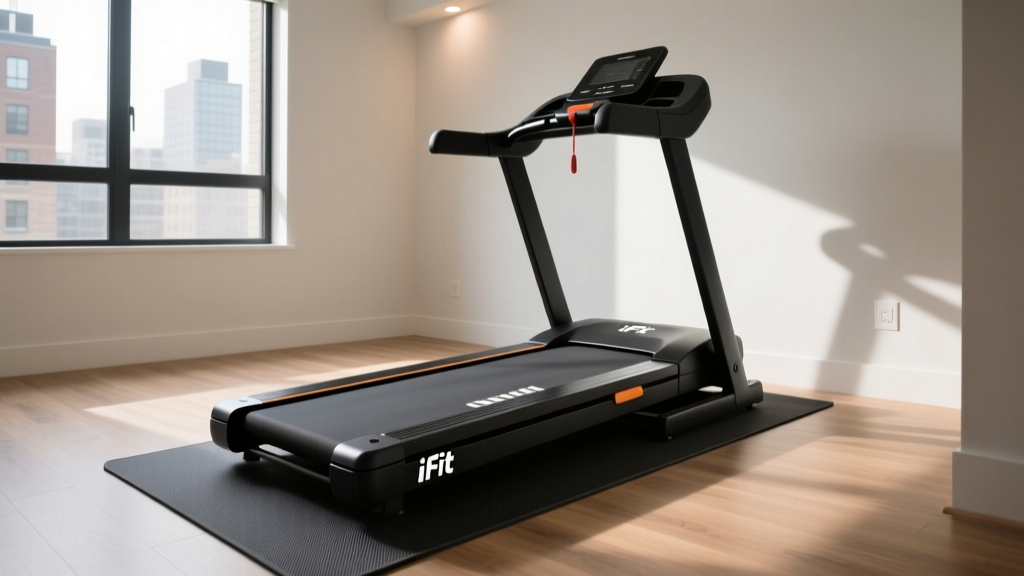
Optimizing Space: iFit Treadmill Mat & Belt Maintenance Guide
Learn how strategic space optimization, proper iFit treadmill mat placement, and precise belt maintenance extend your cardio machine's lifespan.

The Intersection of Spatial Design and Treadmill Longevity
When designing a compact home gym or integrating cardio equipment into a multi-use living space, most users focus exclusively on the footprint of the machine. However, true space optimization requires thinking beyond static dimensions and accounting for the dynamic mechanical needs of the equipment. Treadmill belt maintenance and lubrication are frequently overlooked in spatial planning, leading to premature motor burnout, belt fraying, and voided warranties. In 2026, with advanced connected models like the NordicTrack Commercial 1750 and ProForm Pro 9000 dominating home setups, the integration of an iFit treadmill mat and proper spatial clearances is not just about protecting your hardwood floors—it is a critical mechanical intervention.
According to equipment longevity reports referenced by Consumer Reports, over 40% of home treadmill failures are linked to improper deck lubrication and excessive dust infiltration. In space-constrained environments, such as spare bedrooms or basement corners, airflow is restricted and ambient dust settles directly into the motor housing. By strategically planning your layout and utilizing high-density equipment mats, you create a controlled micro-environment that drastically reduces maintenance frequency and extends the life of your investment.
Why Your iFit Treadmill Mat is a Maintenance Tool
Many consumers view an iFit treadmill mat merely as a sweat catcher or a cosmetic floor protector. From a biomechanical and spatial design perspective, a high-quality, 3/16-inch to 1/4-inch thick PVC or rubber mat serves as a vital vibration damper and leveling agent.
Expert Insight: The Micro-Vibration Effect
When a treadmill operates on an uneven surface or directly on hard flooring without a mat, micro-vibrations cause the belt to track slightly off-center. Over hundreds of miles, this lateral drift forces the user to constantly adjust the rear roller tension bolts. A dense iFit treadmill mat absorbs these high-frequency vibrations, keeping the belt centered and reducing the lateral friction that degrades the belt edges.
Furthermore, in multi-use rooms where treadmills are placed near HVAC vents or high-traffic doorways, the mat acts as a secondary seal. It prevents fine particulate matter from being kicked up by foot traffic and sucked into the treadmill's cooling fan, which ultimately blows dust directly onto the belt-deck interface. This interface is where friction generates heat; dust acts as an abrasive, accelerating the wear of the phenolic deck coating.
Designing Your Layout for Maintenance Access
A common mistake in space optimization is pushing the treadmill flush against a wall or wedging it into a tight alcove. While this maximizes square footage for other activities, it completely eliminates the spatial clearance required for routine belt maintenance. To properly lubricate a treadmill belt, you must be able to lift the belt edges, access the rear roller adjustment bolts, and clean the motor shroud.
| Zone | Minimum Clearance | Purpose & Maintenance Requirement |
|---|---|---|
| Rear Wall | 24 - 36 inches | Access to rear roller tension bolts (3/16' or 1/4' hex key) and power cord routing. |
| Left/Right Sides | 12 - 18 inches | Allows user to crouch and lift the belt edge to apply silicone lubricant to the deck. |
| Front (Console) | 6 - 12 inches | Prevents console from striking walls during incline elevation (up to 15% on commercial models). |
| Overhead | User Height + 12 inches | Safety clearance for incline running and ceiling fan avoidance. |
When laying out your gym space, use painter's tape to mark these maintenance clearances on the floor before unboxing the machine. If your room cannot accommodate the rear clearance, consider a layout where the treadmill faces a window or an open doorway, allowing you to pull the machine away from the wall only when maintenance is required.
Step-by-Step Belt Lubrication in Space-Constrained Rooms
Lubricating a treadmill belt in a tight spatial layout requires precision and the right materials. Never use petroleum-based lubricants or aerosol WD-40, as these will destroy the belt's multi-ply rubber and void your warranty. You must use 100% liquid silicone treadmill lubricant (typically priced between $10 and $15 for a 4oz bottle with an extension tube).
- Power Down and Unplug: Always disconnect the machine from the wall. In tight spaces, ensure the power cord is not routed under the iFit treadmill mat where it could become pinched or cause the mat to bunch up, creating an uneven surface.
- Locate the Application Zone: Crouch on the side of the treadmill (utilizing your 12-inch side clearance). Lift the edge of the walking belt in the middle of the deck. You should be able to lift it approximately 2 to 3 inches.
- Apply the Silicone: Insert the extension tube under the belt and aim toward the center of the deck. Squeeze exactly 0.5 ounces (about half the bottle) of 100% silicone in a zig-zag pattern from the front roller to the rear roller. Repeat on the opposite side.
- Distribute the Lubricant: Plug the machine back in. Start the treadmill at a slow walking pace (1.5 to 2.0 mph). Walk on the belt for 3 to 5 minutes, intentionally stepping slightly left and right to spread the silicone evenly across the entire phenolic deck surface.
- Wipe the Edges: Use a microfiber cloth to wipe away any excess silicone that squeezes out onto the side rails. Excess silicone on the rails can transfer to your shoes, creating a slipping hazard when you step off the machine.
Troubleshooting: When Room Layout Causes Belt Drift
Even with meticulous lubrication, spatial anomalies in your room can cause the belt to slip or drift. If you are using an iFit-connected treadmill and receive an Error Code 1 or 2 (indicating motor overcurrent or excessive friction), the issue may be tied to your room's layout rather than the machine itself.
The Sloped Floor Dilemma
Many homes have subtle floor sloping (up to 1/2 inch over 10 feet) for drainage or structural settling. If a treadmill is placed perpendicular to a slope, the frame twists microscopically under the dynamic load of a runner. This twist pulls the rear roller out of parallel alignment with the front roller, causing the belt to aggressively track to one side. The Fix: Use your iFit treadmill mat in conjunction with adjustable furniture shims placed *under* the mat on the lower side of the slope. Use a digital level on the side rails to ensure the frame is perfectly horizontal.
Proximity to HVAC and Sunlight
Placing a treadmill directly under an AC vent or in the path of direct, unfiltered sunlight through a window alters the ambient temperature of the belt. Extreme cold makes the rubber stiff and prone to slipping; intense UV and heat can dry out the rubber and cause the silicone lubricant to evaporate prematurely. According to ergonomic and environmental guidelines supported by the American Council on Exercise (ACE), maintaining a stable environmental temperature around fitness equipment is crucial for both user safety and equipment longevity. Ensure your layout positions the treadmill away from direct thermal drafts.
Expert Layout Framework for Compact Cardio Zones
To synthesize space optimization with mechanical preservation, follow this final layout checklist for your cardio zone:
- The Mat Boundary: Your iFit treadmill mat should extend at least 6 inches beyond the rear of the treadmill. This catches debris kicked up by the runner's shoes before it can bounce back into the rear roller mechanism.
- Cable Management: Use flat, low-profile cable covers routed along the baseboard. Never run power or ethernet cables under the treadmill mat, as the constant compression will degrade the cable shielding and create an uneven bump that transfers shock into the treadmill deck.
- Ventilation Corridors: Treadmill motors pull in air from the front or sides and exhaust it out the rear or bottom. Ensure your spatial layout does not block the exhaust ports with walls, heavy curtains, or adjacent furniture, as heat buildup will degrade the belt-deck lubricant faster.
By treating your treadmill not just as a piece of furniture, but as a precision machine requiring specific spatial and environmental conditions, you bridge the gap between interior design and mechanical engineering. A well-placed iFit treadmill mat, combined with the correct maintenance clearances and a strict lubrication schedule, will ensure your cardio equipment operates silently and efficiently for years to come. For ongoing technical support and model-specific maintenance intervals, always refer to the official iFit Support hub or your manufacturer's digital manual.
More gear to consider
All reviews
NFC Treadmill vs Stationary Bike Types: Upright, Recumbent & Spin

Walking Pad Review: Setup for the 12 3 30 Treadmill Exercise

Curved vs Motorized: BowFlex Results Series Treadmill Fixes

Do Treadmills Use a Lot of Electricity? Small Space Folding Review

Walking Pad Review: Setup & Treadmill Belt Seam Guide
