
Bumper vs Iron Plate Cost Analysis: Deadlifts to Dumbbell Chest Row
Compare bumper plate vs iron plate costs for your home gym. Discover how plate choice impacts your budget and exercises like the dumbbell chest row.

The Core Dilemma: Cost Per Pound vs. Functional Utility
Building a home gym in 2026 requires a strategic approach to capital allocation. With supply chains fully normalized and equipment prices stabilizing, the debate between bumper plates and cast iron plates is no longer just about availability—it is a strict mathematical and biomechanical calculation. While Olympic weightlifters and CrossFit athletes default to rubber bumpers, bodybuilders and powerlifters often swear by the dense, uncompromising nature of cast iron. But how does this choice impact your overall budget, and more importantly, how does it affect your ability to perform specific hypertrophy movements?
Quick Budget Snapshot (2026 Market Averages)
- Economy Cast Iron: $1.00 - $1.30 per pound
- Premium Virgin Rubber Bumpers: $2.20 - $2.80 per pound
- Calibrated Steel Plates: $4.50 - $6.00 per pound
According to comprehensive equipment analyses by BarBend's home gym guides, the initial sticker shock of bumper plates can consume up to 40% more of your total equipment budget compared to standard iron. This capital drain directly limits your ability to invest in other crucial gym components, such as adjustable benches, cable attachments, or high-quality dumbbells.
The Biomechanics of Plate Selection: The ROM Problem
The most overlooked aspect of the bumper vs. iron debate is how plate diameter and thickness dictate your range of motion (ROM) in non-barbell exercises. This is where the dumbbell chest row becomes a perfect case study for equipment interference.
The dumbbell chest row is typically performed lying face-down on an incline bench, or using a specialized chest-supported row machine, to isolate the lats, rhomboids, and rear delts without lower back involvement. If you are utilizing plate-loaded dumbbell handles to perform the dumbbell chest row, using bumper plates is a critical biomechanical error.
Why Bumper Plates Ruin the Dumbbell Chest Row
Standard Olympic bumper plates—even the lightweight 10-pound and 15-pound 'technical' plates—are manufactured to a strict 450mm (17.7-inch) diameter to meet International Weightlifting Federation (IWF) standards. When you load these onto a plate-loaded dumbbell handle for a chest-supported row:
- Premature Ground Contact: The 17.7-inch diameter means the plates will collide with the floor or the base of the incline bench before your elbows can travel past your torso.
- Truncated Eccentric Phase: Hypertrophy relies heavily on the stretched position. As highlighted by NSCA educational resources on resistance training ROM, limiting the eccentric stretch of the latissimus dorsi significantly reduces muscle fiber recruitment and mechanical tension.
- Awkward Grip Mechanics: The thickness of multiple bumper plates forces the dumbbell handle to become excessively wide, altering the natural grip width and placing undue stress on the wrist joints during the pulling phase.
Conversely, cast iron plates—specifically 2.5lb, 5lb, and 10lb increments—have a significantly smaller diameter and a much thinner profile. This allows you to load heavy weight onto a plate-loaded dumbbell handle while maintaining the compact footprint necessary to achieve a full, unobstructed stretch during the dumbbell chest row.
Durability and Failure Modes: Where Does Your Money Actually Go?
When analyzing value, we must look beyond the initial purchase price and consider the lifespan and failure modes of the equipment. Iron and rubber degrade in fundamentally different ways.
Cast Iron Plates: The Longevity Champion
Primary Failure Mode: Cosmetic degradation and rust.
Unless you live in an unclimate-controlled garage in a high-humidity environment, cast iron plates will outlive you. The paint may chip, and the edges may rust, but the structural integrity of the iron remains uncompromised. A quick wire brush and a coat of Rust-Oleum will restore them to near-new condition for under $20.
Bumper Plates: The 'Taco' Effect
Primary Failure Mode: Hub separation and 'tacoing' (warping).
Bumper plates are designed to be dropped from overhead, but only when the barbell is loaded with enough weight to distribute the impact. If you repeatedly drop a barbell loaded with only light bumpers (e.g., a pair of 10lb or 15lb plates), the rubber will absorb too much shock, causing the plate to fold inward toward the collar—a phenomenon lifters call 'tacoing'. Once the brass or steel hub separates from the rubber matrix, the plate is entirely ruined and becomes a safety hazard. Replacing a warped $80 bumper plate destroys any perceived long-term value.
Head-to-Head Cost and Utility Breakdown
| Feature | Standard Cast Iron | Virgin Rubber Bumpers | Crumb Rubber (Economy Bumpers) |
|---|---|---|---|
| Average Cost (per lb) | $1.15 - $1.50 | $2.20 - $2.80 | $1.60 - $1.90 |
| Thickness Profile | Very Thin (Ideal for loading) | Thick (Limits bar capacity) | Extremely Thick |
| Drop Tolerance | Low (Damages floors/bars) | High (Protects floors) | High (But bounces unpredictably) |
| Impact on Dumbbell Rows | Excellent (Preserves full ROM) | Poor (Blocks eccentric stretch) | Poor (Blocks eccentric stretch) |
| Odor Factor | None (Smells like metal/paint) | Low (Fades in weeks) | High (Can take months to off-gas) |
The Hybrid Gym Strategy: Maximizing Your 2026 Budget
You do not need to choose just one. The most financially savvy home gym owners utilize a hybrid purchasing framework that allocates capital based on exercise requirements. According to budget optimization strategies featured on Garage Gym Reviews, mixing plate types yields the highest functional return on investment.
Step 1: Buy Iron for Hypertrophy and Accessory Work
Purchase a set of cast iron plates ranging from 2.5lbs to 45lbs. Use these for your dumbbell chest row setups, lunges, Romanian deadlifts, and any movement where barbell sleeve space is at a premium. Iron allows you to load up to 500+ lbs on a standard 7-foot Olympic bar without running out of sleeve space, which is a common issue when using thick bumper plates.
Step 2: Invest in a Minimal Bumper Set for Olympic and Floor Work
Buy exactly one pair of 45lb (or 20kg) competition-grade bumpers. Use these exclusively for deadlifts, power cleans, snatches, and any movement where the barbell will be dropped to the floor. By limiting your bumper purchase to just one pair, you save hundreds of dollars that can be redirected toward high-quality adjustable dumbbells or a premium incline bench.
Pro-Tip for Plate-Loaded Dumbbell Handles: If you are using plate-loaded dumbbell handles for the dumbbell chest row, always load the handle with iron 10s and 5s first, placing them closest to the handle grip. This keeps the center of mass tight and prevents the dumbbell from feeling unwieldy at the top of the concentric contraction.
Final Verdict: Where Should Your Money Go?
If your training revolves strictly around Olympic weightlifting or high-rep CrossFit-style metcons where dropping the barbell is mandatory, the premium for bumper plates is a non-negotiable necessity. However, for the vast majority of lifters focused on powerbuilding, hypertrophy, and general strength, cast iron offers vastly superior value.
By choosing iron for your bulk weight, you not only save roughly $1.00 per pound, but you also preserve the biomechanical integrity of crucial isolation exercises. You ensure that when you set up for a heavy set of the dumbbell chest row, your equipment facilitates your muscle growth rather than physically blocking your range of motion. Build smart, buy iron for the grind, and save the rubber for the drops.
More gear to consider
All reviews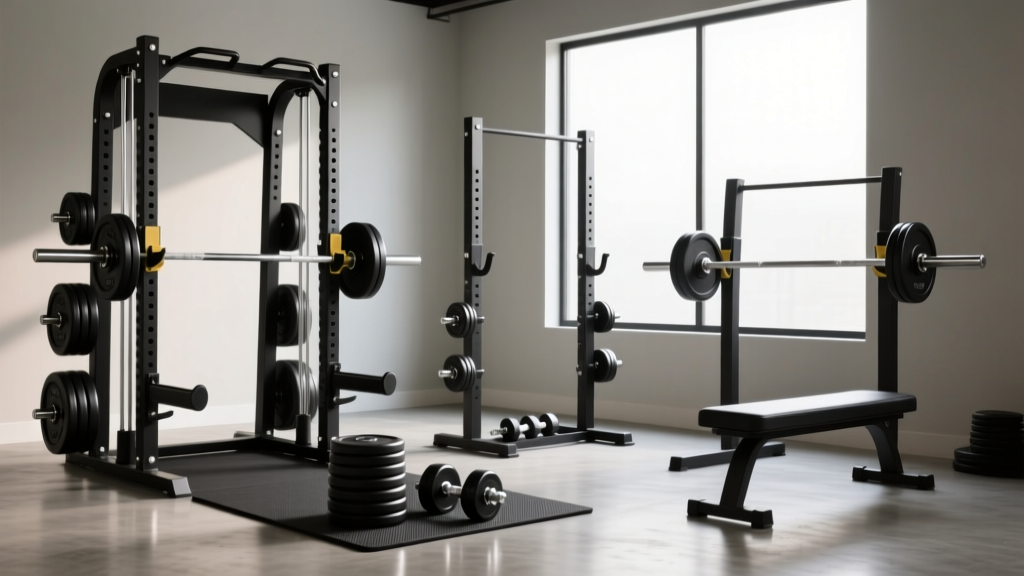
Power Rack vs Squat Rack vs Squat Stand: What's a Dumbbell Row Setup?

Beyond the Dumbbell Bracelet: Dumbbell Rack Storage Trends

What Size Dumbbells Should I Start With? Neoprene Home Pitfalls
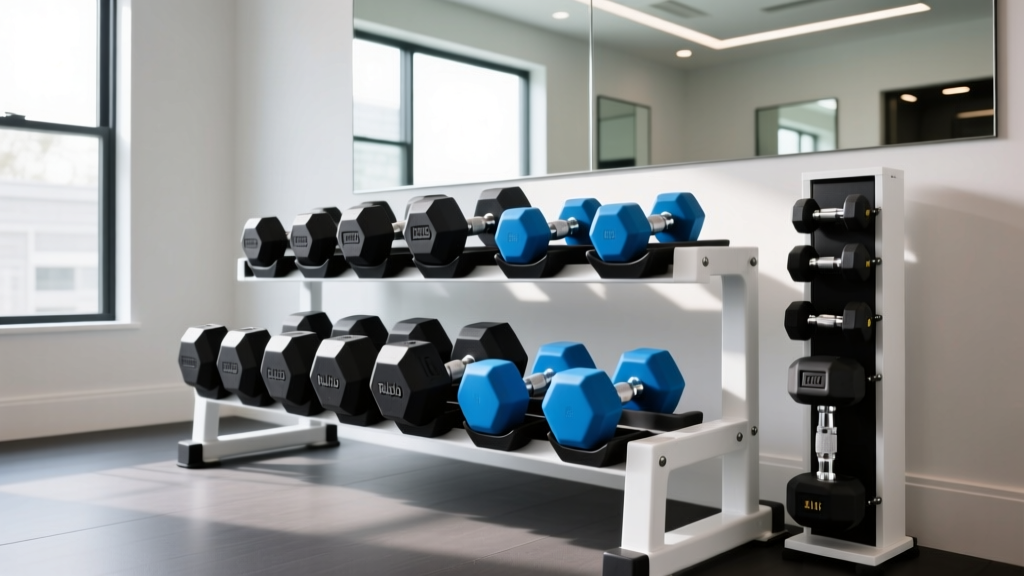
Optimizing Gym Space: Rubber Hex vs Urethane & 1lb Dumbbell Storage

Maintaining Loadable Farmers Walk Dumbbells: A Longevity Guide
