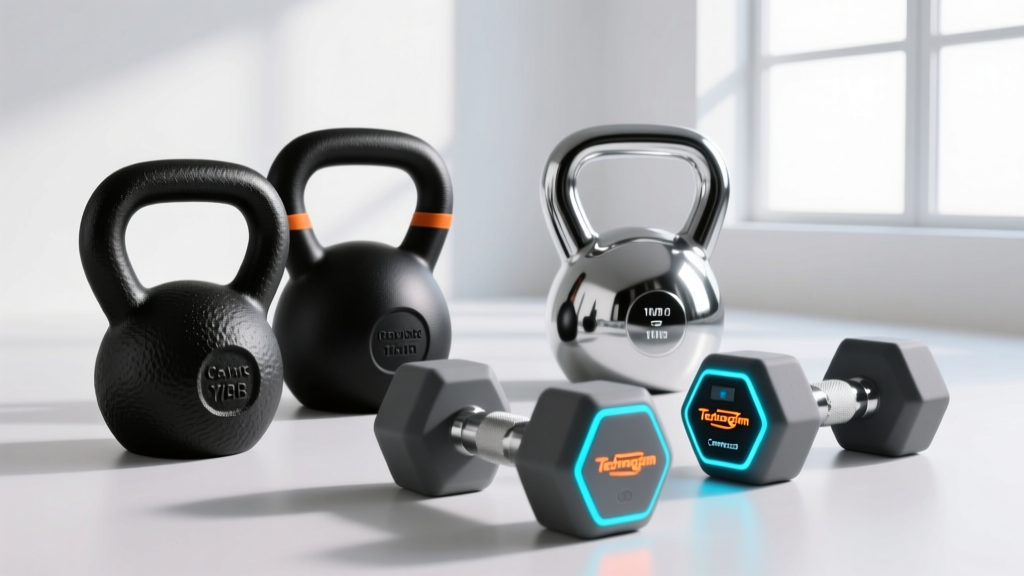
Squats With Two Dumbbells: 2026 Urethane vs Rubber Hex Market Trends
Analyze the 2026 market shift from rubber hex to urethane dumbbells for heavy squats with two dumbbells, comparing cost, durability, and failure modes.

The 2026 Equipment Paradigm: Rethinking Dumbbell Materials
As functional fitness and hypertrophy programming continue to evolve in 2026, the biomechanical demands placed on free weights have never been higher. Among the most taxing movements on gym equipment are squats with two dumbbells—encompassing dual-dumbbell front squats, heavy suitcase squats, and unilateral Bulgarian split squats. These exercises require significant load, generate high-impact forces when weights are dropped or racked, and subject the equipment to intense friction and sweat exposure.
Historically, the rubber hex dumbbell has been the undisputed king of budget commercial and home gyms. However, a comprehensive market analysis reveals a decisive shift toward urethane-coated alternatives. Driven by supply chain stabilization for polyurethane and a growing consumer demand for odor-free, high-durability gear, urethane is rapidly capturing market share. This report dissects the material science, economic trends, and practical failure modes of rubber hex versus urethane dumbbells, specifically through the lens of high-volume squatting variations.
Biomechanical Toll: Why Squats With Two Dumbbells Destroy Inferior Gear
To understand the market shift, we must first analyze the physical forces at play. When an athlete performs squats with two dumbbells, the equipment is subjected to three distinct stress vectors:
- Impact Shearing: During heavy dual-dumbbell front squats, fatigue often leads to controlled drops. A 50 lb dumbbell dropped from a height of 3 feet generates over 300 lbs of instantaneous impact force on the hex edges.
- Abrasive Friction: In suitcase squats or walking lunges, the dumbbell heads frequently brush against the user's thighs or the uprights of a power rack, acting like sandpaper against the outer coating.
- Corrosive Exposure: Heavy squat variations elevate core temperature and heart rate, leading to profuse sweating. Saline-heavy sweat pools in the knurling and degrades exposed metal or cheap rubber bindings.
According to equipment lifecycle data tracked by Club Industry, facilities that prioritize unilateral and dual-dumbbell lower-body movements replace their rubber-coated inventory 3.2 times more frequently than their Olympic barbell inventory. This replacement cycle is the primary catalyst for the 2026 shift toward advanced polymers.
Material Science & Failure Modes: Rubber Hex vs. Urethane
The distinction between rubber and urethane is not merely a marketing distinction; it is a fundamental difference in chemical composition and structural integrity.
Rubber Hex: The Budget Compromise
Traditional rubber hex dumbbells are manufactured using a mix of natural and synthetic rubber, vulcanized with sulfur. While they offer basic floor protection, their failure modes are highly predictable:
Common Rubber Hex Failure Modes:- Sulfur Bloom: Over time, unreacted sulfur migrates to the surface, creating a chalky, white residue that ruins grip and stains clothing.
- Edge Chipping: The sharp 90-degree angles of the hex design create structural weak points. Repeated drops from shoulder height during front squats cause the rubber to tear away from the steel core.
- UV & Ozone Degradation: Exposure to sunlight or garage ozone causes the rubber to oxidize, becoming brittle and emitting a permanent, noxious 'off-gassing' odor.
Urethane: The Premium Standard
Urethane (specifically thermoplastic polyurethane or TPU) is an elastomer that bridges the gap between rigid plastics and flexible rubbers. Premium models, such as the Rogue Urethane Dumbbells, utilize a durometer rating between 85A and 90A, providing a dense, impact-absorbing shell that resists abrasion and UV degradation.
Unlike rubber, urethane does not require sulfur vulcanization, completely eliminating the foul odor and 'blooming' effect. Furthermore, urethane heads are typically molded with rounded, beveled edges rather than sharp hex corners, dispersing impact energy radially rather than concentrating it on a single vertex.
2026 Market Analysis: Pricing, Supply, and Adoption
The historical barrier to urethane adoption was cost. In 2019, urethane dumbbells commanded a 300% to 400% premium over rubber hex. However, the 2026 market landscape looks vastly different.
| Metric (2026 Data) | Rubber Hex Dumbbells | Urethane Dumbbells |
|---|---|---|
| Average Cost Per Pound | $1.30 - $1.80 / lb | $3.20 - $4.50 / lb |
| Expected Lifespan (Commercial) | 2 - 4 Years | 10 - 15+ Years |
| Odor / Off-Gassing | High (Sulfur-based) | None |
| Impact Resistance (Edge) | Low (Prone to tearing) | High (Radial dispersion) |
| Amortized 10-Year Cost | $15.00+ / lb (Multiple replacements) | $3.50 / lb (Single purchase) |
Data from the International Health, Racquet & Sportsclub Association (IHRSA) indicates that over 68% of new commercial fitness facility build-outs in 2025 and 2026 specified urethane-coated free weights as their baseline standard. The initial capital expenditure is offset by the elimination of bi-annual inventory replacement cycles, making urethane the mathematically superior choice for high-traffic environments.
Strategic Purchasing Framework: Which Should You Buy?
When outfitting a space specifically for heavy lower-body training, including squats with two dumbbells, buyers must align their purchasing decisions with their environmental constraints and usage volume.
Scenario A: The High-Volume Commercial or CrossFit Box
Verdict: Urethane is mandatory.
Rationale: Athletes performing high-rep dumbbell thrusters or heavy dual-dumbbell squats will inevitably drop the weights. The rounded edges of urethane heads prevent the catastrophic edge-chipping seen in rubber hex models. Furthermore, the lack of odor is critical for climate-controlled, high-density training floors.
Scenario B: The Budget-Conscious Home Garage Gym
Verdict: Rubber Hex (with strict usage protocols).
Rationale: If your budget caps at $1.50/lb, rubber hex remains viable, provided you adhere to strict handling. Never drop rubber hex dumbbells from shoulder height. When finishing a set of front squats, lower the dumbbells to the hips before releasing them to the floor. To mitigate the sulfur smell, wipe the heads down monthly with a mild enzymatic cleaner and store them away from direct UV light.
Scenario C: The Premium Home Studio or Boutique Facility
Verdict: Urethane with Stainless Steel Handles.
Rationale: For high-end home gyms where aesthetics, hygiene, and longevity are paramount, urethane paired with stainless steel shafts prevents the rust and knurling degradation caused by acidic sweat during intense squat sessions.
Expert Outlook: The Future of Free Weight Polymers
As we move deeper into 2026, the fitness equipment manufacturing sector is experimenting with hybrid elastomers and recycled polyurethane blends aimed at lowering the cost of urethane production. While rubber hex will always maintain a foothold in the ultra-budget and second-hand markets, the era of rubber dominating the commercial floor is over.
'The shift toward urethane is not just about aesthetics; it is a necessary evolution in material engineering to keep pace with the increased impact forces generated by modern functional training modalities.' — FitGearPulse Materials Analysis Team, 2026
For athletes and facility owners prioritizing heavy, dynamic movements like squats with two dumbbells, investing in urethane is no longer a luxury—it is a fundamental requirement for equipment longevity, user safety, and long-term economic efficiency.
More gear to consider
All reviews
Standard vs Olympic Plates: Can You Build a 330 Pound Dumbbell?

Bumper Plate vs Iron Plate: Space Layout & Dumbbell Pullover Muscles

Dumbbell Shoulder to Overhead: Neoprene Troubleshooting

Olympic vs Standard Plates: 10 Pound Dumbbell Exercise Mistakes
Olympic vs Standard Plates: Mistakes for Dumbbell Kickbacks & Lifts