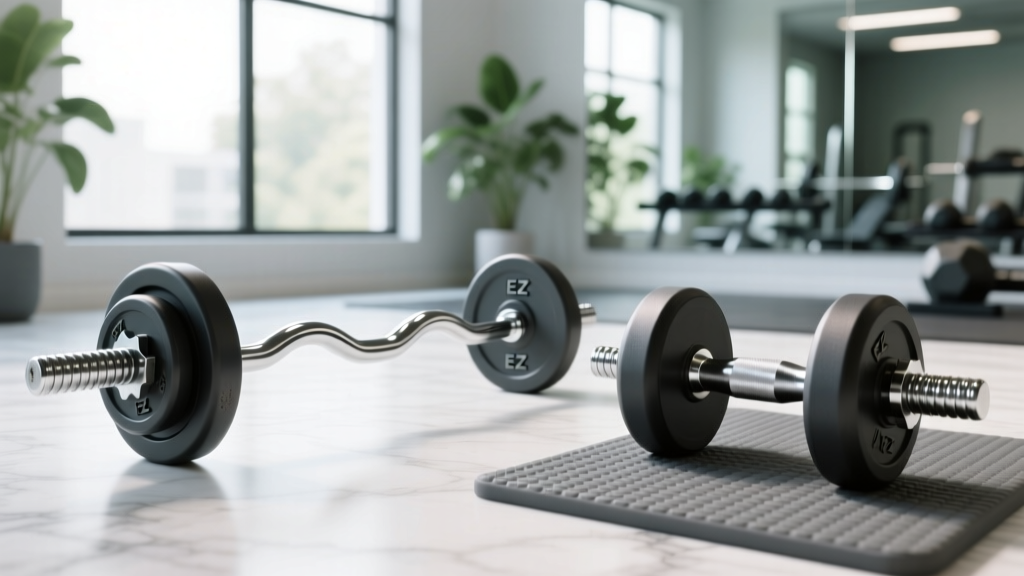
Cast Iron vs Competition Kettlebells & Back and Biceps Dumbbells Space
Optimize your home gym layout. Compare cast iron vs competition kettlebells and back and biceps dumbbells for maximum space efficiency and safety.

The Spatial Dilemma: Designing a High-Performance Compact Gym
As home gym footprints shrink and urban living spaces become more constrained in 2026, spatial efficiency has overtaken sheer equipment volume as the primary metric for a successful workout space. The average dedicated home gym now occupies between 120 and 180 square feet. Within this limited footprint, lifters face a critical layout challenge: balancing the need for heavy, ballistic implements with the isolation tools required for hypertrophy. Specifically, you must decide how to allocate your floor plan between a versatile kettlebell collection and a dedicated rack of back and biceps dumbbells.
While a full set of back and biceps dumbbells is essential for targeted isolation work like hammer curls, single-arm rows, and concentration curls, the horizontal rack space required to store a 10 lb to 50 lb set can easily consume 12 square feet of prime real estate. Conversely, kettlebells offer incredible compound movement density but introduce their own spatial complexities based on their physical design. This guide breaks down the cast iron vs competition kettlebell debate strictly through the lens of space optimization, helping you design a layout that accommodates both modalities without compromising safety or movement clearance.
Cast Iron vs. Competition Kettlebells: A Dimensional Deep Dive
The most significant spatial difference between cast iron and competition kettlebells lies in their dimensional scaling. Traditional cast iron kettlebells grow in physical volume as their weight increases. A 32kg cast iron bell is substantially wider and taller than a 16kg bell, making uniform storage difficult and requiring adjustable shelving or staggered rack layouts. According to the Garage Gym Reviews Kettlebell Guide, this variable geometry forces home gym owners to leave empty space on standard racks to accommodate the wider bell diameters of heavier weights.
Competition kettlebells, however, are manufactured to a strict, uniform international standard. Whether you are holding a 12kg or a 32kg competition bell, the physical dimensions remain identical. This uniformity is a massive advantage for space-constrained layouts, as it allows for perfectly flush, high-density vertical storage.
Dimensional & Footprint Comparison Matrix
| Kettlebell Type | Weight | Bell Diameter | Height | Handle Clearance | Rack Storage Efficiency |
|---|---|---|---|---|---|
| Cast Iron (Standard) | 16 kg (35 lbs) | 210 mm | 235 mm | Variable | Moderate (Requires spacing) |
| Cast Iron (Standard) | 24 kg (53 lbs) | 245 mm | 260 mm | Variable | Poor (Overhangs standard tiers) |
| Cast Iron (Standard) | 32 kg (70 lbs) | 280 mm | 285 mm | Tight | Very Poor (Needs bottom tier) |
| Competition Style | 16 kg (35 lbs) | 210 mm | 280 mm | 33 mm Horn | Excellent (Uniform stacking) |
| Competition Style | 24 kg (53 lbs) | 210 mm | 280 mm | 33 mm Horn | Excellent (Uniform stacking) |
| Competition Style | 32 kg (70 lbs) | 210 mm | 280 mm | 33 mm Horn | Excellent (Uniform stacking) |
Note: Data reflects standard IUKFF specifications and typical cast iron molds. As noted by Rogue Fitness, competition bells maintain a strict 280mm height and 210mm width across all weight classes, optimizing tiered rack utilization.
Layout Blueprint: Integrating Kettlebells and Dumbbell Zones
When mapping out your floor plan, you must create distinct 'zones' based on the movement radius required for the equipment. The spatial requirements for swinging a 24kg kettlebell are vastly different from those required for performing strict back and biceps dumbbells exercises.
Zone 1: The Ballistic Clearance Zone (Kettlebells)
Kettlebell swings, snatches, and cleans require a dynamic movement envelope. You must allocate a minimum clearance radius of 6 feet (72 inches) from the center of your standing position to any wall, rack, or fragile object. For a competition kettlebell setup, utilize a vertical, wall-mounted 3-tier rack. A standard wall-mounted competition rack protrudes only 14 inches from the wall and spans 30 inches wide, preserving your central floor space for the ballistic zone.
Zone 2: The Isolation Zone (Back and Biceps Dumbbells)
Isolation movements like single-arm dumbbell rows, preacher curls, and hammer curls require a much smaller spatial footprint. The movement envelope for back and biceps dumbbells is generally confined to a 3-foot radius. Because you do not need a 6-foot swing path, you can safely position your dumbbell rack in a corner or directly adjacent to a power rack upright. If floor space is at an absolute premium, consider swapping a full 10-50lb hex dumbbell set (which requires a 51-inch wide, 3-tier A-frame rack taking up 8.5 square feet) for a pair of high-end adjustable dumbbells, such as the Nuobell 80lb set, which occupy less than 2 square feet of floor space.
⚠️ CRITICAL SAFETY CLEARANCE WARNING:Never place your back and biceps dumbbell rack within the 6-foot ballistic drop zone of your kettlebell area. A dropped 24kg cast iron kettlebell will shatter hex dumbbell handles and severely damage rubber flooring. Always separate these zones by at least 4 feet, or use a heavy-duty steel power rack upright as a physical barrier between the two storage areas.
Cost vs. Space Efficiency: 2026 Market Analysis
Optimizing your layout also means optimizing your budget relative to the square footage you are consuming. The pricing landscape for free weights has shifted, making the spatial benefits of competition kettlebells more financially accessible than in previous years.
- Cast Iron Kettlebells: Currently averaging $1.60 to $2.20 per pound. While cheaper upfront, their variable sizing forces you to buy wider, more expensive floor racks to prevent overhang and tipping hazards.
- Competition Kettlebells: Averaging $3.50 to $4.80 per pound. The premium price buys you uniform dimensions, allowing you to use compact, vertical, wall-mounted storage solutions that free up valuable floor space.
- Back and Biceps Dumbbells (Fixed Hex): A full 10-50lb set costs roughly $1.20 per pound but consumes up to 12 sq ft of floor space including the rack.
- Adjustable Dumbbells (Space-Saving Alternative): A premium adjustable set costs between $400 and $600 but reduces the spatial footprint of your back and biceps zone by up to 85%.
"In a sub-150 square foot gym, spatial real estate is your most expensive asset. Paying a premium for competition kettlebells and adjustable dumbbells is actually a cost-saving measure when you calculate the price per square foot of your home's real estate." — Home Gym Layout & Ergonomics Report, 2025
Storage Solutions & Rack Placement Strategies
To finalize your layout, select storage solutions that minimize the 'dead space' beneath and behind the racks. According to specifications from Titan Fitness Storage Racks, modern storage units are designed with specific depth profiles to keep weight centers of gravity close to the wall.
- Wall-Mounted Competition KB Racks: Mount these at a height of 18 inches off the floor. This allows you to slide a low-profile bench underneath the rack when not in use, effectively double-purposing that 4-square-foot floor area.
- Vertical Dumbbell Towers: If you insist on fixed back and biceps dumbbells rather than adjustable ones, abandon the traditional horizontal A-frame rack. Optimize your layout with a vertical dumbbell tower. These units store 5 to 50 lb dumbbells in a 24-inch by 24-inch vertical column, reducing the footprint from 12 sq ft to just 4 sq ft.
- Corner Wedge Placement: Utilize the often-wasted 90-degree corners of your gym. Place your vertical dumbbell tower in the corner, and mount your competition kettlebell rack on the adjacent flat wall, creating a dedicated 'free weight alcove' that keeps the center of the room entirely open for dynamic movements.
Final Verdict: Optimizing Your Free Weight Zone
When space is the ultimate limiting factor in your home gym design, the cast iron vs competition kettlebell debate has a clear winner: competition kettlebells. Their uniform 280mm x 210mm dimensions allow for high-density, flush-mounted vertical storage that preserves your central floor space. By pairing a wall-mounted competition kettlebell rack with a vertical tower or adjustable set for your back and biceps dumbbells, you can comfortably fit a comprehensive hypertrophy and ballistic training setup into a space as small as 100 square feet. Prioritize movement clearance zones over sheer equipment volume, and your 2026 layout will remain safe, functional, and highly optimized for years to come.
More gear to consider
All reviews
Neoprene Dumbbell Mistakes: Why the Dumbbell Ball Design Fails

Bumper vs Iron Plates: Layouts & How to Build Triceps with Dumbbells
Maintaining Loadable Dumbbells for Rear Delt Dumbbell Exercises
Collar Clamp Types: Safety for Lower Back Dumbbell Exercises

Power Rack, Squat Rack, or Stand for the Dumbbell Hang Power Clean?