Dumbbell Pullover Exercise Benefits: Rack Storage & Maintenance
Discover how proper dumbbell rack storage and maintenance protects your gear, ensuring safety while maximizing dumbbell pullover exercise benefits.

The Overhead Risk: Why Storage Maintenance Dictates Pullover Safety
When athletes research the dumbbell pullover exercise benefits, they typically focus on the profound latissimus dorsi stretch, thoracic ribcage expansion, and serratus anterior activation. According to kinesiology databases like ExRx.net, the pullover is a unique multi-joint movement that bridges the chest and back musculature. However, very few lifters consider the critical equipment storage protocols that make this movement safe to perform.
The dumbbell pullover requires you to hold a single, heavy dumbbell—often ranging from 50 to over 100 pounds for advanced lifters—directly over your face, throat, and sternum. If your dumbbell handle is compromised by oxidation from improper floor storage, or if an adjustable dumbbell's internal selector pin fails because it was repeatedly slammed onto a metal rack, the consequences are catastrophic. To safely unlock the full dumbbell pullover exercise benefits, you must trust your equipment implicitly. That trust begins with how you store, rack, and maintain your free weights in your home or commercial gym.
Rack Physics: Weight Distribution and Center of Gravity
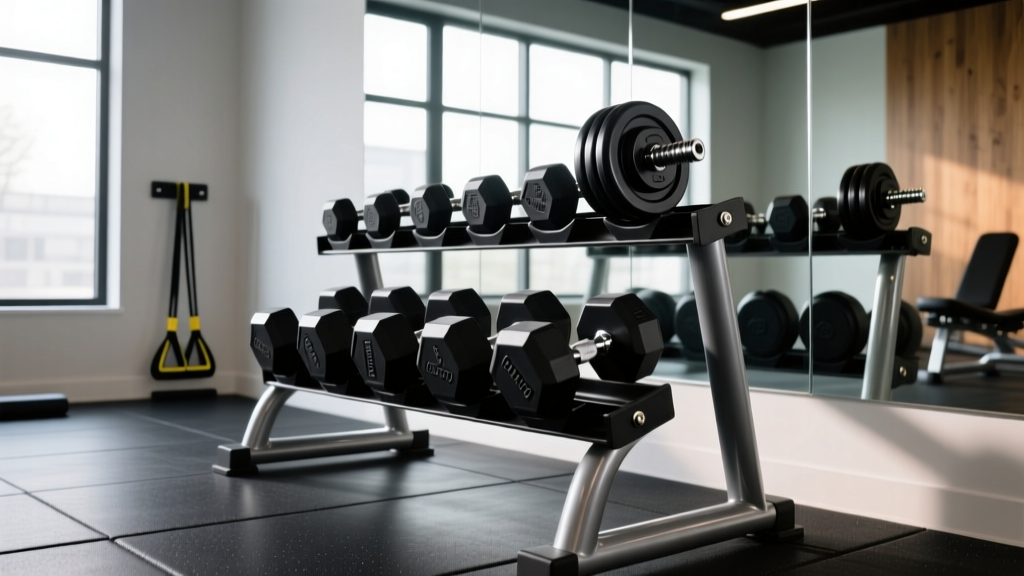
Proper storage is not just about organization; it is about preserving the structural integrity of both the rack and the dumbbells. In 2026, the most common storage solutions are A-Frame vertical racks and 3-Tier horizontal shelves. Misloading these racks is a primary cause of premature weld fatigue and tipping hazards.
Comparing 2026 Rack Solutions for Heavy Dumbbell Storage
| Rack Model | Type | Max Capacity | Footprint | Maintenance Focus |
|---|---|---|---|---|
| Rogue A-Frame Dumbbell Rack | Vertical A-Frame | ~1,200 lbs | 30" x 30" | Checking floor levelers and base pad wear. |
| Rep Fitness 3-Tier Rack | Horizontal Shelf | ~1,500 lbs | 48" x 24" | Inspecting tier welds and rubber saddle degradation. |
| PowerBlock Commercial Rack | Vertical Selector | Specific to Sets | 22" x 26" | Clearing dust from selector pin guide rails. |
As noted in equipment guides on Rogue Fitness, vertical A-frames are excellent for saving floor space, but they require strict adherence to weight symmetry. If you store a 100 lb dumbbell on the left peg and a 20 lb dumbbell on the right, the uneven torsional stress can warp the peg sleeves over time, eventually causing the rubber or urethane coating on the dumbbell heads to scrape and tear during insertion.
Knurling Integrity: Preventing Slip Failures During Eccentrics
The eccentric (lowering) phase of the pullover places immense shear force on your grip. As the dumbbell travels behind your head, the lever arm lengthens, and the rotational force trying to peel the handle out of your palms peaks. If your dumbbells are stored improperly—such as being left on a damp garage floor or in an unclimate-controlled shed—the steel handles will develop micro-oxidation (rust).
Rust acts as a mild abrasive that initially feels like 'extra grip,' but it rapidly degrades the knurling peaks, turning them smooth and brittle. When the knurling fails, your grip fails, and a heavy pullover becomes a severe facial hazard.
The Correct Knurling Maintenance Protocol
According to strength and conditioning guidelines from the National Strength and Conditioning Association (NSCA), equipment hygiene is a core component of facility safety. To preserve your dumbbell handles for heavy overhead movements:
- Avoid WD-40: Standard WD-40 is a solvent and water displacer, not a long-term lubricant. It will strip the protective oils from the steel and attract abrasive gym dust, creating a grinding paste that destroys knurling.
- Use 3-IN-ONE Oil or Mineral Oil: Apply a light coat of 3-IN-ONE multi-purpose oil to a stiff nylon brush (never wire, which damages the knurl peaks).
- Scrub and Wipe: Scrub the handle in a circular motion to lift chalk and dead skin from the knurling valleys, then wipe completely dry with a microfiber cloth before returning the dumbbell to the rack.
Adjustable Dumbbells: The Hidden Storage Vulnerability
If you utilize adjustable dumbbells like the Nuobell 80lb set or the PowerBlock Pro series to achieve the heavy loads required for advanced pullovers, your storage technique directly impacts their internal longevity. Adjustable dumbbells contain precise selector pins, magnetic locks, or polyurethane shifting plates.
"The most common failure mode for adjustable dumbbells in 2026 is not from dropping them during a lift, but from users forcefully 'slamming' them back into the storage rack cradle. The micro-shocks misalign the internal weight plates, causing the selector dial to jam or the locking pin to shear off mid-rep."
Always store adjustable dumbbells by gently guiding them into their specific rack cradles. If your rack uses universal flat shelves rather than custom-molded cradles, ensure the dumbbell is placed perfectly flat. Storing an adjustable dumbbell on its side or at an angle can cause the internal weight stacks to sag against the casing, warping the outer shell over months of static pressure.
Urethane and Rubber Degradation: Environmental Storage Factors
The outer casing of your dumbbells protects your floors and racks, but it is highly susceptible to environmental damage. Virgin rubber and premium urethane (like that found on EliteFTS or Rogue Urethane bells) will degrade, chalk, or split if exposed to UV radiation and ozone.
Position your dumbbell rack away from direct sunlight and garage windows. UV rays break down the polymer chains in rubber, causing it to dry out and crack. Once the casing cracks, moisture reaches the inner steel core, leading to structural rust that cannot be seen from the outside. A severely rusted core can cause the dumbbell head to detach from the handle—a fatal risk during a pullover.
Quarterly Rack & Dumbbell Maintenance Checklist
To ensure your equipment remains safe for demanding movements, implement this 45-minute quarterly maintenance routine:
- Inspect Rack Welds and Bolts (10 mins): Use a socket wrench to check all structural bolts on your 3-tier or A-frame rack. Look for hairline fractures in the welds, particularly where the weight saddles meet the main uprights.
- Level the Rack (5 mins): Place a carpenter's level on the top tier. Adjust the rubber foot pads at the base to ensure the rack sits perfectly flush. An unlevel rack causes dumbbells to roll slightly, stressing the handles and rack lips.
- Deep Clean Knurling (15 mins): Execute the nylon-brush and mineral oil protocol on all dumbbells in the 50lb to 100lb range, as these are the most common weights used for heavy pullovers.
- Check Urethane Seams (10 mins): Run your thumb along the seam where the dumbbell head meets the handle. If you feel any catching, separation, or excessive chalky residue, the bell is compromised and should be retired from overhead movements immediately.
- Wipe Down Rack Saddles (5 mins): Use a mild, non-bleach disinfectant to wipe the rubber saddle pads on the rack. Sweat and acidic gym chalk drip off the dumbbells and pool in these saddles, eventually eating through the rack's protective rubber lining and causing the steel shelf to rust.
Frequently Asked Questions
Can I use a standard weight bench rack for dumbbell pullover storage?
No. Standard barbell bench racks are not designed for the lateral footprint of dumbbells. Storing dumbbells on the uprights of a bench rack creates a severe tipping hazard and obstructs the path required to safely unrack a barbell. Always use dedicated, floor-standing dumbbell storage solutions.
How heavy should my dumbbell be to maximize pullover benefits?
For optimal latissimus dorsi and serratus activation, most intermediate lifters benefit from a dumbbell weighing between 35 and 65 pounds. Advanced lifters may use 80 to 100+ pounds. Because of these heavy loads, ensuring your storage rack can handle high-capacity extraction without tipping is non-negotiable.
Does storing dumbbells vertically damage the handles?
Storing standard fixed hex or round dumbbells vertically on an A-frame peg does not damage the handles, provided the peg is fully sleeved in rubber or UHMW plastic. Bare metal pegs will scrape the inner handle coating and accelerate rust formation, compromising your grip for exercises like the pullover.
More gear to consider
All reviews
Gold Dumbbell Storage: 2026 Rack Budget & Value Analysis

Best Neoprene Weights for a Dumbbell Routine for Beginners
Neoprene Dumbbells vs Centr 210 Dumbbell Set: Beginner Guide
2026 Market Trends: Finding a Leg Press Alternative with Dumbbells

EZ vs Straight Bar: Compact Layouts & Weighted Dips Dumbbell
