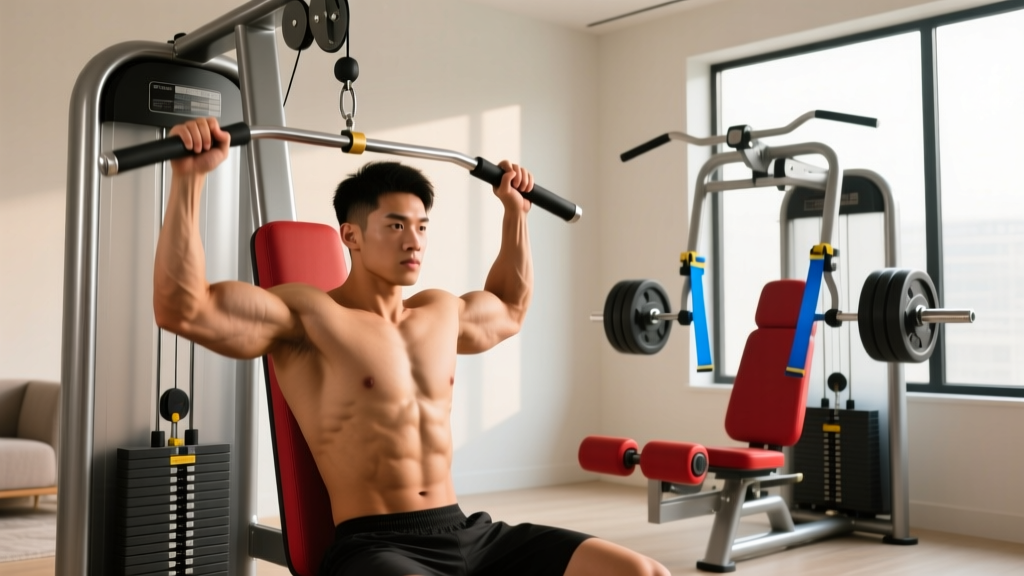
Shoulder Press Machine Maintenance & How to Use Bicep Curl Machine
Explore shoulder press machine types, essential maintenance care for longevity, and learn how to use bicep curl machines to prevent equipment wear.

The Anatomy of Upper-Body Machine Longevity
Commercial and high-end home gym equipment represents a significant capital investment. In 2026, a fully outfitted upper-body circuit can easily exceed $25,000. Yet, the lifespan of this equipment is rarely dictated by the structural steel frame; rather, it is determined by the degradation of moving parts, pivot bearings, and upholstery. Understanding the intersection of biomechanics and mechanical maintenance is critical for gym owners and serious home-gym enthusiasts alike.
This comprehensive guide bridges two vital aspects of arm and shoulder training equipment: evaluating modern shoulder press machine types and options through a lens of long-term durability, and breaking down the precise biomechanics of how to use bicep curl machine setups to prevent premature mechanical failure. When users operate equipment outside its intended kinematic path, the resulting lateral sheer forces can destroy pivot bushings in a matter of months.
Shoulder Press Machine Types and Options: A Durability Breakdown
When selecting a shoulder press machine, the drive mechanism dictates not only the feel of the lift but also the long-term maintenance footprint. The market is currently dominated by three primary architectures, each with distinct failure modes and care requirements.
| Machine Type | Top 2026 Model Example | Avg. Price Range | Primary Wear Components | Maintenance Frequency |
|---|---|---|---|---|
| Plate-Loaded (Iso-Lateral) | Hammer Strength Iso-Lateral Front Shoulder Press | $3,400 - $3,900 | Pivot bearings, horn sleeves, seat adjustment gas springs | Grease pivots bi-annually; inspect welds yearly |
| Selectorized (Pin-Loaded) | Life Fitness Signature Series Shoulder Press | $4,800 - $5,500 | Guide rods, urethane wipers, Kevlar belts, pulleys | Clean rods weekly; replace wipers annually |
| Motorized / Digital Resistance | Prime Fitness Smart Strength Shoulder Press | $6,200 - $7,100 | Optical sensors, servo motors, cooling fans | Dust sensors monthly; software calibration quarterly |
Evaluating Longevity by Drive Type
Plate-loaded machines like the Hammer Strength series are often considered the most durable because they lack the complex internal cable routing of selectorized models. However, their exposed pivot points are highly susceptible to environmental humidity and sweat corrosion. Selectorized machines offer superior user convenience but introduce the Kevlar belt—a component that, if subjected to micro-abrasions from misaligned pulleys, can snap unexpectedly. According to equipment lifecycle data published by IHRSA, selectorized machines require roughly 30% more preventative maintenance hours per year than their plate-loaded counterparts to maintain optimal safety standards.
Critical Maintenance Protocols for Shoulder Press Equipment
To maximize the ROI of your shoulder press equipment, maintenance must transition from reactive repairs to proactive preservation. Sweat is highly corrosive; the chloride ions present in human perspiration initiate galvanic corrosion on zinc-plated steel components, particularly around the seat adjustment knobs and pivot bolts.
Pro-Tip: Lubrication Chemistry MattersNever use standard WD-40 or wet silicone sprays on selectorized guide rods. Wet lubricants attract airborne dust and chalk, creating an abrasive paste that shreds the urethane wipers and scores the steel rods. Always use a PTFE (Teflon) based dry lubricant. It evaporates quickly, leaving a micro-thin frictionless film that repels dust.
- Daily (Post-Close): Wipe down all upholstery and exposed steel with a neutral pH, quaternary ammonium-based disinfectant. Avoid bleach-based cleaners, which degrade the plasticizers in vinyl and polyurethane seats, leading to cracking.
- Weekly: Wipe down selectorized guide rods with a clean, dry microfiber cloth to remove dust accumulation. Inspect the weight stack for any signs of lateral rubbing against the shroud.
- Monthly: Check all structural and pivot bolts with a torque wrench. The main cam pivot bolts on a shoulder press machine should be torqued to manufacturer specifications (typically between 45 and 60 ft-lbs). Loose bolts cause micro-movements that elongate the frame holes over time.
- Bi-Annually: Apply synthetic bearing grease to all plate-loaded pivot points. If the machine utilizes sealed ball bearings rather than bushings, listen for grinding noises, which indicate the internal grease has dried out and the bearing cartridge must be replaced.
Biomechanics Meets Durability: How to Use Bicep Curl Machine Correctly
While maintenance preserves the machine, proper user biomechanics prevents the catastrophic lateral forces that maintenance cannot fix. Understanding how to use bicep curl machine equipment correctly is not just about muscle isolation; it is about respecting the machine's axis of rotation. This is especially critical on preacher curl machines and rotary cam bicep machines.
Aligning the Axis of Rotation
The most common mechanical failure on a rotary bicep curl machine is the seizure or elongation of the main cam pivot bushing. This rarely happens from the sheer weight being lifted; it happens from misalignment. The National Strength and Conditioning Association (NSCA) emphasizes that the user's anatomical joint must perfectly align with the machine's mechanical axis of rotation.
When setting up a user on a bicep curl machine, follow these precise steps:
- Seat Height Adjustment: Adjust the seat so that the user's lateral epicondyle (the bony prominence on the outside of the elbow) is perfectly in line with the center of the machine's pivot bolt or cam axis.
- Pad Placement: The upper arm should rest flush against the preacher pad or arm brace without the armpit hanging over the top edge. If the armpit is over the edge, the user will naturally shift their weight during the concentric phase, pulling the arm pad laterally.
- Grip Alignment: Ensure the wrists are neutral and aligned with the handles. A severely bent wrist alters the force vector, transferring torque into the machine's handlebar rather than the intended cam path.
The Cost of Misalignment
What happens when a user operates the machine out of alignment? If the elbow is positioned two inches above or below the pivot point, the user's natural arc of motion conflicts with the machine's fixed arc. This creates a lateral sheer force on the pivot bolt. On a heavy load (e.g., 80 lbs of resistance), this misalignment can generate up to 45 lbs of lateral sheer stress against a 1-inch steel pivot bolt and its surrounding nylon or bronze bushing. Over 6 to 8 months of heavy commercial use, this sheer force will physically elongate the bushing housing, resulting in the dreaded 'clunk' sound at the bottom of the movement and eventual cam seizure.
'Equipment longevity is inextricably linked to user education. A perfectly maintained bicep curl machine will still fail prematurely if the facility's members consistently misalign their joints with the machine's cam axis.' — Facility Management Best Practices, Life Fitness Academy
Troubleshooting Common Arm Machine Failure Modes
Even with rigorous maintenance and biomechanical education, arm training equipment will exhibit wear. Recognizing early warning signs can save thousands in replacement parts.
1. Squeaking Pivot Points on Shoulder Presses
Diagnosis: Lack of lubrication or degraded grease turning into an abrasive compound due to dust ingress.
Solution: Disassemble the pivot bolt, clean the shaft and bushing with a degreaser, inspect the bushing for scoring, and repack with high-viscosity synthetic lithium grease. Do not simply spray surface lubricant into the joint; it will not penetrate the load-bearing surface.
2. Weight Stack 'Sticking' or Dropping Unevenly
Diagnosis: Scored guide rods or degraded urethane wipers allowing chalk dust into the center stem of the weight plates.
Solution: Replace the wipers immediately. If the guide rods are visibly scored (you can feel ridges with your fingernail), the rods must be replaced. Attempting to sand down a scored rod will remove the case-hardening, leading to rapid rust and further degradation.
3. Vinyl Tearing at the Stitch Lines on Preacher Pads
Diagnosis: Users dragging elbow skin or wearing abrasive clothing, combined with the vinyl drying out from harsh chemical cleaners.
Solution: Switch to a pH-neutral cleaner. For high-wear environments, consider retrofitting the machine with high-density polyurethane (HDPU) pads, which resist tearing and sweat absorption significantly better than traditional vinyl.
Final Thoughts on Equipment Stewardship
Maximizing the lifespan of your arm and shoulder training equipment requires a dual-pronged approach. You must select the right shoulder press machine types and options that align with your maintenance capacity, and you must actively educate your users on the precise mechanics of how to use bicep curl machine setups to protect the internal hardware. By combining rigorous, chemistry-aware cleaning protocols with strict biomechanical alignment standards, you can easily extend the functional lifespan of your upper-body circuit well past the industry average, ensuring a safe, smooth, and profitable training environment for years to come.
More gear to consider
All reviews
12 Practical DIY Beginner Ideas for Body Arms Enthusiasts
Training for Infrared: A Tactical Operator’s Guide to Thermal Detection, Avoidance, and Countermeasures

How To Match Athletes With Care: A Precision Framework for Protective Equipment Selection

Equip Body Chest Tools Checklist: Precision, Safety, and Clinical Readiness for Respiratory & Cardiac Assessment

Arm Workout Equipment Names: Tricep Rope vs Bar Compared
