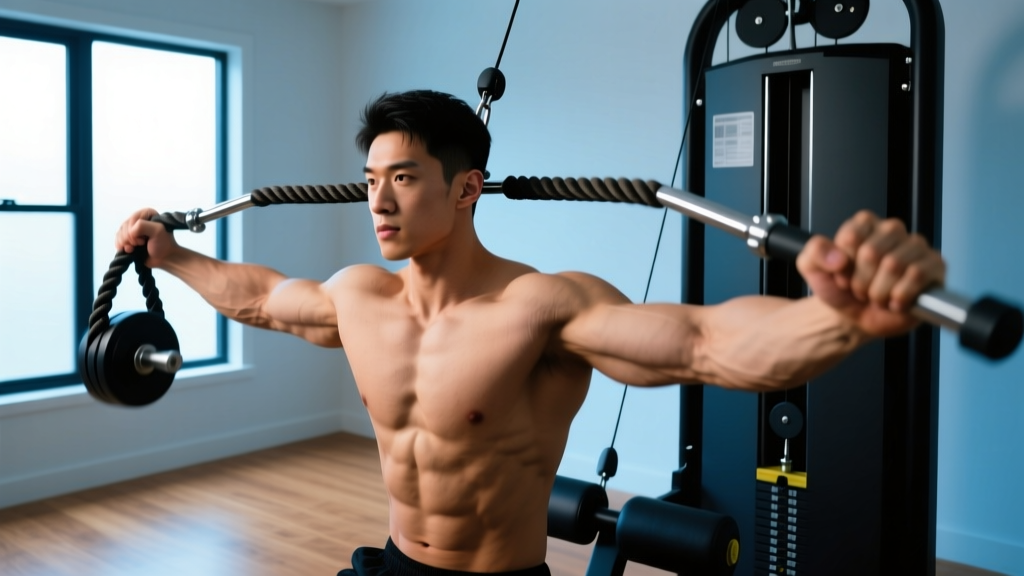
Tricep Rope vs Bar Attachment: Better Than the Dumbbell Wrist Curl?
Compare the tricep rope and straight bar attachment for cable pushdowns. Discover which builds more mass and how they outperform the dumbbell wrist curl.

The 2026 Arm Training Paradigm: Cables vs. Free Weights
When building a comprehensive arm training protocol, the debate between cable attachments and free-weight isolation exercises is a cornerstone of modern hypertrophy programming. In 2026, the fitness industry has largely shifted toward understanding stretch-mediated hypertrophy and continuous tension curves. While many lifters obsess over forearm isolation movements, true arm mass requires prioritizing the triceps brachii, which makes up roughly 60% of your upper arm volume. This brings us to a critical equipment showdown: the tricep rope versus the straight/EZ bar attachment. How do they compare, and why do they outperform traditional free-weight staples like the dumbbell wrist curl for overall arm development?
Common Forum Query: "I've been doing the dumbbel wrist curl for months but my forearms plateau and my triceps aren't growing. Should I switch to cables?"
Expert Insight: This highlights a frequent anatomical misconception. Wrist curls target the forearm flexors (flexor carpi radialis/ulnaris), not the triceps. To build the back of the arm, you must utilize elbow extension exercises like cable pushdowns.
The Biomechanics of Cable Pushdowns
According to ExRx.net's biomechanical directory, the cable pushdown is a single-joint isolation exercise that leverages a continuous resistance profile. Unlike gravity-dependent free weights, where the resistance vector is strictly vertical, cables allow you to align the resistance vector directly with the muscle fibers of the lateral and medial tricep heads.
When you perform a free-weight tricep extension (like a lying dumbbell skullcrusher), the tension drops to near-zero at the top of the movement when the weight is stacked directly over the elbow joint. Cable attachments eliminate this 'dead zone,' providing maximal mechanical tension from the stretched position all the way through the peak contraction.
Tricep Rope Attachment: Deep Dive & Top 2026 Models
The tricep rope is the gold standard for maximizing the peak contraction phase of the pushdown. Because the rope is not a fixed solid bar, it allows your hands to rotate and pull past your hips, increasing the range of motion (ROM) and forcing a harder squeeze in the lateral head of the tricep.
Pros and Cons of the Rope
- Pros: Superior peak contraction, allows natural wrist rotation (reducing joint strain), highly effective for the lateral tricep head.
- Cons: Grip fatigue often precedes tricep failure; difficult to overload with maximal weight due to the instability of the flexible rope.
Top 2026 Rope Models
- Rogue Fitness Monster Tricep Rope ($48.00): Features a 1.25-inch diameter braided nylon rope with aggressive knurled aluminum end-caps. The thicker diameter increases grip demand, making it ideal for lifters who want to simultaneously tax their forearm extensors.
- Titan Fitness Heavy Duty Tricep Rope ($34.99): A budget-friendly but highly durable option with a 1.5-inch thickness. The rubberized end-stops prevent hand slippage during high-rep drop sets, a common 2026 hypertrophy technique.
Straight and EZ Bar Attachments: Load and Stability
If the rope is the king of the squeeze, the bar attachment is the king of mechanical overload. A solid steel bar eliminates the stabilizing demands of a rope, allowing you to push closer to your absolute one-rep max (1RM) for tricep extensions. This makes it superior for targeting the medial and long heads of the triceps under heavy loads.
Pros and Cons of the Bar
- Pros: Maximum load capacity, highly stable, excellent for progressive overload and eccentric (negative) overloading.
- Cons: Straight bars can cause severe wrist extension torque; limits the ROM at the bottom of the movement compared to a rope.
Top 2026 Bar Models
- CAP Barbell 14" Chrome Tricep Bar ($27.50): A classic straight bar with medium-depth diamond knurling. Best suited for lifters with excellent wrist mobility who prioritize raw load over ergonomic comfort.
- Yes4All EZ Curl/Pushdown Bar ($24.99): The EZ bar's 30-degree angled grips are a game-changer for pushdowns. It places the wrists in a semi-supinated position, drastically reducing ulnar deviation pain while still allowing for heavy loading. This is the most highly recommended bar attachment for aging lifters or those with a history of wrist tendinopathy.
Head-to-Head Comparison Matrix
| Feature | Tricep Rope | EZ / Straight Bar |
|---|---|---|
| Max Load Capacity | Moderate (Limited by grip) | High (Stable steel base) |
| Wrist Ergonomics | Excellent (Free rotation) | Poor (Straight) / Good (EZ) |
| Peak Contraction | Superior (Pull past hips) | Moderate (Stops at thighs) |
| Primary Tricep Head | Lateral Head | Medial & Long Heads |
| Best Rep Range | 12-20 (Metabolic stress) | 6-12 (Mechanical tension) |
Addressing the Forearm Gap: The Dumbbell Wrist Curl
While cable pushdowns dominate tricep development, a complete 2026 arm protocol requires dedicated forearm isolation. This is where the dumbbell wrist curl enters the conversation. However, lifters must understand the biomechanical limitations of this free-weight movement.
When performing a traditional dumbbell wrist curl over a bench, the resistance curve is highly uneven. At the bottom of the movement (full wrist extension), the moment arm is longest, and tension on the forearm flexors is maximal. As you curl the weight up into full flexion, the weight stacks directly over the wrist joint, and tension drops to near zero.
To optimize the dumbbell wrist curl, modern hypertrophy coaches recommend utilizing lengthened partials. Instead of curling all the way up where tension is lost, perform the bottom two-thirds of the ROM where the mechanical tension is highest. Alternatively, performing wrist curls on a cable machine with a straight bar attachment behind the back provides a smooth, continuous tension curve that free weights simply cannot match.
Programming Framework: The Ultimate Arm Day
To maximize arm hypertrophy, the National Strength and Conditioning Association (NSCA) suggests combining heavy mechanical loading with metabolic stress. Here is a highly effective, structurally balanced arm routine that leverages both bar and rope attachments while respecting forearm recovery.
- Heavy EZ Bar Pushdowns: 3 sets of 6-8 reps. Focus on a 3-second eccentric (lowering) phase. Rest 2 minutes between sets.
- Rope Pushdowns (Lengthened Bias): 3 sets of 12-15 reps. Set the cable pulley slightly higher than usual to increase the stretch on the triceps at the top of the movement. Rest 90 seconds.
- Behind-the-Back Cable Wrist Curls: 3 sets of 15-20 reps. This replaces the traditional dumbbell wrist curl to ensure continuous tension on the forearm flexors without the dead-zone at the top of the rep.
- Overhead Rope Extensions: 2 sets to failure. Targets the long head of the tricep in its fully stretched position.
Frequently Asked Questions
Can I use a tricep rope for forearm training?
While gripping a thick tricep rope (like the 1.5-inch Titan Fitness model) during pushdowns will indirectly tax your forearm extensors and brachioradialis, it is not a substitute for direct flexion work. You still need dedicated wrist curls or reverse curls for complete forearm development.
Why do my wrists hurt on the straight bar pushdown?
Straight bars force your wrists into extreme extension and ulnar deviation, which can compress the carpal tunnel and strain the triangular fibrocartilage complex (TFCC). If you experience pain, immediately switch to an EZ bar attachment or a tricep rope, both of which allow for a more neutral, ergonomic wrist alignment.
How often should I train arms for optimal growth?
Current hypertrophy research indicates that training a muscle group twice per week yields superior results compared to a once-a-week 'bro split.' Integrate one heavy bar-focused arm session and one high-rep rope-focused arm session into your weekly routine to hit all three heads of the triceps and both compartments of the forearms.
More gear to consider
All reviews
Preacher Bench Setup: Planet Fitness Biceps Curl Machine vs Home Gear

Overhead Bicep Curl Machine vs Free Weights: 2026 Market Trends

2026 Arm Gear Trends: Free Weights vs Bicep Curl Machines

12 Proven DIY Cold Ideas for Home, Workshop, and Emergency Preparedness
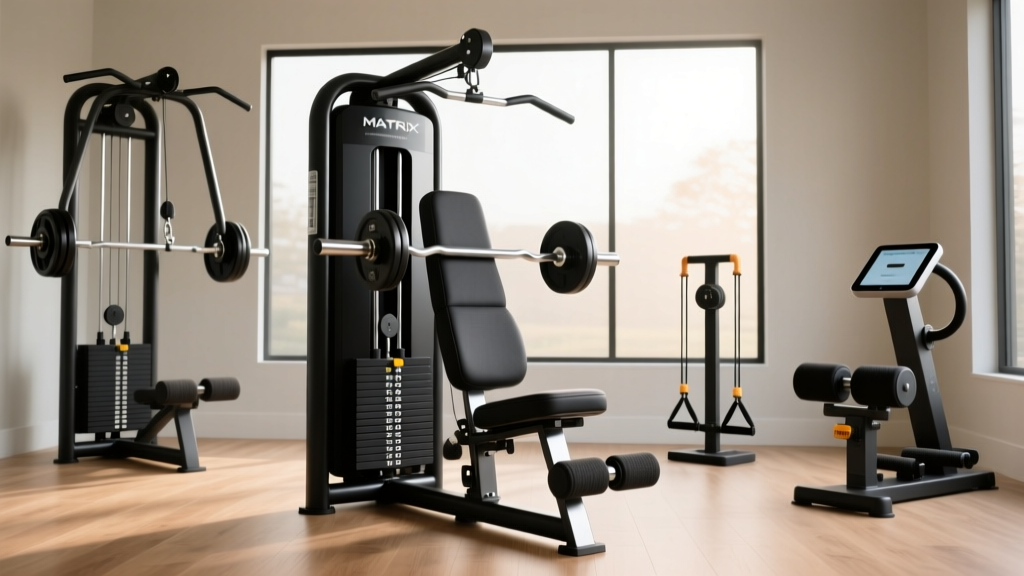
Matrix Bicep Curl Machine & Top Alternatives: 2026 Buyer Guide
