
Maintaining Loadable Dumbbells: Dumbbell Bench to Barbell Bench
Discover essential maintenance tips for loadable dumbbells with interchangeable plates as you upgrade from a dumbbell bench to barbell bench setups.

The Training Shift: Why Your Maintenance Demands Change
Upgrading your home gym from a basic dumbbell bench to barbell bench configurations is a major milestone. It signals a shift toward heavier compound pressing and structured periodization. However, this evolution fundamentally changes how you use your loadable dumbbells with interchangeable plates. When a dumbbell bench was your primary station, your loadable dumbbells likely sat locked at heavy weights for low-rep sets, enduring occasional drops but minimal mechanical manipulation. Once you transition to a barbell bench for your heavy flat and incline presses, your loadable dumbbells are relegated to high-volume accessory work: lateral raises, tricep extensions, and single-arm rows. This means you are swapping interchangeable plates three to four times more often per workout. More frequent plate changes equate to accelerated thread wear, locking mechanism fatigue, and tolerance degradation. Understanding this biomechanical shift is the first step in preserving the longevity of premium equipment like the Ironmaster Quick-Lock V2 or Titan Fitness Loadable Handles in 2026.
⚠ Critical Warning: Never use standard WD-40 on dumbbell threads or locking pins. Standard WD-40 is a solvent and water-displacer, not a long-term lubricant. It leaves a sticky residue that attracts gym chalk, dead skin, and metallic dust, effectively creating a grinding paste that will destroy your threading within months.Thread and Locking Mechanism Care (Model-Specific)
Loadable dumbbells generally fall into two categories regarding their retention systems: spinlock collars and screw-in/pin-lock systems. Each requires a distinct maintenance protocol to survive the increased handling of an accessory-focused routine.
Spinlock Systems (e.g., Titan Fitness Loadable Handles)
Spinlock handles, such as the popular Titan Fitness Loadable Dumbbell Handles (retailing around $89.99), rely on coarse steel threading and a star-lock collar. The primary enemy here is galvanic corrosion accelerated by sweat (which has a pH between 4.5 and 7.0).
- Cleaning: After every session, wipe the threaded shaft with a microfiber cloth lightly dampened with a 50/50 mix of distilled water and isopropyl alcohol to neutralize sweat acids.
- Debris Removal: Once a month, use a brass wire brush (never steel, which will strip the zinc coating) to clear chalk and dust from the thread valleys.
- Lubrication: Apply a dry PTFE (polytetrafluoroethylene) spray. According to tribology experts at Machinery Lubrication, dry film lubricants are ideal for gym equipment because they dry instantly and do not trap particulate matter.
Screw-in and Quick-Lock Systems (e.g., Ironmaster Quick-Lock V2)
Premium systems like the Ironmaster Quick-Lock V2 (priced around $419 in 2026) use a threaded locking screw that pushes a steel retention pin through the handle and plates. Because you are now changing weights more frequently for accessory work, the risk of cross-threading increases exponentially when users rush between sets.
- Alignment Protocol: Always back the locking screw out counter-clockwise until you feel the threads 'click' into place before tightening. This prevents cross-threading, which can permanently warp the internal retention pin.
- Torque Limits: Hand-tighten only. Over-torquing past 15 ft-lbs (using tools or excessive grip strength) can compress the urethane plates and cause the screw head to strip.
- O-Ring Inspection: The V2 system relies on internal rubber O-rings to reduce rattle. Inspect these bi-annually; if they flatten or crack, replacement kits are available directly from the manufacturer for under $15.
Plate Tolerance and Rattle Mitigation
As interchangeable plates are swapped repeatedly, microscopic wear on the center holes can lead to 'plate rattle'—a phenomenon where the plates shift during eccentric movements, altering the center of gravity and stressing the locking pin. Below is a diagnostic matrix for managing plate tolerances.
| System Type | Acceptable Gap Tolerance | Common Failure Mode | Shim / Fix Solution |
|---|---|---|---|
| Spinlock (Steel Plates) | Up to 1.5mm lateral play | Collar loosens mid-set due to vibration | Add 1mm rubber friction shims between plates |
| Screw-in Pin (Urethane) | Zero lateral play (compression fit) | Urethane compression set (flattening) | Replace inner O-rings; do not over-torque screw |
| Magnetic / Dial Systems | 0.5mm maximum variance | Chalk blocks magnetic engagement | Compressed air blowout; isopropyl wipe |
The Barbell Bench Clearance Hazard
When you introduce a dedicated barbell bench (especially an FID bench with heavy-duty uprights and spotter arms) into your space, you inadvertently create a new hazard for your loadable dumbbells. In a pure dumbbell-bench setup, dropping the weights to the floor at the end of a set is standard practice. However, when using dumbbells for accessory work on or around your new barbell bench, users often attempt to 'rack' the dumbbells on the barbell spotter arms or the edge of the bench pad. Never drop or rest loadable dumbbells on steel barbell bench uprights. The impact shock transfers directly through the interchangeable plates into the locking mechanism. While a fixed hex dumbbell can survive this, a loadable dumbbell's locking pin will sheer, or the spinlock collar will warp, rendering the handle useless. Always return them to a dedicated rubber-lined dumbbell rack or the floor.
'Home gym owners frequently underestimate the sheer force generated when a 50lb loadable dumbbell is dropped onto a steel rack arm. The deceleration spike can easily exceed 400 lbs of localized force on the retention pin.' — Equipment Safety Analysis, Garage Gym Reviews (Source)
Knurling Preservation and Rust Prevention
The knurling on loadable dumbbell handles is typically shallower than Olympic barbell knurling to prevent tearing the hands during high-rep accessory work. Because you are now gripping these handles for higher-rep sets (e.g., 15-20 rep lateral raises), sweat accumulation is heavier.
- Immediate Wipe Down: Use a dry, stiff nylon brush to dislodge dried sweat and chalk from the knurling valleys immediately post-workout.
- Monthly Deep Clean: Spray the handle with a dedicated gym equipment cleaner (avoid bleach or ammonia-based products, which accelerate oxidation on bare steel).
- Protective Coating: If your loadable handles feature bare steel or black oxide finishes (common on budget spinlocks), apply a micro-thin layer of 3-IN-ONE oil once a month, letting it sit for 10 minutes before buffing it completely dry with a towel.
Your 12-Month Loadable Dumbbell Maintenance Calendar
To ensure your interchangeable plate system survives the transition to a barbell-centric gym, adhere to this strict maintenance schedule:
- Weekly: Wipe down handles and plates with a neutral pH cleaner. Inspect spinlock collars for hairline fractures.
- Monthly: Brass-brush the threading on spinlock handles. Apply dry PTFE lubricant to all male and female threads. Check Ironmaster locking screws for stripping or metal shavings.
- Bi-Annually: Disassemble the dumbbells completely. Wash urethane/rubber plates with mild dish soap and warm water to remove accumulated sebum and chalk. Inspect internal O-rings and retention pins for shear stress.
- Annually: Calibrate your weight. Use a digital floor scale to weigh the fully assembled dumbbell. If a 50lb dumbbell reads under 48.5lbs, the internal plates may have cracked or degraded, requiring a warranty claim.
By respecting the mechanical limitations of loadable dumbbells and adapting your care routine to match your new training split, you will protect your investment and ensure safe, effective accessory work for years to come.
More gear to consider
All reviews
Cast Iron vs Competition Kettlebells & Dumbbell Shoulder Press Bench

Bumper vs Iron Plates: Beyond Single Dumbbell Shoulder Workouts
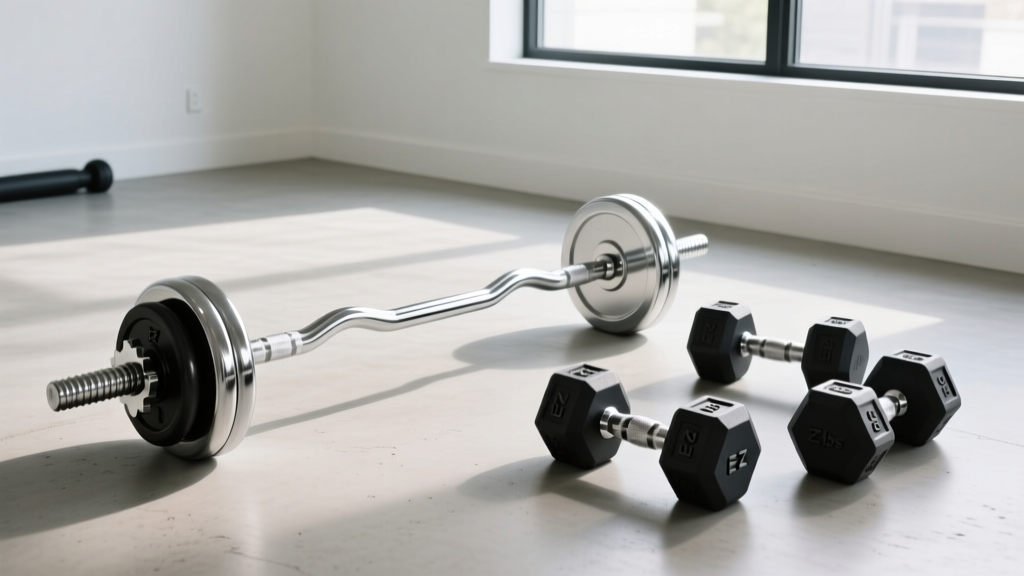
EZ Bar vs Straight Bar Care & Around the Worlds Dumbbells
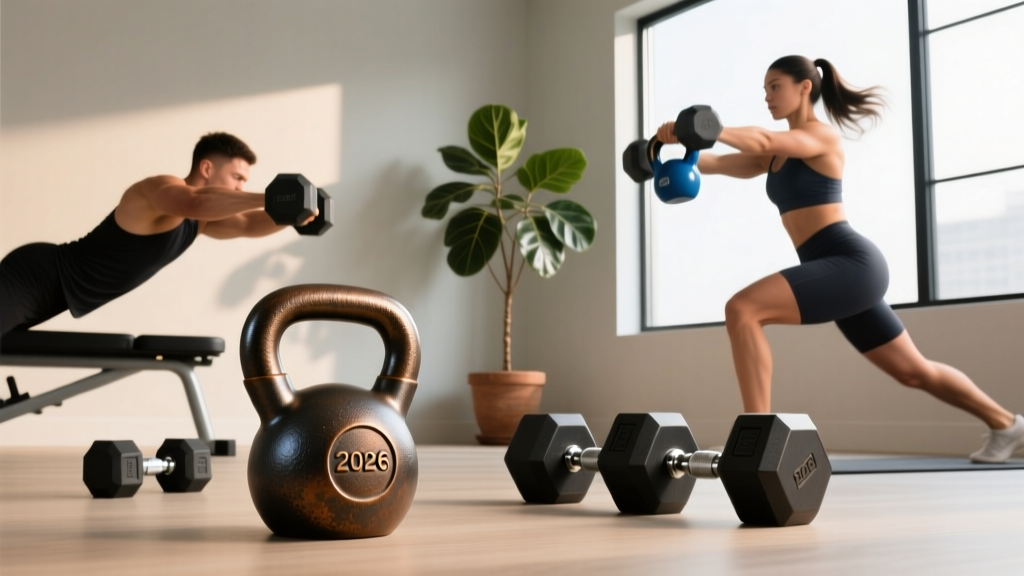
Dumbbell Pullovers Out? 2026 Cast Iron vs Competition Kettlebell Guide

Home Gym Setup: Barbell Clamps & Lateral Raise Machine vs Dumbbell
