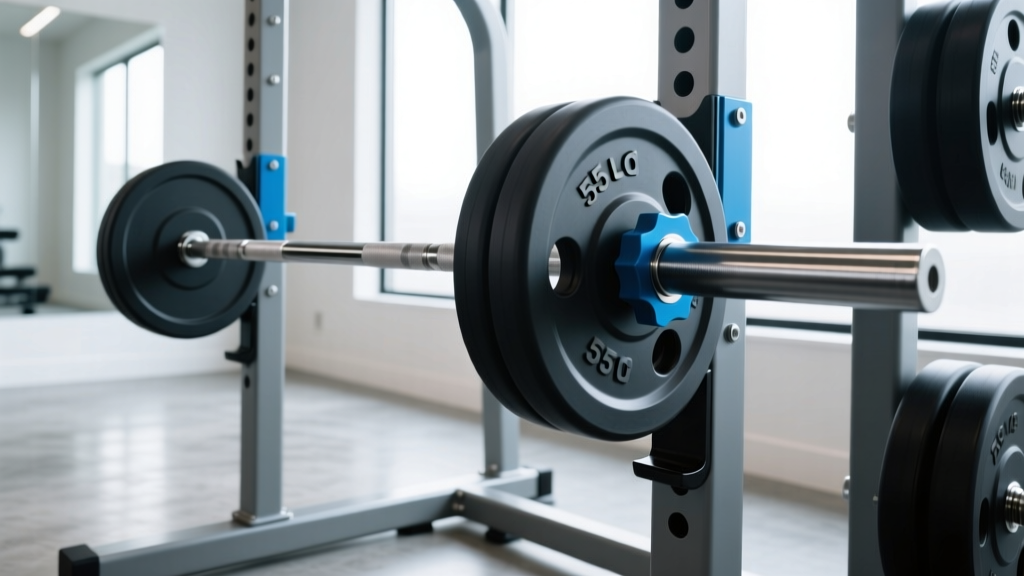
Building a Custom 55 Dumbbell: Olympic vs Standard Plate Mistakes
Avoid catastrophic failures when building a custom 55 dumbbell. We troubleshoot common Olympic vs standard weight plate mistakes and sleeve limits.

The DIY Dumbbell Dilemma: Why Your 55 Dumbbell Build Might Be Failing
Assembling a custom plate-loaded dumbbell is a cost-effective way to scale your home gym, especially when you need specific weight increments for unilateral work. Many lifters aim to build a 55 dumbbell (a 55-pound setup per hand) to bridge the gap between moderate pressing and heavy single-arm rows or goblet squats. However, the most common point of catastrophic failure in home gyms occurs when lifters misunderstand the fundamental differences between Olympic and standard weight plates, handles, and collars.
If you have ever experienced a wobbling sleeve, a collar slipping mid-rep, or the frustrating realization that your plates simply will not fit on the handle, you are not alone. This troubleshooting guide breaks down the exact mechanical and mathematical mistakes lifters make when mixing 1-inch standard gear with 2-inch Olympic hardware, and how to engineer a rock-solid 55 lb dumbbell setup in 2026.
⚠️ SAFETY WARNING: Never use plastic or cheap aluminum 1-inch to 2-inch sleeve adapters for heavy dumbbell work. The dynamic shear force of a 55 lb dumbbell during a floor press can snap these adapters, causing plates to slide off and potentially crush your face or torso.The Core Mistake: Confusing 1-Inch Standard with 2-Inch Olympic
The most foundational error in free weight assembly is assuming all weight plates share the same center hole diameter. According to international weightlifting standards, the dimensions are strictly bifurcated:
- Standard Plates: Feature a 1-inch (25.4 mm) center hole. These are typically found in budget-friendly, big-box store sets.
- Olympic Plates: Feature a 2-inch (50.8 mm) center hole, designed to fit the rotating sleeves of commercial-grade barbells and premium loadable dumbbell handles.
Troubleshooting the 'Wobble' Effect
If you are trying to slide Olympic plates onto a standard handle (or vice versa using a makeshift shim), you will introduce a massive degree of lateral play. A 55 dumbbell requires tight tolerances. Even a 2-millimeter gap between the plate hole and the handle sleeve will amplify into a violent wobble at the outer edge of the plate. This wobble alters the center of gravity during a lift, forcing your rotator cuff to overcompensate and drastically increasing the risk of a dropped weight.
The Sleeve Length Math: Why Standard Gear Fails at 55 lbs
One of the most non-obvious reasons lifters fail to build a proper 55 dumbbell using standard equipment is sleeve capacity. Let us look at the exact mathematics of loading a 55 lb dumbbell using standard 1-inch hardware versus Olympic hardware.
Scenario A: The Standard Rubber Grip Plate Failure
Assume you have a standard 1-inch dumbbell handle. The handle itself weighs roughly 2.5 lbs. To reach 55 lbs, you need 52.5 lbs of plates per hand. If you are using 10 lb rubber-coated standard grip plates (which are notoriously thick, averaging 1.6 inches wide each), you need five 10 lb plates and one 2.5 lb plate per side.
The Failure Point: Five 10 lb rubber plates equal 8 inches of width. Most standard dumbbell sleeves are only 7 to 7.5 inches long. You physically cannot fit enough rubber standard plates on the sleeve to reach 55 lbs. The collar will have no threading left to grip, rendering the setup entirely unsafe.
Scenario B: The Olympic Cast Iron Solution
Now, look at an Olympic setup. A premium loadable handle (like the Rogue Loadable Dumbbell Handle) weighs 5 lbs and features a 10-inch loadable sleeve. To reach 55 lbs, you need 50 lbs of plates. Using standard 2-inch cast iron plates (which are much denser and thinner than rubber grip plates), four 10 lb plates and two 5 lb plates per side will only consume about 4.5 inches of sleeve space. This leaves over 5 inches of clearance for a heavy-duty lock collar.
Expert Insight: 'When building heavy unilateral implements, density is your best friend. Transitioning from rubber-coated standard plates to machined cast iron or urethane Olympic plates is the only reliable way to achieve high-weight, low-profile dumbbell builds without exceeding sleeve limits.' — Home Gym Engineering Review, 2025
Olympic vs. Standard: 2026 Comparison Matrix
When deciding which ecosystem to invest in for your plate-loaded dumbbells, consider the long-term scalability. As noted by fitness equipment analysts at BarBend, standard plates are a dead-end for serious lifters due to their lack of compatibility with commercial barbells and racks.
| Feature | Standard (1-Inch) | Olympic (2-Inch) |
|---|---|---|
| Center Hole Diameter | 1 inch (25.4 mm) | 2 inches (50.8 mm) |
| Handle Weight | ~2.0 to 3.0 lbs | ~5.0 to 8.0 lbs (includes sleeve bearings) |
| Max Safe Load (Per Handle) | 45 - 60 lbs (Thread/Shear limits) | 150 - 200+ lbs |
| 2026 Avg Cost (Cast Iron) | $1.10 - $1.40 / lb | $1.60 - $2.20 / lb |
| Collar Security | Spinlock (Prone to loosening) | Clamp/Spring (Highly secure) |
Step-by-Step Troubleshooting: Fixing a Slipping Collar
If you have correctly matched your Olympic plates to an Olympic handle, but your 55 dumbbell is still shifting during use, the issue lies in your collar selection and sleeve maintenance. Follow this troubleshooting protocol:
- Degrease the Sleeve: New dumbbell handles are shipped with a thick coat of anti-rust oil. If you do not wipe this off with a degreaser and a microfiber cloth, clamp collars will slide right off mid-rep.
- Ditch the Spring Clips: Standard wire spring clips are designed for barbells where gravity keeps the plate seated. On a dumbbell, the plate orientation changes constantly. Spring clips will fail.
- Upgrade to Lock-Jaw or Machined Clamps: Invest in specialized dumbbell collars. The Lock-Jaw Pro Dumbbell Collars or machined aluminum clamp collars provide the necessary radial clamping force to secure a 55 lb load during dynamic movements like renegade rows or heavy goblet squats.
- Check for Sleeve Burrs: Run a cloth along the end of the handle sleeve. If it snags, there is a metal burr from the manufacturing process preventing the collar from seating flush against the outer plate. Sand it down with 400-grit sandpaper.
Edge Case: The '55mm' Grip Confusion
A secondary troubleshooting scenario occurs when lifters search for a '55 dumbbell' but are actually referring to a 55mm thick-handled fat grip dumbbell. If you are sliding Olympic plates onto a 55mm thick-grip adapter, you must account for the severe reduction in loadable sleeve length. A standard Olympic dumbbell handle offers a 10-inch sleeve, but adding a 55mm fat grip adapter can consume up to 5 inches of that real estate. You will be limited to roughly 35-40 lbs of plates before the collar runs out of room. For true 55 lb+ fat grip work, you must purchase a specialized extended-sleeve fat grip handle.
Final Verdict: Abandon the Standard Ecosystem
If your goal is to build a reliable, heavy-duty 55 dumbbell (or eventually scale up to 80+ lb dumbbells for heavy unilateral pressing), the standard 1-inch ecosystem is a mathematical and mechanical trap. The sleeve lengths are too short for thick plates, the spinlock collars loosen under rotational torque, and the handles lack the sheer strength for heavy drops. Invest in a 2-inch Olympic loadable handle and pair it with dense, machined cast iron or urethane Olympic plates to ensure your hardware is as resilient as your work ethic.
More gear to consider
All reviews
Olympic vs Standard Plates: Guide to Dumbbell Squats for Men
EZ Curl Bar vs Straight Bar: Budget Value & Dumbbell Lat Exercises

Cast Iron vs Competition Kettlebells & Seated Dumbbell Row Pairings
How Heavy Are the Dumbbells You Lift? Form Over Fitness Video Hype

Urethane vs Rubber Hex: 2026 Gear for the NYT Dumbbell Workout
