Rogue Loadable Dumbbells vs Neoprene Weights: Home Gym Guide
We compare Rogue loadable dumbbells against neoprene coated fixed weights for home gyms, breaking down cost, space, and biomechanics.

The 2026 Home Gym Dilemma: Plate-Loaded vs. Fixed Weight
Building a comprehensive free weight section in a home gym inevitably leads to a critical crossroads: do you invest in a space-saving, plate-loaded system, or do you commit to the premium feel and convenience of fixed-weight racks? For athletes targeting the 5 to 50-pound range, the debate frequently narrows down to two distinct philosophies. On one side, we have the highly engineered Rogue loadable dumbbells, a favorite among garage gym purists who value barbell-like knurling and modularity. On the other side, we have the traditional neoprene coated dumbbell for home use, prized for its floor-friendly exterior, grab-and-go convenience, and commercial-gym aesthetic.
In this head-to-head comparison, we are stripping away the marketing fluff to examine the exact economics, biomechanical differences, and long-term failure modes of both systems. Whether you are outfitting a spare bedroom or a climate-controlled garage, understanding the material science and spatial requirements of these two options is essential for making a smart equipment investment this year.
Contender A: Rogue Loadable Dumbbells
Specs, Pricing, and the 'Ohio Bar' Feel
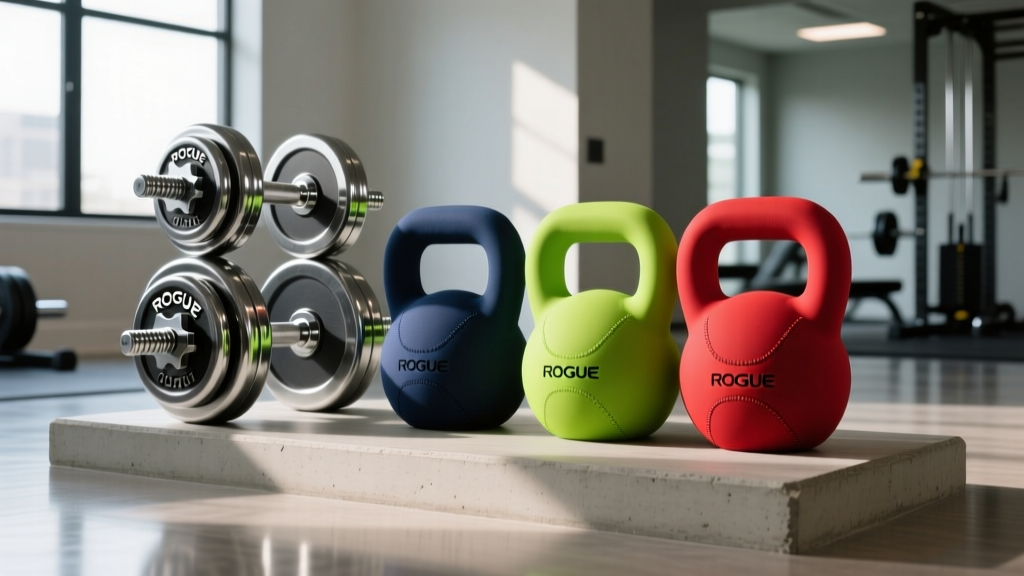
The Rogue Loadable Dumbbell Handles are essentially miniature Olympic barbells. Machined from solid steel, they feature a 1.2-inch grip diameter and an aggressive knurl pattern that closely mimics the renowned Rogue Ohio Bar. The overall length is 13.5 inches, with 6.25-inch sleeves designed to accept standard 2-inch Olympic plates. Priced at approximately $110 per pair, the handles themselves are a bargain. However, the true cost lies in the plates required to make them functional.
To utilize Rogue loadable dumbbells effectively, you need a diverse inventory of fractional and standard plates. Because the sleeves are 6.25 inches long, loading a 50-pound dumbbell requires low-profile urethane or precision-machined steel plates; standard thick rubber bumpers will max out the sleeve length long before you hit heavy weight thresholds. According to equipment analysts at Garage Gym Reviews, the primary advantage of loadable handles is the unparalleled grip texture and the ability to micro-load, which is crucial for rehabilitation and progressive overload on isolation movements.
Contender B: Premium Neoprene Coated Fixed Dumbbells
The Economics of Fixed Sets and Material Realities
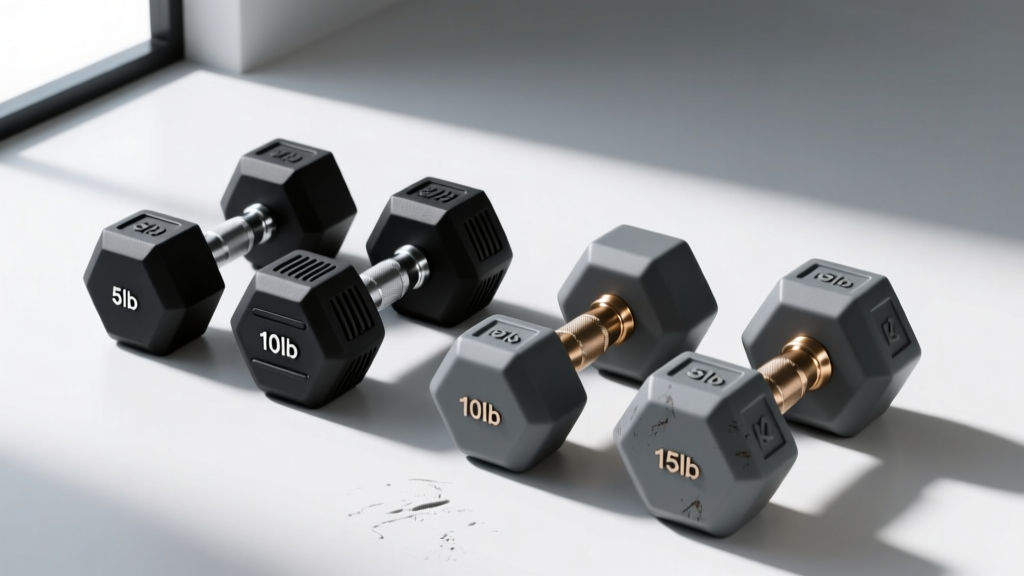
Neoprene is a synthetic rubber that offers a softer, more tactile exterior than traditional cast iron or harsh recycled rubber. When evaluating a neoprene coated dumbbell for home use, the primary draw is residential compatibility. Neoprene will not scuff hardwood floors, it dampens acoustic vibration when set down on rubber matting, and it lacks the pungent 'tire shop' off-gassing odor associated with cheap crumb-rubber dumbbells.
However, neoprene is not indestructible. Unlike high-density urethane, which can survive repeated drops from shoulder height, neoprene is prone to slicing and tearing if dropped onto bare concrete. Furthermore, neoprene is susceptible to UV degradation; if your home gym is in a sunroom or a garage with direct sunlight exposure, the coating will eventually fade, dry out, and begin to flake after 3 to 5 years. Brands like CAP Barbell and Rep Fitness dominate this space, with pricing generally hovering between $1.60 and $2.20 per pound depending on the set configuration.
Head-to-Head: 5lb to 50lb System Breakdown
Calculating the true cost and spatial footprint to achieve a 5-50 lb range in 5 lb increments (10 pairs / 11 total plates per side for loadable).
| Feature | Rogue Loadable System | Neoprene Fixed Set (10 Pairs) |
|---|---|---|
| Total Weight Required | ~105 lbs of plates + 10 lb handles | 550 lbs total dumbbell mass |
| Estimated 2026 Cost | $110 (handles) + $350 (plates) = $460 | ~$990 (at $1.80/lb average) |
| Floor Space Footprint | 2 sq ft (handles + plate tree) | 12-16 sq ft (requires 2-3 tier racks) |
| Setup Time per Set | 45-90 seconds (stripping/loading) | 0 seconds (grab and go) |
| Drop Durability | High (Steel on steel, requires mats) | Moderate (Neoprene tears on concrete) |
Biomechanics and Center of Mass: A Hidden Difference
One of the most overlooked factors in the plate-loaded versus fixed-weight debate is the shift in the center of mass. When you perform a lateral raise or a chest fly with a fixed neoprene dumbbell, the weight is distributed evenly along a compact, centralized horizontal axis. The American Council on Exercise (ACE) frequently highlights how the stabilizer muscles in the rotator cuff and wrist must adapt to the specific leverage of free weights.
"When using loadable dumbbells with larger diameter plates, the center of mass shifts outward, away from the hand. This increases the rotational inertia, forcing the wrist stabilizers to work significantly harder during pressing and fly movements compared to the compact profile of a fixed hex dumbbell."
If you are using Rogue loadable dumbbells with standard 10-pound or 25-pound urethane plates, the physical width of the dumbbell expands. This can interfere with the range of motion on exercises like dumbbell skull crushers or deep goblet squats, where the plates may collide with your knees or forehead. Fixed neoprene dumbbells maintain a consistent, compact profile regardless of the weight, allowing for uninterrupted biomechanical tracking.
Edge Cases and Failure Modes
Before pulling the trigger on either system, home gym owners must consider the real-world failure modes that manufacturers rarely advertise in their product descriptions:
- Neoprene Slippage: During high-sweat metabolic conditioning (like dumbbell thrusters or renegade rows), neoprene coatings can become surprisingly slick. Unlike bare steel knurling that bites into the skin, smooth neoprene relies entirely on chalk and grip strength, which can be a limiting factor for heavy farmers carries.
- Snap Ring Fatigue on Loadables: Many plate-loaded handles, including older iterations of loadable systems, rely on snap rings to secure the plates. If you frequently drop the dumbbells from the top of a chest press, the sheer force can warp the snap ring groove, leading to catastrophic plate slippage. Always use heavy-duty collars or ensure your specific handle model uses a threaded or machined end-cap retention system.
- The 'Clanking' Factor: If you live in an apartment or a home with shared walls, loading and unloading steel plates onto steel Rogue handles generates high-decibel metallic clanking. Neoprene dumbbells, when placed gently on a rack, are virtually silent, making them vastly superior for early-morning or late-night residential workouts.
The Final Verdict: Which System Wins Your Floor Space?
The choice between Rogue loadable dumbbells and a neoprene coated dumbbell for home use ultimately hinges on your training style, spatial constraints, and budget. If you are a strength-focused lifter who prioritizes aggressive knurling, micro-loading capabilities, and wants to keep their equipment footprint under three square feet, the Rogue loadable system is the undisputed champion. It offers a barbell-quality grip at a fraction of the cost of a full fixed-weight rack.
Conversely, if your training involves high-volume supersets, drop sets, or fast-paced HIIT circuits where stopping to unscrew collars and swap plates would ruin your heart-rate zone, the neoprene fixed set is mandatory. The premium you pay for fixed neoprene weights is essentially a 'convenience tax'—you are buying back your time and maintaining your workout intensity. Just ensure you keep them out of direct sunlight and pair them with a dedicated multi-tier rack to keep your home gym organized and safe.
More gear to consider
All reviews
Barbell Collar Types: Secure Gear for Single Leg Dumbbell RDLs

Best Neoprene Dumbbells for a Men's Full Body Dumbbell Workout 2026

Best Adjustable Dumbbells for a Total Body Dumbbell Routine (2026)

Olympic vs Standard Plates for a Dumbbell Stomach Workout Setup
Power Rack vs Squat Rack vs Stand: Setup & Reverse Grip Curls Dumbbell