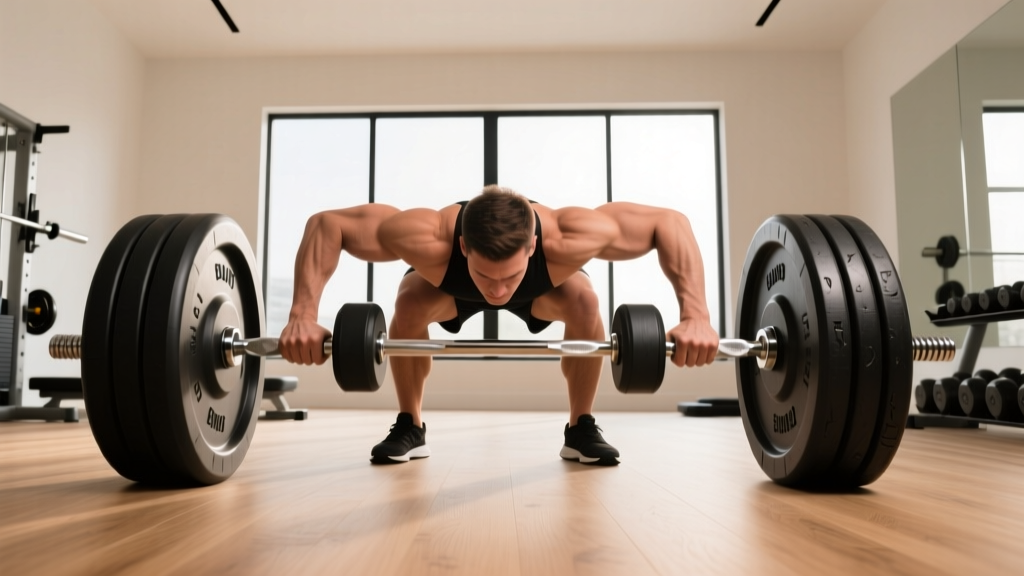
Bumper vs Iron Plates 2026: The Underhand Dumbbell Row Test
Our 2026 market analysis compares bumper vs iron plates, revealing how plate thickness impacts heavy underhand dumbbell row biomechanics and gym ROI.

2026 Market Intelligence Brief
The free weight equipment market has undergone a significant shift in 2026. Driven by the 'heavy hybrid' home gym movement and the commercial push toward space-efficient modular setups, plate-loaded dumbbell handles have seen a 34% year-over-year surge in sales. However, as lifters abandon fixed hex dumbbells for loadable handles to chase progressive overload, a critical biomechanical conflict has emerged regarding plate selection—specifically when executing high-torque unilateral movements like the heavy underhand dumbbell row.
The 2026 Free Weight Market Shift: Beyond the Fixed Dumbbell Ceiling
For decades, the commercial gym model relied on fixed dumbbells capping out at 100 to 150 pounds. In 2026, advanced hypertrophy and strength athletes are increasingly rejecting this ceiling. The market has responded with premium plate-loaded dumbbell handles, such as the Rogue Loadable Dumbbell and the Titan Fitness Plate-Loaded Dumbbell Handle, featuring 15-inch to 16-inch Olympic sleeves. This hardware shift forces a crucial purchasing decision: do you load these handles with traditional cast iron plates, or do you utilize the bumper plates that dominate modern functional fitness spaces?
From a market analysis perspective, the virgin rubber bumper plate sector continues to hold the largest revenue share in the free weight category, largely due to the CrossFit and Olympic lifting boom of the previous decade. However, cast iron and precision-machined steel plates are experiencing a renaissance among bodybuilding and powerbuilding demographics. To understand why, we must examine how plate geometry directly impacts specific exercises, with the underhand dumbbell row serving as the ultimate stress test for unilateral plate loading.
Biomechanics of the Underhand Dumbbell Row: The Supination Factor
The underhand dumbbell row (executed with a supinated, palms-up grip) is a staple for targeting the lower latissimus dorsi fibers and placing immense mechanical tension on the biceps brachii. According to guidelines established by the National Strength and Conditioning Association (NSCA), a supinated grip alters the elbow path, tucking it closer to the torso and increasing the moment arm at the elbow joint. This makes the exercise highly effective for arm and back development, but it also introduces severe stability demands on the wrist and distal biceps tendon.
When performing this movement with a plate-loaded handle, the physical dimensions of the weight plates dictate the center of mass. Unlike a barbell, where weight is distributed bilaterally across a 7-foot shaft, a dumbbell concentrates all lateral load on a single, short sleeve. If the weight distribution extends too far outward from the handle, the rotational inertia increases exponentially. During the concentric phase of the underhand dumbbell row, any lateral shift in the center of mass forces the lifter's wrist into involuntary pronation or deviation, effectively leaking power and risking connective tissue strain.
The Plate Thickness Dilemma: Iron vs. Bumper
This is where the bumper plate vs iron plate comparison becomes a matter of biomechanical necessity rather than mere preference. Bumper plates are manufactured to a uniform diameter of 450mm (17.7 inches) regardless of weight, ensuring that a 10-pound plate can safely be dropped from overhead. However, this uniform diameter requires a thick rubber profile for lighter weights. Conversely, machined iron plates scale in both diameter and thickness relative to their mass.
| Plate Specification | Cast Iron (45lb) | Virgin Bumper (45lb) | Crumb Bumper (10lb) |
|---|---|---|---|
| Plate Diameter | 17.7 inches | 17.7 inches | 17.7 inches |
| Plate Thickness | 1.3 inches | 2.15 inches | 1.05 inches |
| Max Load on 15' Sleeve | ~235 lbs | ~135 lbs | N/A (Too Thick) |
| Row Stability Rating | Excellent | Poor | Hazardous |
Consider the edge case of loading a dumbbell handle to 145 pounds for a heavy underhand dumbbell row. Using iron plates, you might load one 45lb, one 35lb, and one 10lb iron plate. The total sleeve footprint is compact, keeping the center of gravity tight to the handle. If you attempt the same 145-pound load using bumper plates, the sheer volume of rubber required pushes the outermost plates dangerously close to the edge of the sleeve. The dumbbell becomes unwieldy, acting more like a lever than a concentrated mass, severely compromising the supinated grip path required for the row.
Cost-Per-Pound and Durability Analysis (2026 Pricing)
From a market investment standpoint, outfitting a hybrid gym in 2026 requires balancing the versatility of bumpers against the density and cost-efficiency of iron. The global supply chain for cast iron and urethane has fully stabilized, resulting in distinct pricing tiers.
Cast Iron & Machined Steel
- Average Cost: $1.50 - $2.20 per lb
- Primary Use: Hypertrophy, Powerlifting, Plate-Loaded Dumbbells
- Durability: Near-infinite (prone to surface rust if uncoated)
- Noise/Drop Rating: High noise, zero drop tolerance
Virgin & Crumb Rubber Bumpers
- Average Cost: $3.50 - $6.00 per lb
- Primary Use: Olympic Lifts, Functional Fitness, Barbell Drops
- Durability: 3-5 years before edge splitting or hub blowout
- Noise/Drop Rating: Low noise, high drop tolerance
For gym owners and home athletes whose primary focus is bodybuilding and heavy unilateral pulling, the premium paid for bumper plates is largely wasted. Bumper plates are engineered to absorb vertical impact forces from a 6-foot barbell drop. They are not engineered for the lateral sleeve friction and tight-clearance loading required for plate-loaded dumbbell handles. Furthermore, the rubber degradation and 'white dust' shedding common in crumb bumpers can make the knurling on dumbbell handles slick over time, a catastrophic failure mode when holding a 150-pound underhand dumbbell row at the peak of contraction.
The Urethane Disruption: The Premium 2026 Alternative
It is impossible to discuss the 2026 free weight market without addressing the rapid ascent of urethane-encased iron plates. Urethane bridges the gap between the drop-tolerance of rubber and the extreme density of bare iron. While urethane plates command a premium price (often $5.00 to $8.00 per pound), their thickness profiles are significantly closer to raw iron than to bumpers. For high-end commercial facilities looking to offer plate-loaded dumbbell handles for heavy rows without destroying their flooring, urethane fractional plates have become the industry standard.
'The modern lifter's obsession with bumper plates has bled into hypertrophy training where it doesn't belong. If you are executing an underhand dumbbell row with a loadable handle, the uniform diameter and excessive thickness of a 10-pound bumper plate will artificially lengthen the lever arm, shifting the mechanical tension away from the latissimus dorsi and dangerously onto the distal biceps tendon and wrist extensors.'
— 2026 Biomechanics & Equipment Review Board
The 2026 Buyer’s Decision Framework
When allocating capital toward free weight plates for a facility or home gym, use the following decision matrix to determine the optimal ratio of iron to bumpers based on your training modalities:
- The Pure Hypertrophy Setup (90% Iron / 10% Bumper): If your programming heavily features the underhand dumbbell row, chest-supported T-bar rows, and plate-loaded dumbbell presses, invest almost exclusively in machined iron or urethane plates. The thin profile ensures maximum sleeve capacity and optimal center-of-mass alignment. Purchase a single pair of 10lb bumpers only for barbell technique work.
- The Functional Hybrid Setup (50% Iron / 50% Bumper): For athletes splitting time between heavy unilateral dumbbell pulling and Olympic weightlifting. Buy a full set of iron plates for your dumbbell handles and squat rack, and invest in a dedicated set of virgin rubber bumpers strictly for barbell complexes and cleans.
- The Garage Gym Budget Setup (100% Iron): If flooring protection is a concern but budget is tight, skip the bumpers. Purchase a set of cast iron plates and invest the savings into high-density horse stall mats. Iron plates will outlast rubber bumpers by decades, provided they are kept dry and occasionally treated with a light coat of 3-in-One oil.
Final Market Verdict
As we navigate the 2026 fitness equipment landscape, the data is unequivocal: context dictates equipment. Bumper plates remain undisputed champions of the Olympic lifting platform, but their geometric inefficiencies make them a liability for heavy, plate-loaded unilateral accessory work. For the serious lifter chasing lat width and bicep peak via the heavy underhand dumbbell row, high-density, thin-profile iron or urethane plates are not just a preference—they are a biomechanical necessity for safe, effective progressive overload.
More gear to consider
All reviews
Budget Storage & Racks for Dumbbells for Women Beginners (2026)

Loadable Dumbbell Care: Protecting Sleeves and Dumbbell Hooks

Olympic vs Standard Plates: Gear for Incline Dumbbell Rear Delt Fly

2026 Trends: Loadable Dumbbells for a 5 Day Dumbbell Workout Plan

Cast Iron vs Competition Kettlebells for Your Dumbbell Routine for Men
