
Rep Fitness Urethane Dumbbells vs. Olympic vs. Standard Plates
We compare Rep Fitness urethane dumbbells against Olympic and standard weight plates to help you choose the ultimate free weight setup for your home gym.

The Home Gym Free Weight Dilemma: Fixed vs. Plate-Loaded
When outfitting a home gym in 2026, the most critical decision you will face is choosing your primary resistance modality. Do you invest in a premium fixed-weight setup like the REP Fitness urethane dumbbells, or do you build a traditional plate-loaded system using Olympic or standard weight plates? Each option offers distinct advantages regarding space, biomechanics, budget, and long-term durability. This head-to-head comparison breaks down the exact specifications, pricing structures, and real-world failure modes of these three free weight categories to help you make an informed, data-driven purchase.
Contender 1: REP Fitness Urethane Dumbbells
Fixed dumbbells are the backbone of commercial gyms, and the REP Fitness urethane dumbbell lineup represents the upper echelon of home gym quality. Unlike adjustable dumbbells that rely on mechanical dials or fragile locking pins, fixed urethane dumbbells offer zero setup time and unparalleled structural integrity.
Material Science: Why Urethane?
Urethane is a premium elastomer that vastly outperforms traditional rubber. Cheap rubber dumbbells are notorious for off-gassing volatile organic compounds (VOCs), leaving your garage smelling like a tire fire for months. Urethane is completely odorless, UV-resistant, and impervious to ozone cracking. Furthermore, the REP Fitness models feature a 35mm handle diameter with aggressive, multi-directional knurling that mimics a high-quality barbell, ensuring grip security during heavy unilateral movements like Bulgarian split squats or dumbbell Romanian deadlifts.
Pricing and Footprint
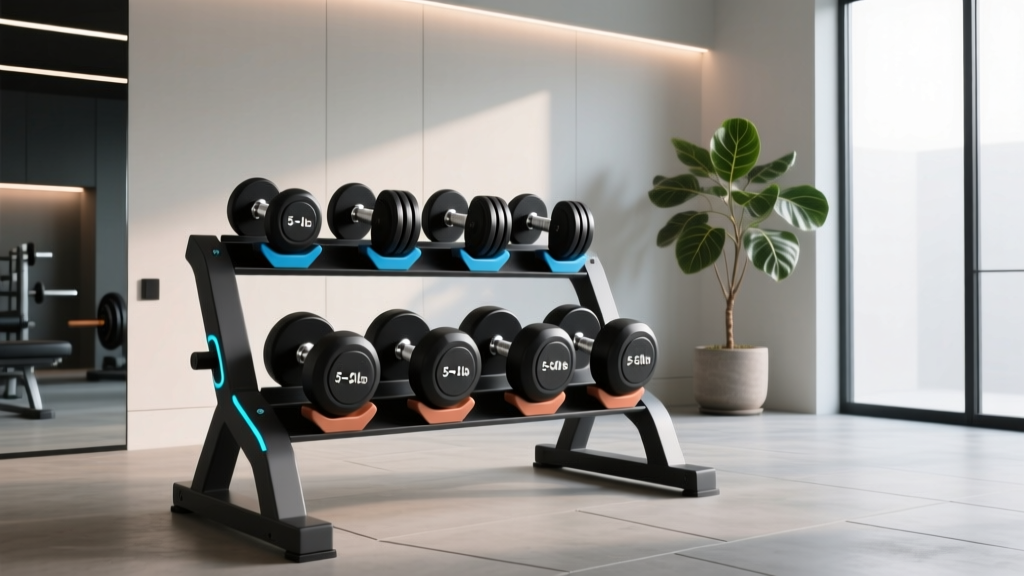
The primary drawback to fixed dumbbells is the cost and spatial footprint. As of 2026, premium urethane dumbbells average between $3.00 and $3.50 per pound. A standard 5-to-50 lb set (10 pairs) will cost upwards of $3,200 and requires a dedicated 3-tier or 5-tier dumbbell rack, consuming roughly 4.5 feet of horizontal wall space.
Contender 2: Olympic Weight Plates (The 2-Inch Standard)
The Olympic plate system is the undisputed gold standard for powerlifting, Olympic weightlifting, and heavy compound movements. Governed by the specifications of the International Weightlifting Federation (IWF), Olympic plates feature a 2-inch (50.4mm) center hole designed to slide onto heavy-duty barbell sleeves.
Load Capacity and Biomechanics
Olympic plates allow for virtually limitless progressive overload. A standard 7-foot Olympic barbell can hold over 800 lbs of plates, and the sleeves rotate independently via bushings or bearings, reducing torque on your wrists during dynamic lifts like the clean and jerk. Full-sized 45lb Olympic plates adhere to a strict 450mm (17.7-inch) diameter, ensuring consistent starting heights for deadlifts and barbell rows regardless of the brand you purchase.
The Hidden Costs of Going Olympic
While Olympic plates themselves are relatively affordable (ranging from $1.50 to $2.50 per pound for cast iron or bumper plates), the ecosystem required to use them is expensive. You must purchase a 45lb Olympic barbell ($200–$350), a power rack or squat stand ($300–$800), and heavy-duty storage pegs. The total entry price for a functional 300lb Olympic setup easily exceeds $1,200.
Contender 3: Standard Weight Plates (The 1-Inch Budget Route)
Standard weight plates feature a 1-inch (25.4mm) center hole. These are commonly found in big-box sporting goods stores and are typically constructed from either solid cast iron or a cement/sand mixture encased in a vinyl shell. According to resistance training guidelines from the National Strength and Conditioning Association (NSCA), while standard plates can facilitate beginner hypertrophy and general fitness, they possess severe mechanical limitations for intermediate and advanced lifters.
Failure Modes and Limitations
The most critical failure mode of the standard 1-inch system is the barbell itself. Standard barbells are typically made from lower-tensile steel with a yield strength far below Olympic bars. Loading a standard barbell beyond 200–250 lbs often results in permanent plastic deformation (bending) of the bar. Additionally, the 1-inch sleeves are notoriously short, meaning you will run out of physical space to slide plates onto the bar long before you reach your muscular failure point on heavy compound lifts like squats or deadlifts.
Head-to-Head Comparison Matrix
| Feature | REP Urethane Dumbbells | Olympic Plates (2-Inch) | Standard Plates (1-Inch) |
|---|---|---|---|
| Center Hole / Handle | 35mm Knurled Steel | 50.4mm (2-Inch) | 25.4mm (1-Inch) |
| Average Cost Per Pound | $3.00 - $3.50 | $1.50 - $2.50 | $0.75 - $1.25 |
| Max Practical Load | 120+ lbs (per hand) | 800+ lbs (barbell dependent) | ~200 lbs (before bar yields) |
| Odor / Off-Gassing | Zero (Odorless) | Minimal (Rubber bumpers) | High (Vinyl/Cement/Rubber) |
| Primary Use Case | Unilateral work, isolation, HIIT | Heavy compounds, powerlifting | Beginner fitness, light toning |
Financial & Spatial Breakdown (2026 Market Reality)
To truly understand the value proposition, we must look at the total cost of ownership and the spatial footprint required for a complete workout experience.
- The REP Urethane Route: Buying a 5-50lb set (1,100 total lbs) costs roughly $3,300, plus $350 for a 3-tier rack. Total: $3,650. Footprint: 5 feet wide, 2 feet deep. No spotter required for most movements.
- The Olympic Route: A 45lb bar ($250), 300lbs of Echo Bumper plates ($600), and a flat bench ($150). Total: $1,000. Footprint: 8 feet long, 4 feet wide (plus rack space). Requires a spotter or safety straps for heavy benching.
- The Standard Route: A 15lb standard bar ($30), 200lbs of vinyl-cement plates ($150), and a basic bench ($60). Total: $240. Footprint: Minimal, easily slid under a bed. Severe ceiling on progressive overload.
The Final Verdict: Which Setup Should You Buy?
Your choice ultimately depends on your training age, budget, and spatial constraints.
Choose REP Fitness Urethane Dumbbells If:
You are focused on bodybuilding, hypertrophy, unilateral athleticism, or high-intensity interval training (HIIT). If you have the budget for a premium fixed-weight set and want a commercial-gym experience with zero setup time, zero maintenance, and no foul odors, urethane dumbbells are an unbeatable investment. They are also significantly safer for solo lifters who do not have a power rack with safety spotter arms.
Choose Olympic Weight Plates If:
Your primary goals revolve around raw strength, powerlifting, or Olympic weightlifting. If you need to progressively overload barbell squats, deadlifts, and bench presses beyond 250 lbs, the 2-inch Olympic system is non-negotiable. It offers the highest ceiling for human performance and the best cost-per-pound ratio for heavy loading.
Choose Standard Weight Plates If:
You are on an extreme budget, live in a small apartment, and only require light resistance for general health, rehabilitation, or beginner-level conditioning. Treat standard plates as a temporary stepping stone; once you can comfortably lift the maximum load your 1-inch barbell can hold, you will inevitably need to upgrade to an Olympic system or heavy adjustable dumbbells to continue progressing.
More gear to consider
All reviews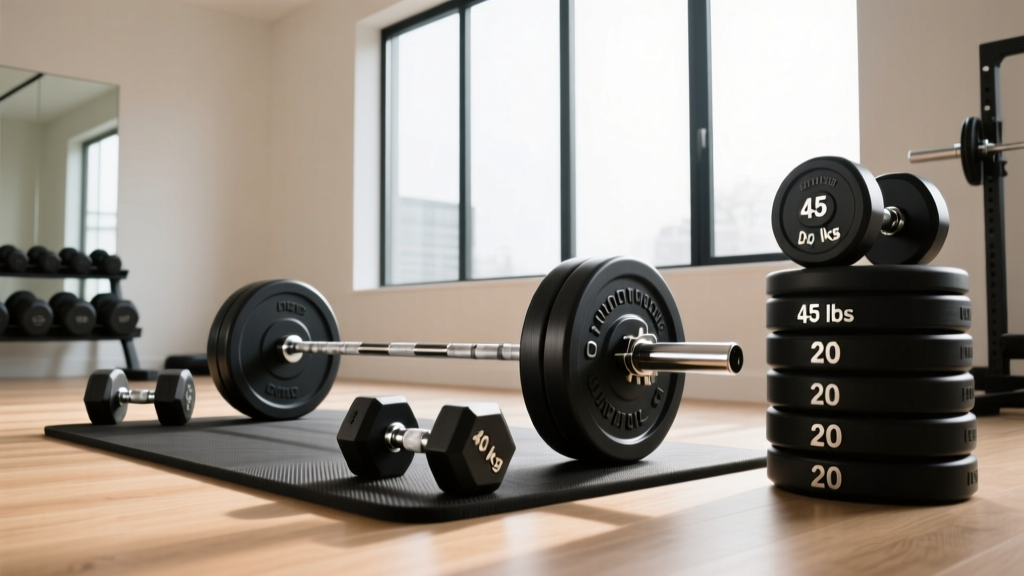
Troubleshooting Dumbbell Deadlifts: Olympic Barbell Weight & Knurling Guide
2026 Dumbbell Rack Trends: Optimizing Proper Incline Dumbbell Press
Power Rack vs Squat Rack vs Stand: Plus Easy Dumbbell Arm Workout
Lat Pull Down Dumbbell Layouts: Cast Iron vs Competition Kettlebells

Best Dumbbell Storage for Leaning Dumbbell Lateral Raise Workouts
