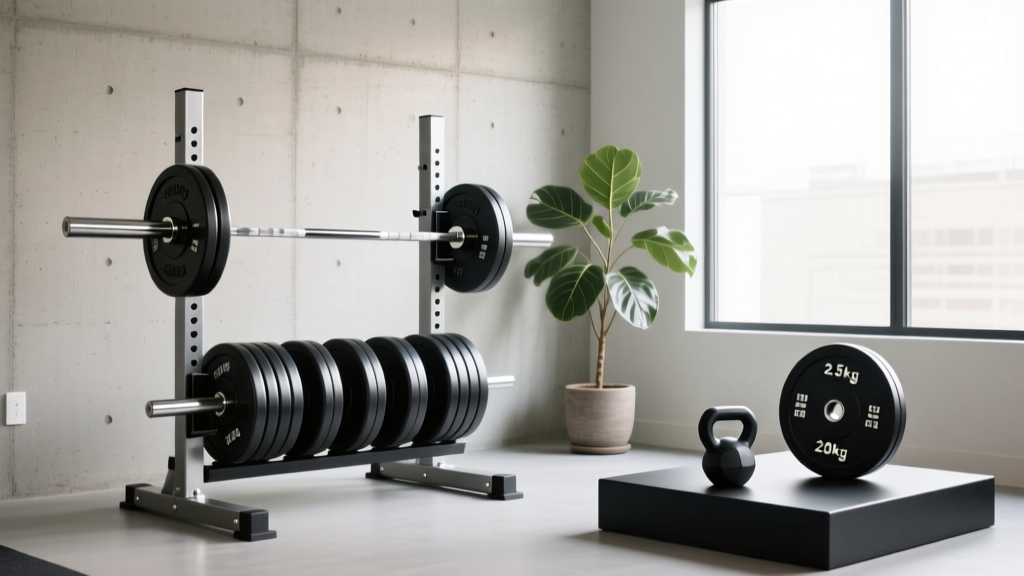
Olympic vs Standard Plates: Upgrading Beyond Ball Dumbbells
Compare Olympic vs standard weight plates for your home gym. Learn why upgrading from ball dumbbells and 1-inch bars to 2-inch Olympic gear is vital.

The Progression: From Ball Dumbbells to Plate-Loaded Lifting
Every home gym journey has a starting point. For many, it begins with a rack of fixed-weight vinyl ball dumbbells or a budget-friendly 110-pound standard spinlock barbell kit picked up from a big-box sporting goods store. These entry-level tools are fantastic for learning basic movement patterns, building initial neuromuscular adaptations, and establishing a consistent workout habit. However, as your strength progresses, the physical limitations of standard 1-inch equipment become a severe bottleneck.
If you are reading this in 2026, you have likely maxed out your standard plates or realized that your 1-inch barbell is bending under heavy squats. Transitioning from standard weight plates and ball dumbbells to a full Olympic weight plate ecosystem is the single most important equipment upgrade a home gym owner can make. This in-depth buying guide breaks down the exact engineering, material, and biomechanical differences between standard and Olympic weight plates, providing a clear decision framework for your next purchase.
Standard Weight Plates: The 1-Inch Legacy
Standard weight plates feature a 1-inch (25.4mm) center hole, designed to slide onto standard 1-inch diameter barbells and dumbbell handles. While they are inexpensive and widely available, they suffer from critical engineering flaws when pushed beyond beginner loads.
The Biomechanical Deficit
One of the most overlooked failure modes of standard plates is the lack of diameter standardization. An Olympic 45-pound plate is universally 450mm (17.7 inches) in diameter, ensuring the barbell sits exactly 8.75 inches off the floor for deadlifts and power cleans. Standard 45-pound cast iron plates, however, frequently measure between 14 and 15 inches in diameter. This forces you to pull from a deficit, artificially altering your starting mechanics and increasing the shear force on your lumbar spine.
⚠️ Warning: The Yield Point DangerStandard 1-inch barbells are typically made from basic cold-rolled steel. Most standard bars will permanently bend (take a set) when loaded between 200 and 250 pounds. If you are loading standard plates past this threshold, you are risking catastrophic bar failure during squats or bench presses.
Cement-Filled Vinyl vs. Cast Iron
Standard plates usually come in two materials: cast iron or cement-filled vinyl. The cement-filled plates (often sold alongside cheap ball dumbbells) are notorious for degrading. The plastic shells crack over time, leaking concrete dust and sand onto your gym floor, while the internal weight shifts, throwing off the balance of the bar.
Olympic Weight Plates: The 2-Inch Gold Standard
Olympic weight plates feature a 2-inch (50mm) center hole, designed for high-tensile Olympic barbells. This 2-inch sleeve diameter allows the barbell to house heavy-duty bushings or needle bearings, enabling the bar to spin freely during Olympic lifts and reducing torque on your wrists and elbows.
Strict IWF Tolerances
True Olympic plates adhere to International Weightlifting Federation (IWF) standards. A 20kg (44lb) or 45lb Olympic plate must have a diameter of exactly 450mm (with a tolerance of +/- 1mm) and a width that allows for proper loading on a 16.4-inch sleeve. When you buy calibrated Olympic steel plates or high-quality bumpers, you are buying guaranteed dimensional accuracy.
"Upgrading to Olympic plates isn't just about adding more weight; it's about standardizing your equipment to match commercial gym specifications, ensuring that your strength translates perfectly outside your garage." - FitGearPulse Editorial Team
Head-to-Head Comparison Matrix
| Feature | Standard (1-Inch) | Olympic (2-Inch) |
|---|---|---|
| Center Hole | 1 inch (25.4mm) | 2 inches (50mm) |
| 45lb Plate Diameter | Varies (14" - 15") | Strictly 17.7" (450mm) |
| Barbell Yield Point | ~200 - 250 lbs | 500 - 1,500+ lbs |
| Collar Mechanism | Spinlock (threads strip) | Spring Clips / Clamps |
| Average Cost per lb | $0.80 - $1.25 | $2.00 - $5.00+ |
Material Breakdown: Choosing Your Olympic Plates
Once you commit to the 2-inch Olympic standard, you must choose the material. As of 2026, freight stabilization has made high-quality imported rubber and urethane plates more affordable than ever. According to extensive durability testing by BarBend, the material you choose dictates the noise level, drop tolerance, and lifespan of your plates.
1. Cast Iron (Machined vs. Unmachined)
Cast iron plates are the traditional choice. Unmachined plates are poured into sand molds and painted. They are cheap ($1.50/lb) but often have rough edges, inaccurate weights (sometimes off by 3-5%), and a smaller diameter. Machined plates (like the Rep Fitness Deep Dish) are CNC-machined on the interior hub and exterior edge, guaranteeing weight accuracy within 1% and providing a smooth, premium finish. Expect to pay $2.25 to $2.75 per pound for quality machined iron.
2. Crumb Rubber Bumpers
Made from recycled rubber tires compressed into a steel hub. Crumb bumpers, like the renowned Rogue Echo V2 Bumpers (detailed in this Garage Gym Reviews breakdown), are the workhorses of CrossFit boxes and home gyms. They have a lower Shore A durometer (around 75-80), making them incredibly forgiving when dropped from overhead. However, they are thicker than iron, meaning you can fit fewer plates on the sleeve.
3. Virgin Rubber & Urethane
Virgin rubber competition plates are dense, thin, and feature a high Shore A rating (85-90), providing a 'dead bounce' that prevents the bar from rolling away. Urethane is the premium tier. It is virtually indestructible, does not off-gas (smell) like rubber, and resists UV fading. Urethane plates are standard in high-end commercial gyms but carry a premium price tag of $4.00 to $6.00+ per pound.
Cost Analysis: Building Your First Arsenal
Upgrading from standard gear requires a holistic budget approach, as you must purchase an Olympic barbell alongside the plates. Here is a realistic 2026 pricing breakdown for a 300-pound plate set:
- Budget (Crumb Rubber): 300 lbs of generic imported bumpers at $2.25/lb = $675. Add a 190k PSI tensile strength bar ($150) for a total of $825.
- Mid-Tier (Machined Iron): 300 lbs of Rep Fitness or Titan machined iron at $2.50/lb = $750. Add a knurled power bar ($200) for a total of $950.
- Premium (Urethane): 300 lbs of urethane grip plates at $4.50/lb = $1,350. Add a stainless steel Olympic bar ($300) for a total of $1,650.
While the upfront cost is significantly higher than a $99 standard kit found on marketplace sites, the cost-per-use over a decade of lifting makes Olympic gear vastly superior in value retention and safety.
Frequently Asked Questions
Can I use my old standard plates on an Olympic barbell?
No. Standard plates have a 1-inch hole and will not fit over a 2-inch Olympic sleeve. While you can buy plastic 1-inch to 2-inch adapter sleeves, they are highly discouraged. They introduce 'slop' (lateral movement), degrade quickly, and can crack under heavy loads, creating a severe safety hazard.
Are Olympic plates worth it if I only lift under 200 pounds?
Absolutely. Even if you are only lifting 135 or 185 pounds, Olympic plates ensure your barbell is at the correct 8.75-inch starting height for deadlifts and rows. Furthermore, standard spinlock collars frequently vibrate loose during dynamic movements like bent-over rows or hip thrusts, whereas Olympic spring clips lock the plates securely in place.
How do I maintain cast iron Olympic plates?
Cast iron is susceptible to oxidation (rust) in humid environments like unclimate-controlled garages. Wipe them down periodically with a light coat of 3-in-One oil or mineral oil, and use a wire brush to remove any surface rust that develops. Urethane and rubber plates require zero maintenance beyond occasional wiping with a mild soap solution.
More gear to consider
All reviews
EZ vs Straight Bar Comparison & Dumbbell Pull Exercises Care
Iron vs Bumper Plates: 2026 Trends & Dumbbell Overhead March

Setup for the Best Dumbbell Workout Routine: Clamps vs Collars

Loadable Dumbbell Care for Rear Delt Workouts with Dumbbells

Olympic vs Standard Plates for Inner Thigh Dumbbell Exercises
