Power Rack vs Squat Rack vs Stand: Dumbbell Ulnar Deviation
Compare power racks, squat racks, and stands. Learn how rack width and bench setups impact wrist health and prevent dumbbell ulnar deviation.

The Home Gym Dilemma: Cage, Half-Rack, or Stand?
Designing a comprehensive home gym in 2026 requires balancing spatial constraints with biomechanical safety. While most buyers focus solely on barbell clearances and pull-up bar heights, a critical and often overlooked factor is how your rack choice impacts heavy dumbbell training. Specifically, the architecture of your rack dictates your lift-off mechanics, which can either protect your wrists or force them into dangerous angles. In this guide, we break down the power rack vs squat rack vs squat stand debate through the lens of heavy dumbbell pressing, space efficiency, and long-term joint health.
The Biomechanics of the Heavy Dumbbell Lift-Off
When pressing heavy hex or urethane dumbbells (typically 70 lbs and above per hand), the most dangerous phase of the movement is not the press itself, but the lift-off. If your equipment forces you to grab the bells from an awkward lateral angle or from the floor while lying on a bench, your wrists will naturally bend toward the pinky side to compensate for the load. This is known as dumbbell ulnar deviation.
According to the American Society of Hand Therapists, repetitive or loaded ulnar deviation places immense shear stress on the Triangular Fibrocartilage Complex (TFCC) in the wrist. As noted in clinical breakdowns by Orthobullets, TFCC tears are a common, debilitating injury among lifters who repeatedly overload the wrist in deviated positions. A properly configured rack allows you to use a 'knee-kick' technique or safety-arm roll, keeping the wrist perfectly stacked and neutral, entirely bypassing the risk of dumbbell ulnar deviation.
⚠️ Injury Warning: The TFCC Tear
If you feel a sharp, clicking pain on the pinky-side of your wrist during heavy incline dumbbell presses, you are likely experiencing TFCC impingement caused by extreme ulnar deviation under load. Stop immediately and evaluate your bench-to-rack clearance.
Comparison Matrix: Footprint, Safety, and DB Ergonomics
Below is a 2026 market comparison of the three primary rack categories, evaluating their suitability for heavy dumbbell work and overall safety.
| Equipment Type | Avg 2026 Price | Interior Width | DB Press Ergonomic Rating | Safety Mechanism |
|---|---|---|---|---|
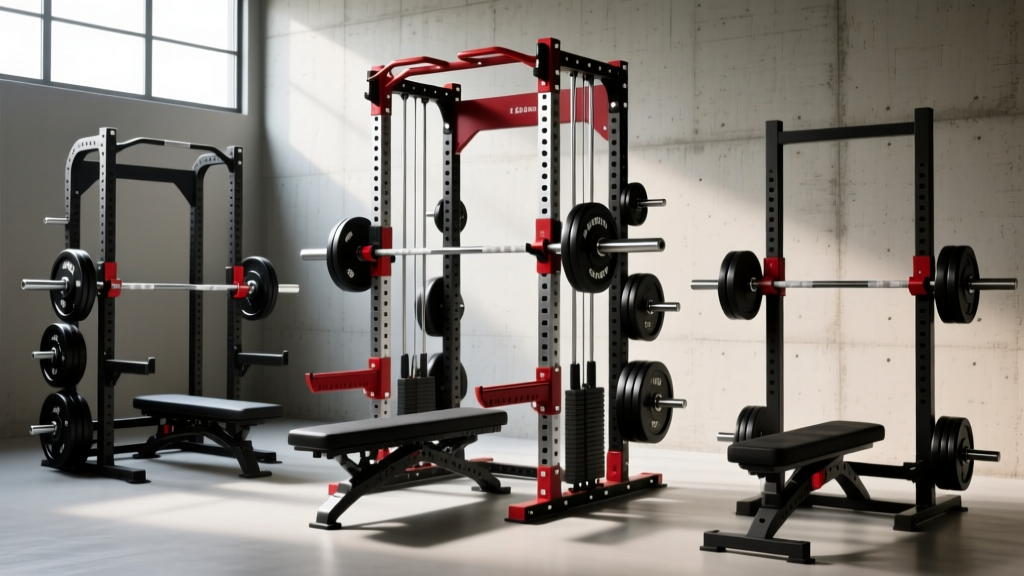
| Power Rack (Full Cage) | $900 - $1,600 | 43" - 49" | Excellent | Internal Pin-Pipe / Strap Safeties |
| Squat Rack (Half-Rack) | $600 - $1,100 | 42" - 48" | Good (with long spotter arms) | Front-Mounted Flip-Down Arms |
| Squat Stand (Independent) | $250 - $450 | Variable (Usually 44" exterior) | Poor | Short Catcher Arms / None |
Power Racks: The Biomechanical Safe Zone
A full power rack (four to six uprights) is the undisputed champion for heavy dumbbell training. Models like the Rogue R-3 Power Rack feature a 49-inch exterior width, yielding roughly 43 inches of interior clearance. When paired with a standard 12-inch wide utility bench, this leaves over 15 inches of lateral space on either side of your torso.
The Safety-Arm Roll Technique
This interior width is the secret to avoiding dumbbell ulnar deviation. Instead of cleaning heavy bells from the floor, you can place your dumbbells directly on the rack's safety spotter arms, set just below your chest height. You lie back on the bench, grab the bells with a perfectly neutral, stacked wrist, and simply roll them into the pressing position. The cage protects you if you fail a rep, and the wide uprights ensure your elbows never clip the steel during a deep stretch on an incline press.
Squat Racks (Half-Racks): The Space-Saving Compromise
Half-racks, such as the REP PR-4000 or Titan T-2, utilize two main uprights with a rear stabilizer and front-mounted safety spotter arms. They are ideal for garages where ceiling height or depth is restricted.
- Pros: Saves roughly 15-20 square feet of floor space compared to a full cage; allows for easy barbell racking from the outside.
- Cons: Front spotter arms can sometimes obstruct the path when picking up heavy dumbbells from the floor if you aren't using the safety-arm roll technique.
To mitigate wrist strain in a half-rack, you must invest in extended spotter arms (at least 24 inches long). This allows you to set the bench slightly further back, giving your elbows room to drop during a press without hitting the uprights, while still providing a safe shelf to rest your dumbbells prior to the lift-off.
Squat Stands: Minimalist but Risky for Dumbbell Work
Squat stands (two independent, freestanding uprights) are popular for budget builds and apartment gyms. However, they are fundamentally hostile to heavy dumbbell pressing. Because the stands must be manually adjusted to match your barbell length, the interior width is often too narrow to accommodate a bench and the lifter's elbows simultaneously.
When using squat stands, lifters are forced to pick up heavy dumbbells from the floor while lying on the bench. This awkward, asymmetric reach forces the wrist into extreme flexion and dumbbell ulnar deviation just to get the weight to chest level. Furthermore, the short catcher arms found on most stands offer zero protection for a failed dumbbell press, making them a severe safety hazard for solo lifters pushing past 70 lb dumbbells.
Step-by-Step: Configuring Your Rack for Wrist Health
If you are currently experiencing wrist pain or want to future-proof your 2026 home gym setup, follow this configuration protocol:
- Measure Your Bench Pad: Ensure your bench pad is no wider than 12 inches. A 14-inch pad will push your shoulder blades too far apart and force your wrists outward to clear the pad during the descent.
- Set Safety Arms at Sternum Height: When using a power rack, set the pin-pipe safeties exactly 2 inches below your sternum. This allows you to rest the dumbbells on the safeties, grab them with neutral wrists, and roll them up without requiring a bicep curl or wrist bend.
- Utilize Westside Hole Spacing: Ensure your rack features 1-inch hole spacing in the bench press zone. This micro-adjustability is crucial for dialing in the exact safety height needed to protect your wrists and pecs during the lift-off.
- Check Upright Clearance: If your elbows graze the uprights at the bottom of a dumbbell press, your rack is too narrow. You must either switch to a 53-inch wide commercial rack or adjust your bench angle to a 15-degree decline to alter the elbow path.
Frequently Asked Questions
Can wrist wraps prevent dumbbell ulnar deviation?
Stiff, cast-style wrist wraps can limit extreme extension, but they do little to prevent lateral ulnar deviation under heavy loads. Proper wrist stacking (knuckles pointing to the ceiling) and using a rack wide enough to facilitate a safe lift-off are the only true preventative measures.
Are folding wall-mounted racks good for dumbbell pressing?
Folding racks (like the Rogue RML-3W) are excellent for space-saving, but their interior width is typically 43 inches. While sufficient for most, taller lifters with long wingspans may find their elbows clipping the uprights during flat dumbbell presses, necessitating a wider freestanding power rack.
More gear to consider
All reviews
Great Bicep Workouts With Dumbbells: 2026 Loadable Plate Review

Bumper vs Iron Plate Budget: Dumbbell Cheat Press Setup 2026

Best Dumbbell Racks for Safe Supine Dumbbell Pullover Setups

Bumper vs Iron Plate Longevity: Can I Buy Dumbbells With HSA?
Maintain Your Planet Fitness Dumbbell Weight: Rubber vs Urethane