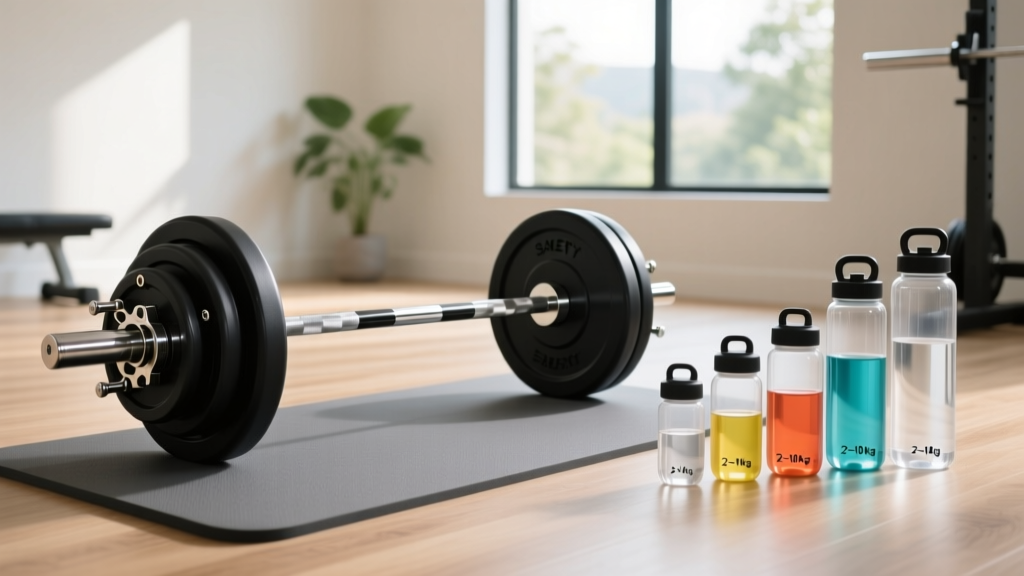
Barbell Collar Types & Water Dumbbells: Setup Walkthrough
Master your 2026 home gym setup with our walkthrough on barbell collar types for heavy lifting and water dumbbells for aquatic recovery.

The 2026 Longevity Gym: Heavy Iron & Aquatic Recovery
Building a comprehensive home gym in 2026 requires looking beyond just the squat rack and bench press. The modern longevity-focused athlete understands that peak performance relies on a dual-zone approach: high-intensity progressive overload and low-impact active recovery. This complete setup and installation walkthrough bridges two seemingly disparate pieces of equipment that are vital for a balanced, injury-free training ecosystem. First, we will break down the critical safety mechanics of barbell collar and clamp types to secure your heavy free weights. Then, we will transition to the recovery zone, detailing the installation and hydrodynamic physics of water dumbbells for aquatic therapy. Whether you are outfitting a garage gym or a dedicated backyard wellness pavilion, mastering the setup of both heavy and aquatic gear is essential for long-term joint health and lifting safety.
Phase 1: Securing the Iron — Barbell Collar Types Compared
When loading an Olympic barbell (which features standard 16.3-inch sleeves and a 50mm diameter), failing to secure your weight plates is a catastrophic safety hazard. According to Mayo Clinic's strength training safety guidelines, proper equipment stabilization is the first line of defense against traumatic gym injuries. But not all collars are created equal. The right clamp depends on your training modality: powerlifting, Olympic weightlifting, or high-volume hypertrophy.
The Big Four: Clamp, Spring, Lever, and Spinlock
Before installing your plates, you must select the correct retention mechanism. Here is a deep dive into the four primary barbell collar types available on the market today, including real-world pricing and failure modes.
1. Lock-Jaw Style Clamps (e.g., Lock-Jaw Pro, Rogue Clamps)
These utilize a reinforced nylon resin body with a dual-prong locking mechanism and an inner rubber gasket. They are the gold standard for general strength training and CrossFit-style WODs. They offer immense grip force (often exceeding 100 lbs of lateral pressure) and are quick to snap on and off.
- Price Range: $35 - $50 per pair.
- Best For: Deadlifts, squats, and rapid weight changes.
- Failure Mode: The rubber gasket can compress over 3-4 years of heavy use, requiring replacement pads to maintain grip on chrome sleeves.
2. Spring Clips (e.g., Rogue HG 2.0)
Constructed from heavy-gauge steel wire, spring clips are the cheapest and fastest option. However, they rely entirely on the tension of the metal. They are perfectly adequate for bench pressing or strict pressing where the bar path is controlled, but they are dangerous for high-impact drops.
- Price Range: $12 - $18 per pair.
- Best For: Bench press, strict overhead press, quick accessory work.
- Failure Mode: "Bar whip" (the elastic deformation of the barbell during heavy deadlifts or cleans) will cause spring clips to inch outward, potentially leading to plate shift and catastrophic imbalance.
3. Lever Training Locks (e.g., Eleiko, USPA Approved)
Used in IPF and IWF competitions, lever locks use an aluminum or steel cam-lever system that bites down onto the sleeve with mechanical advantage. They are heavy, expensive, and virtually indestructible.
- Price Range: $75 - $110 per pair.
- Best For: Competition prep, maximal effort Olympic lifts, heavy barbell cycling.
- Failure Mode: Very rare, but dropping the bar directly onto the lever mechanism from overhead can bend the cam arm.
4. Spinlock Collars
These require threaded barbell sleeves. While they offer a secure, ratcheted lock, they are incredibly slow to use and incompatible with standard smooth Olympic sleeves. They are largely relegated to cheap, entry-level home gym sets and are not recommended for serious 2026 free weight setups.
Expert Warning: The Bar Whip EffectNever use spring clips for touch-and-go deadlifts or Olympic cleans. When a 400+ lb barbell hits the floor, the kinetic energy causes the steel shaft to whip. This vibration travels to the sleeves and will literally shake low-tension spring clips off the bar mid-set. Always use Lock-Jaw or Lever collars for floor-based pulls.
Barbell Collar Comparison Matrix
| Collar Type | Lateral Grip Force | Weight (per pair) | Avg. Cost (2026) | Setup Speed |
|---|---|---|---|---|
| Lock-Jaw Clamp | High (~120 lbs) | 0.6 lbs | $45.00 | Fast (2 seconds) |
| Heavy-Duty Spring | Low (~30 lbs) | 0.8 lbs | $15.00 | Very Fast (1 second) |
| Competition Lever | Extreme (200+ lbs) | 2.2 lbs | $90.00 | Moderate (4 seconds) |
| Threaded Spinlock | Moderate (Mechanical) | 1.5 lbs | $25.00 | Slow (15+ seconds) |
Phase 2: The Recovery Zone — Water Dumbbells Installation
While securing heavy iron protects you from acute trauma, longevity in fitness requires managing chronic joint wear. This is where aquatic therapy enters the home gym ecosystem. Johns Hopkins Medicine highlights aquatic therapy as a premier modality for osteoarthritis management, post-operative rehab, and active recovery. Water dumbbells do not rely on gravity; they rely on hydrodynamic drag and buoyancy.
Hydrodynamic Resistance vs. Gravity
Unlike traditional urethane or neoprene dumbbells, water dumbbells (often made from closed-cell EVA foam) are positively buoyant. When you push them underwater, the resistance is generated by the displacement of water. The faster you push, the greater the resistance (following the physics of fluid drag). This provides an accommodating resistance profile that is incredibly gentle on the rotator cuff and knee menisci.
Setup and Installation Requirements
Integrating water dumbbells into your home setup requires specific environmental considerations to ensure the equipment lasts and functions correctly.
- Pool Depth Calibration: For full range-of-motion (ROM) upper body work, your pool or plunge tank must have a minimum depth of 48 inches. Shallow water restricts the downward pressing motion, rendering the water dumbbells ineffective for chest and shoulder rehab.
- Material Selection (EVA vs. ABS): In 2026, premium water dumbbells use high-density, closed-cell EVA foam. Avoid hollow plastic ABS models that can crack under UV exposure or take on water if the seal fails.
- Sanitization & Storage: Chlorine and saltwater will degrade the outer skin of EVA foam over time. Install a dedicated rinse station (a simple hose bib with a mesh drying rack) adjacent to your pool. Never store water dumbbells in direct sunlight when not in use, as UV degradation will cause the foam to flake within a single summer season.
Pro-Tip for Aquatic Setup: To increase the resistance of your water dumbbells without buying a heavier set, simply increase your speed of movement or attach aftermarket drag fins to the dumbbell shafts. Water resistance scales exponentially with velocity, making speed a free variable for progressive overload.
Phase 3: Complete Gym Walkthrough & Maintenance Schedule
To finalize your setup, implement this weekly maintenance and safety walkthrough to ensure both your heavy lifting zone and aquatic recovery zone remain in peak condition.
Heavy Zone Maintenance
- Barbell Sleeve Wiping: Every Sunday, wipe down your Olympic barbell sleeves with a microfiber cloth and a light coat of 3-in-One oil. Chalk dust and sweat build up on the sleeves, creating a slick surface that compromises the rubber gaskets of your Lock-Jaw clamps.
- Collar Gasket Inspection: Check the inner rubber lining of your clamps. If the rubber is compressed flat or tearing, order replacement pads immediately to prevent plate slippage during heavy squats.
Aquatic Zone Maintenance
- Freshwater Rinse: After every aquatic therapy session, rinse the water dumbbells with fresh water to remove chlorine, bromine, or salt residue.
- Buoyancy Check: Press the EVA foam firmly with your thumb. If it stays compressed and does not rebound instantly, the closed-cell structure has been compromised, and the dumbbell will slowly absorb water, altering its buoyancy profile. Replace immediately.
Final Thoughts on Gym Longevity
A truly elite home gym setup in 2026 is not defined merely by the amount of iron you can stack on a barbell, but by the intelligent systems you put in place to protect your body and your equipment. By investing in high-grip lever or lock-jaw barbell collars, you eliminate the catastrophic risk of shifting plates during maximal effort lifts. Conversely, by properly installing and maintaining water dumbbells in your aquatic recovery zone, you ensure that your joints remain lubricated, mobile, and pain-free for decades to come. Master both zones, and your home gym will support a lifetime of unbroken, progressive training.
More gear to consider
All reviews
Rogue vs Rep Barbell Knurling & Incline Dumbbell Press Guide

2026 Value Dumbbell Racks: Storage for the Dumbbell High Pull
Loadable Barbell Dumbbell Handles: 2026 Budget Breakdown
EZ Curl Bar vs Straight Bar & Wings Workout with Dumbbells

Power Rack vs Squat Stand: SA Dumbbell Bench Press Setups
