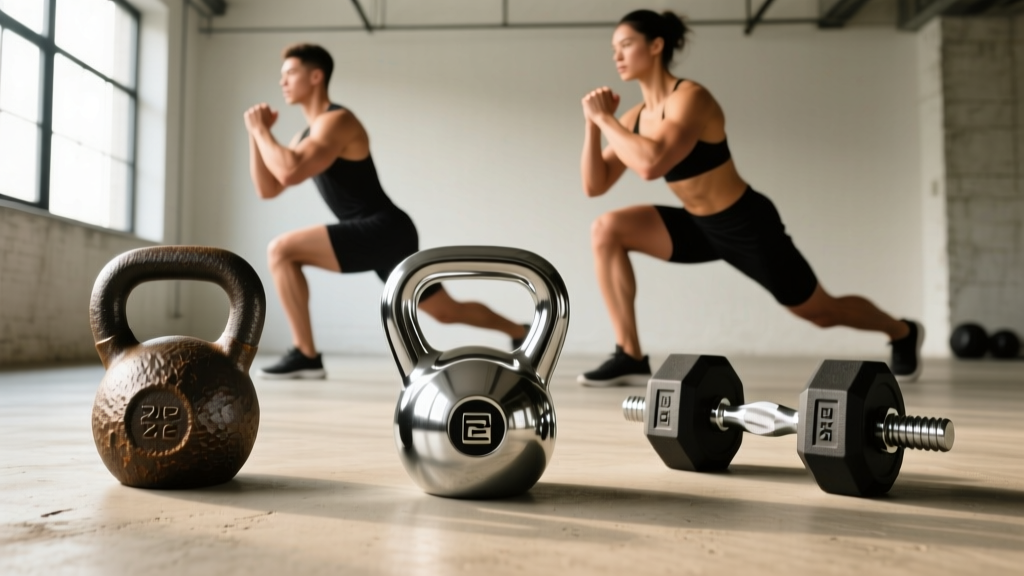
Cast Iron vs Competition Kettlebells & Dumbbell Overhead Lunge
Analyze 2026 market trends for free weights. Compare cast iron vs competition kettlebells and evaluate gear for the dumbbell overhead lunge.

The 2026 Shift Toward Unilateral Overhead Movements
The functional fitness equipment market has undergone a significant transformation as we move through 2026. While bilateral barbell training remains a staple, commercial gyms and premium home fitness setups are increasingly prioritizing unilateral and overhead free weight exercises. This shift is driven by a growing emphasis on core stabilization, asymmetrical load management, and athletic longevity. According to research published in the National Center for Biotechnology Information (NCBI), unilateral training not only corrects muscular imbalances but also elicits significant cross-education strength gains in the contralateral limb, making it a critical component of modern rehabilitation and performance programming.
This macro-trend has directly influenced purchasing behavior in the free weights sector. Consumers are no longer just buying 'weights'; they are buying specific geometries and grip profiles optimized for complex movements. Two primary equipment categories are battling for dominance in this space: traditional cast iron kettlebells, precision-machined competition kettlebells, and standard hex dumbbells. Understanding the biomechanical and economic differences between these tools is essential for making informed purchasing decisions, particularly for demanding exercises like the dumbbell overhead lunge and its kettlebell variations.
Cast Iron vs. Competition Kettlebells: A Market Breakdown
The kettlebell market in 2026 is distinctly bifurcated into two main product lines, each serving a different demographic and training methodology. The price gap, manufacturing tolerances, and material science separating these two categories dictate their market share.
1. Cast Iron Kettlebells: The Home Gym Standard
Cast iron kettlebells are typically poured into molds, resulting in a product where the physical dimensions of the bell and the handle thickness vary depending on the weight. A 12kg cast iron bell will have a noticeably smaller profile and thinner handle than a 32kg bell. Modern premium cast iron bells, such as the Rogue Powder Coat Kettlebells, feature a textured powder-coat finish that grips chalk exceptionally well and resists rust. Pricing in this segment averages between $1.50 and $2.50 per pound. They are ideal for two-handed swings, goblet squats, and general conditioning.
2. Competition Kettlebells: The Precision Standard
Competition kettlebells are constructed from hollow steel and are manufactured to a strict, uniform dimension regardless of weight. Whether you are holding an 8kg or a 32kg competition bell, the handle diameter is exactly 33mm, and the bell size remains identical. This standardization is crucial for technical lifts like the snatch and clean and jerk, where a change in geometry would alter the lifter's rack position and timing. According to Kettlebell Kings, the steel shell is filled with a proprietary mixture (often including lead or steel shot) to achieve the target weight while maintaining the exact outer dimensions. These premium tools command a higher market price, typically ranging from $3.00 to $4.50 per pound.
Market Insight: In 2025-2026, supply chain stabilizations have reduced the cost of raw steel, narrowing the price gap between high-end cast iron and entry-level competition kettlebells by approximately 12%, making competition bells more accessible to serious home gym owners.Biomechanics and Equipment: The Dumbbell Overhead Lunge
To truly understand the value proposition of different free weights, we must analyze them through the lens of specific, high-demand movements. The dumbbell overhead lunge is a premier exercise for testing shoulder mobility, thoracic extension, and dynamic core stability. However, the geometry of the implement drastically alters the execution and safety profile of the movement.
Dumbbell Geometry vs. Kettlebell Rack Position
When performing an overhead lunge with a standard rubber hex dumbbell, the lifter must press the weight into a locked-out position and maintain it there while stepping forward and dropping the hips. The bulky heads of a hex dumbbell (often 5 to 7 inches in diameter on heavier models) can interfere with the ear and neck if the lifter lacks optimal shoulder flexion. Furthermore, the dumbbell's center of mass sits directly over the wrist, requiring intense grip strength to prevent the heavy ends from pulling the wrist into extension under fatigue.
Conversely, executing a kettlebell overhead lunge (often called a waiter's walk or overhead lunge with a KB) utilizes the unique 'rack' and overhead stacking mechanics of the bell. When locked out overhead, a competition kettlebell rests its rounded steel belly against the outside of the forearm. This creates a bone-stacked column where the weight is supported by the skeletal structure of the forearm and humerus, rather than relying purely on active muscular grip stabilization. The 33mm handle of a competition bell also allows the wrist to remain perfectly neutral, whereas the thicker 35mm handles of heavy cast iron bells can force slight wrist extension, leaking power and increasing joint strain during the lunge descent.
Equipment Comparison Matrix: Overhead & Unilateral Utility
| Feature | Competition Kettlebell | Cast Iron Kettlebell | Rubber Hex Dumbbell |
|---|---|---|---|
| Handle Diameter | Uniform 33mm | Variable (30mm - 38mm) | Variable (28mm - 35mm) |
| Overhead Wrist Stack | Excellent (Bone-stacked) | Good (Thicker grip limits stack) | Poor (Center mass over wrist) |
| Best Use Case | Snatch, C&J, Overhead Lunges | Swings, Goblet Squats, carries | Isolation, Presses, Rows |
| Average Cost (per lb) | $3.00 - $4.50 | $1.50 - $2.50 | $1.25 - $2.00 |
| Primary Failure Mode | Denting / Paint Chipping | Rust / Coating Flaking | Rubber Degradation / Odor |
Lifecycle Cost and Failure Mode Analysis
When evaluating free weight investments for a commercial facility or a dedicated garage gym, the initial purchase price is only one metric. The lifecycle cost, dictated by the equipment's failure modes, is equally critical in 2026.
- Cast Iron Kettlebells: The primary failure mode is cosmetic and environmental. If the powder coat or enamel paint chips from repeated dropping on concrete, the exposed raw iron will oxidize rapidly in humid environments. Maintenance requires occasional wire-brushing and re-application of rust-inhibitive paint.
- Competition Kettlebells: Constructed from steel shells, these do not rust easily, but they are susceptible to denting if dropped from overhead onto hard surfaces. A dented competition bell may no longer sit flat on the floor, creating a rolling hazard during renegade rows or plank pull-throughs.
- Hex Dumbbells: Cheap rubber hex dumbbells suffer from UV degradation and off-gassing (the notorious 'gym smell'). Furthermore, the steel handles can bend if heavy sets (50lbs+) are repeatedly dropped, rendering the dumbbell unusable for precision movements like the dumbbell overhead lunge due to rotational imbalance.
"For overhead unilateral work, the implement's center of mass dictates the neurological demand. A competition kettlebell allows the lifter to focus on the lunge mechanics and thoracic extension, while a dumbbell forces the central nervous system to micro-manage wrist stabilization." — 2026 Functional Strength Coaching Symposium
Strategic Buying Framework for 2026
How should you allocate your equipment budget based on these market realities? Use the following decision framework to optimize your free weight purchases:
Scenario A: The Athletic Performance Garage Gym
If your programming heavily features Olympic kettlebell sport movements, Turkish get-ups, and overhead lunges, invest in competition kettlebells. The standardized 33mm handle will protect your wrists during high-volume snatch sessions, and the uniform bell size ensures your technique remains consistent as you progress from 16kg to 24kg. Supplement these with a single pair of high-quality urethane dumbbells (e.g., 35lbs) for strict isolation work.
Scenario B: The General Population & Bodybuilding Home Gym
If your primary goals are hypertrophy, basic conditioning, and general strength, cast iron kettlebells and rubber hex dumbbells offer the highest ROI. The varying handle thicknesses of cast iron bells actually provide a unique grip-strength stimulus during farmer's carries and swings. For the dumbbell overhead lunge, stick to lighter hex dumbbells (15-25lbs) to prioritize mobility and core engagement without overloading the shoulder joint with bulky equipment heads.
Scenario C: Commercial Facility Outfitting
Commercial gyms must balance durability with user safety. We recommend outfitting the functional turf area with bumper-plate loaded kettlebells or heavy-duty cast iron bells with thick urethane coatings to survive constant drops. For the free weight aisle, premium urethane dumbbells with chrome, ergonomically knurled handles are mandatory to withstand high-volume use without the handle-bending failures seen in cheaper commercial rubber hex models.
Ultimately, the choice between cast iron, competition steel, and traditional dumbbells is not about which tool is universally superior, but rather which geometry best supports your specific training modalities. As the market continues to refine manufacturing processes in 2026, understanding these nuanced differences ensures your equipment investment directly translates to performance gains on the floor.
More gear to consider
All reviews
Gym Setup Guide: 40kg Dumbbells & Barbell Collar Clamp Types

EZ Curl Bar vs Straight Bar: Cost & Pilates Dumbbell Workouts Value

Olympic Barbell Knurling & Dumbbell Tricep Exercises for Women
Olympic Barbell Knurling Guide & Incline Dumbbell Reverse Fly

2026 Dumbbell Storage Trends: Racks for All Types of Dumbbell Squats
