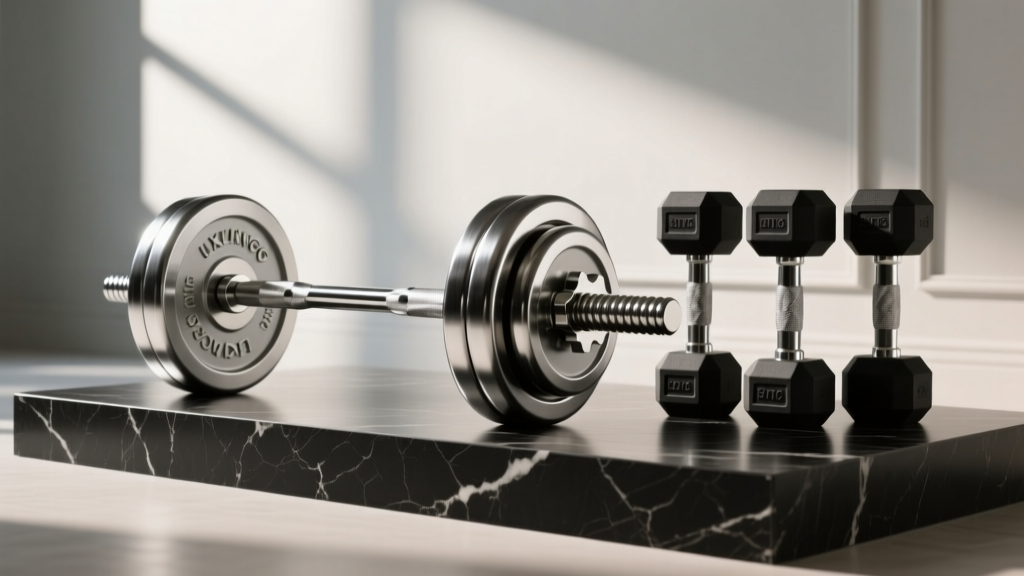
Push Day Dumbbell Exercises vs Olympic Barbells: Weight & Knurling
Compare push day dumbbell exercises with Olympic barbell presses. Dive into our barbell buying guide covering weight tolerances, PSI, and knurling.

The Push Day Dilemma: Barbell vs. Dumbbell Biomechanics
Designing an optimal upper-body pushing routine requires more than just selecting the right movements; it demands a deep understanding of the equipment you are loading. When building a home gym or upgrading commercial racks in 2026, lifters constantly debate the merits of the Olympic barbell versus adjustable and fixed dumbbells. While the barbell remains the undisputed king of absolute load and central nervous system (CNS) adaptation, incorporating push day dumbbell exercises is non-negotiable for addressing muscular imbalances, increasing range of motion (ROM), and maximizing pectoral hypertrophy.
According to biomechanical analyses summarized by the National Strength and Conditioning Association (NSCA), dumbbell presses elicit significantly greater activation in the pectoralis major due to the increased adduction at the top of the movement. However, the barbell bench press allows for greater overall mechanical tension. To make the right equipment purchases, you must understand the intricate specifications of both tools. This guide serves as a dual-purpose resource: breaking down the best dumbbell applications while providing a comprehensive Olympic barbell buying guide focused on weight tolerances, steel grades, and knurling profiles.
Olympic Barbell Buying Guide: Decoding Weight, Steel, and Tolerances
Before you can effectively contrast free weights, you must understand the engineering of the Olympic barbell. A standard men's Olympic barbell weighs exactly 20kg (44 lbs), while a women's specification bar weighs 15kg (33 lbs) and features a thinner 25mm shaft. For push day pressing, the 20kg bar with a 28.5mm to 29mm shaft is the gold standard, offering the perfect balance of grip security and bar whip.
Tensile Strength vs. Yield Strength
When evaluating barbells, marketing jargon often confuses tensile strength with yield strength. Tensile strength (measured in PSI) is the point at which the steel will snap, while yield strength is the point at which the steel will permanently bend. For heavy bench pressing and overhead pressing, you want a high yield strength to prevent the bar from taking a permanent 'set' when dropped on J-cups or safeties.
- Standard/Multi-Purpose (165k - 185k PSI): Adequate for beginners, but prone to bending if dropped with heavy bumper plates. Example: Titan Fitness Lumberjack (~$150).
- Powerlifting/Heavy Pressing (190k - 215k PSI): The sweet spot for serious lifters. The Rogue Ohio Power Bar (190k PSI, ~$295) is the industry benchmark for pressing, while the Eleiko OP Powerlifting Bar (215k PSI, ~$1,100) offers elite-level rigidity.
Weight Tolerance & Calibration
Cheap import barbells often weigh anywhere from 18kg to 22kg despite being labeled as 20kg. Premium manufacturers calibrate their bars to a strict ±10 gram tolerance. If you are tracking progressive overload on your overhead press down to the micro-plate, investing in an IWF or IPF-certified calibrated barbell ensures your data is accurate.
Knurling Deep Dive: Grip Security for Heavy Presses
The knurling pattern on a barbell is arguably its most critical feature for push day performance. A slipped grip during a heavy incline press is not just a failed rep; it is a severe safety hazard. As detailed in the Rogue Fitness Bar Guide, knurling is categorized by its geometric cut and depth.
The Three Knurling Profiles
- Volcano Knurling: The absolute best choice for pressing. The machining process creates a rim that resembles a volcano, providing maximum surface area and grip without being overly sharp. It bites into the calluses of your palms securely during heavy benching but won't tear your skin during high-volume dumbbell or barbell complexes.
- Mountain Knurling: Sharp, aggressive, and pointed. While excellent for deadlifts where the bar is pulling away from your body, mountain knurling will shred your hands during high-rep push day accessory work or front squats.
- Hill Knurling: Rounded and smooth. Often found on cheap, big-box store barbells. It provides insufficient friction for heavy overhead pressing, especially when chalk and sweat are introduced.
Coatings and Knurl Feel
The finish applied to the barbell shaft drastically alters how the knurl feels. Bare steel offers the most aggressive grip but requires constant oiling to prevent rust. Zinc and Black Oxide provide moderate corrosion resistance while preserving the sharpness of the knurl. Cerakote and Hard Chrome fill in the knurling valleys slightly, resulting in a milder feel that is highly resistant to oxidation—ideal for humid garage gyms in 2026.
Head-to-Head Equipment Matrix: Barbell vs. Adjustable Dumbbells
To optimize your push day, most lifters require both modalities. Below is a structural comparison of a premium Olympic barbell setup versus a high-end adjustable dumbbell system (e.g., PowerBlock Elite or Nuobell 80).
| Feature | Olympic Barbell (e.g., Rogue Ohio Power) | Adjustable Dumbbells (e.g., Nuobell 80) |
|---|---|---|
| Base Cost (2026) | $295 (Bar) + $300+ (Plates) | $429 (Pair, 5-80 lbs) |
| Max Load Capacity | 1,500+ lbs (Limited only by plate inventory) | 80 lbs per hand (Expandable to 100 lbs) |
| Grip Interface | Volcano Knurl (29mm shaft) | Ergonomic molded handle (No knurl) |
| Stabilizer Demand | Moderate (Bilateral lock-in) | Extreme (Independent limb tracking) |
| Space Footprint | Requires 7ft bar + rack + plate tree | Compact cradle (approx. 2 sq. ft.) |
Top Push Day Dumbbell Exercises for Hypertrophy
While the barbell builds raw strength, the Examine.com Biomechanics Database confirms that dumbbells are superior for targeted muscle isolation and joint-friendly pressing. When programming push day dumbbell exercises, prioritize these three movements to complement your heavy barbell work:
1. 15-Degree Incline Dumbbell Press
A flat bench often overtaxes the anterior deltoid. Setting an adjustable bench to a slight 15-degree incline targets the clavicular head of the pectoralis major (upper chest) without shifting the primary load to the shoulders. Pro Tip: Use a neutral grip (palms facing each other) to tuck the elbows and save the rotator cuff during heavy sets of 8-12 reps.
2. Seated Dumbbell Z-Press
Performed seated on the floor with legs extended straight out, the Z-Press eliminates all leg drive and lower back arch. This forces the core and upper back stabilizers to work overtime, making it a phenomenal accessory movement for lifters looking to improve their strict overhead barbell press lockout.
3. Deficit Dumbbell Push-Ups
By gripping hex dumbbells or adjustable dumbbell handles on the floor, you increase the depth of the push-up by 3 to 4 inches. This loaded stretch induces massive hypertrophy in the pecs and serves as an excellent burnout at the end of a push day session when CNS fatigue prevents heavy barbell loading.
Equipment Warning: When using adjustable dumbbells like the PowerBlock Elite for deep deficit push-ups, be aware that the rectangular cage design can dig into the wrists or limit the natural rotation of the forearm. Traditional round adjustable dumbbells (like Nuobell or Ironmaster) offer a more natural wrist alignment for floor-based pressing movements.
Final Verdict: Building Your 2026 Push Day Arsenal
There is no single 'best' tool for push day; there is only the right tool for the specific adaptation you are chasing. If your primary goal is moving maximal weight, competing in powerlifting, or overloading the CNS, investing in a 20kg Olympic barbell with a 190k+ PSI tensile strength and aggressive volcano knurling is mandatory. The grip security and bilateral stability cannot be replicated by any other equipment.
However, if your focus is on bodybuilding, correcting left-to-right strength asymmetries, or training in a space-constrained environment, a premium set of adjustable dumbbells is non-negotiable. The ultimate home gym setup leverages the barbell for heavy, low-rep compound presses (3-6 rep range), and transitions to push day dumbbell exercises for moderate-rep hypertrophy (8-15 rep range), utilizing the extended ROM and stabilizer demands that only free-moving weights can provide.
More gear to consider
All reviews
Incline Dumbbell Press vs Incline Bench Press: Collar Types Guide
Power Rack vs Squat Rack vs Stand: Best Dumbbell Curls & Compounds

EZ Curl vs Straight Bar: Evolving Women's Arm Dumbbell Exercises

Best Adjustable Dumbbells for a Beginner Dumbbell Leg Workout Routine

Cheap vs Premium Weights: What You’re Really Paying For — A Data-Driven Breakdown
