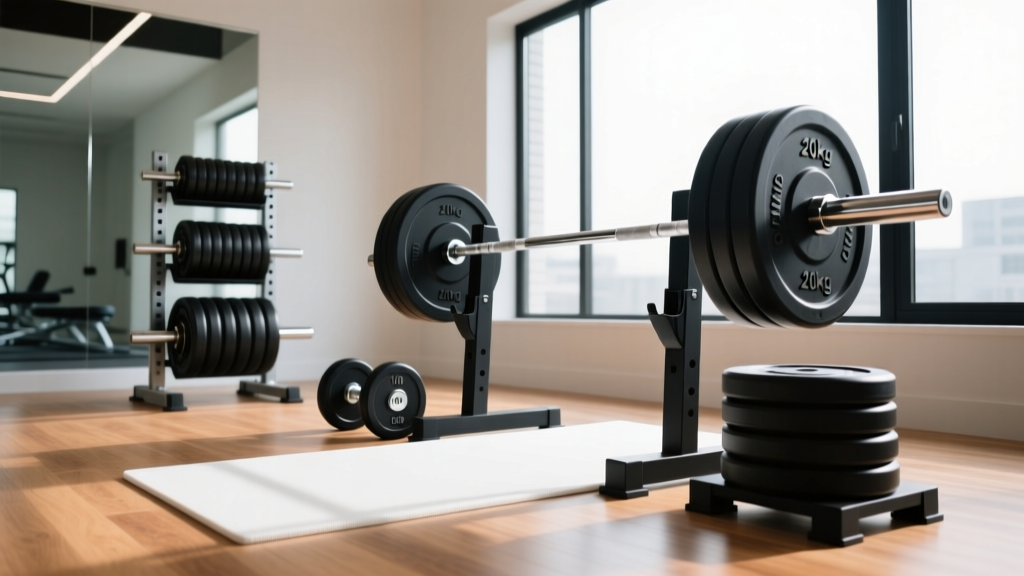
Wood Chopper with Dumbbell Setup: Olympic vs Standard Weight Plates
Master your home gym layout. Compare Olympic vs standard weight plates and optimize floor space for the wood chopper with dumbbell and functional lifts.

The Spatial Reality of Home Gym Design
When engineering a comprehensive home gym, most lifters fixate on the squat rack or the barbell, entirely neglecting the spatial geometry required for functional, multi-planar movements. If your programming includes rotational core work—specifically the wood chopper with dumbbell—your floor plan must accommodate a minimum 6x6 foot clear zone to allow for full hip rotation and lateral extension. This is where the foundational decision between Olympic and standard weight plates transcends mere lifting preference and becomes a critical factor in your gym's layout, storage footprint, and overall safety.
In 2026, the home fitness equipment market has seen a massive influx of hybrid training spaces. Lifters are no longer just powerlifting; they are blending heavy compound barbell work with athletic conditioning. Choosing the right weight plate ecosystem dictates how you store your gear, how much floor space you reclaim for dynamic movements, and how your equipment holds up to the rigors of daily use. According to facility design guidelines from the National Strength and Conditioning Association (NSCA), optimizing the 'flow zone' around primary lifting stations reduces injury risk during dynamic rotational exercises by ensuring unobstructed movement paths.
Quick Spec Snapshot
- Olympic Plate Hub: 2.00 inches (50.8mm)
- Standard Plate Hub: 1.06 inches (27mm)
- Functional Zone Required: 36 sq. ft. for rotational dumbbell work
- Primary Storage Footprint: 4 sq. ft. (Vertical Tree) vs. 9 sq. ft. (A-Frame)
Olympic vs. Standard Plates: Technical Specifications and Pricing
To build a functional training zone, you must first understand the hardware anchoring your gym. The divide between Olympic and standard plates is not just about size; it is about material science, load tolerance, and spatial efficiency.
Dimensional Tolerances and Load Capacities
Olympic plates feature a 2-inch center hole designed to slide onto barbells and storage pegs with a 1.96-inch (50mm) sleeve diameter. This 2mm tolerance gap allows for rapid loading and unloading, a necessity when transitioning from heavy barbell squats to functional accessory work. Standard plates, conversely, utilize a 1-inch hole meant for lighter, often solid-steel or chrome-plated standard bars with a 25mm sleeve.
| Feature | Olympic Plates (Urethane/Rubber) | Standard Plates (Cast Iron/Vinyl) |
|---|---|---|
| Center Hole Diameter | 2.00 inches | 1.06 inches |
| Max Load per Barbell | 1,000+ lbs (Calibrated Steel) | 200 - 300 lbs (Yield Point) |
| Average Cost (250lb Set) | $550 - $750 | $150 - $220 |
| Storage Solution | Vertical Weight Tree (Compact) | A-Frame Rack (High Footprint) |
| Drop Tolerance | High (Bumper/Urethane) | Low (Cracks/Floor Damage) |
Step-by-Step Installation: Storage and Floor Prep
Reclaiming the floor space necessary for the wood chopper with dumbbell requires aggressive vertical storage. Standard A-frame plate racks consume up to 9 square feet of prime floor real estate and create tripping hazards during lateral movements. A vertical Olympic weight tree is the superior choice for functional gyms.
- Subfloor Preparation: Lay down 3/4-inch thick vulcanized rubber horse stall mats (durometer rating of 60A-70A). This thickness is mandatory to absorb the acoustic shock of dropped Olympic plates and protect the concrete subfloor.
- Joist Mapping: Use a stud finder to locate the floor joists beneath your subfloor. A fully loaded Olympic weight tree can exceed 800 lbs; anchoring it solely into drywall or thin subflooring will result in catastrophic tipping.
- Tree Anchoring: Secure the base of a 10-peg vertical weight tree using 3/8-inch x 3-inch structural lag screws driven directly into the floor joists. Ensure the tree is positioned at least 3 feet away from your designated functional movement zone.
- Clearance Verification: Stand in the center of your cleared zone and simulate a full-range wood chopper with dumbbell. Your extended arms and the dumbbell path should have a minimum 18-inch buffer from the nearest weight tree peg to prevent accidental strikes.
Carving Out the Functional Zone: The Wood Chopper with Dumbbell
With your heavy plates stored vertically, your functional zone is now optimized for rotational torque exercises. The wood chopper with dumbbell is a premier anti-rotation and core-stabilization movement that mimics athletic demands like swinging a bat or throwing a punch. Executing this safely requires an unobstructed perimeter.
Biomechanics Insight: According to kinesiology data referenced by ExRx.net, the rotational force generated during a high-to-low dumbbell wood chopper places significant shear stress on the lumbar spine if the hips do not pivot freely. If your feet are boxed in by standard plate stacks or poorly placed racks, you will compensate by over-rotating the thoracic spine, leading to impingement.
By utilizing compact Olympic storage, you allow your feet to pivot naturally on the rubber matting. When performing the movement, grip a single hex or urethane dumbbell (15 to 35 lbs for most intermediate lifters) with both hands. Initiate the chop from above your right shoulder, pivoting your left foot and driving the weight diagonally down toward your left hip. The cleared spatial footprint ensures your momentum is never arrested by nearby equipment.
Edge Cases: When Standard Plates Fail
While standard plates are an affordable entry point, integrating them into a serious functional gym introduces specific failure modes that compromise both your heavy lifts and your floor space.
- Barbell Yield and Bending: Standard 1-inch bars typically lack the tensile strength of Olympic bars. Loading a standard bar past 200 lbs often results in a permanent plastic deformation (bending) of the sleeve, rendering the bar unable to accept new plates.
- Vinyl Casing Degradation: Many budget standard plates are filled with a cement-sand mixture encased in vinyl. Over time, and especially in fluctuating garage temperatures, these casings split, leaking dust and shifting the plate's center of gravity.
- The 'Dead Blow' Hazard: Unlike urethane Olympic bumpers that absorb kinetic energy, cast iron or cement standard plates transfer 100% of the impact force into the floor. Dropping them during a fatigued set will crack concrete and shatter the plates themselves.
2026 Purchasing Framework and Final Verdict
If your training regimen demands the versatility to transition seamlessly from heavy barbell deadlifts to dynamic core work like the wood chopper with dumbbell, the Olympic plate ecosystem is non-negotiable. The upfront cost of a 260 lb set of Rogue Fitness Echo Bumper Plates (approximately $655) or a comparable urethane set is offset by the spatial efficiency of vertical storage and the durability of the 2-inch hub system.
Standard plates should be relegated to light-duty accessory work, adjustable dumbbell setups, or dedicated isolation machines. By investing in Olympic plates and a properly anchored vertical weight tree, you reclaim the square footage required to train like an athlete, ensuring your home gym supports both raw strength and multi-planar functional power.
More gear to consider
All reviews
Waist Workout with Dumbbells: Neoprene Grip & Form Fixes

Olympic vs Standard Plates & Bench Rows With Dumbbells: Beginner Guide

Squat Rack vs Power Rack Setup & Basic Dumbbell Workout Routine

Power Rack vs Squat Stand: Dumbbell Hook Safety & Mistakes

Cast Iron vs Competition Kettlebells & Walking with Dumbbells in Hands
