
Barbell Collar & Clamp Types: Seated Dumbbell Rows to Squats
Compare barbell collar and clamp types for Olympic lifting and adjustable dumbbells. Secure your squats, deadlifts, and seated dumbbell rows safely.

The Hidden Danger in Your Free Weight Rack
Most lifters spend thousands of dollars on premium Olympic barbells, calibrated plates, and heavy-duty power racks, yet completely ignore the $20 piece of hardware keeping 400 lbs of iron from sliding onto their neck or crushing their toes. In 2026, with the massive surge in hybrid home gyms and modular free-weight systems, understanding the mechanical differences between barbell collars, clamps, and dumbbell locks is no longer optional—it is a critical safety requirement.
Whether you are bracing for a heavy low-bar squat or performing high-rep seated dumbbell rows with loadable dumbbells, the collar is the only barrier between a successful set and a catastrophic equipment failure. This in-depth buying guide breaks down the exact physics, failure modes, and best-use scenarios for every major collar and clamp type on the market today.
The Biomechanics of Collar Stress: Pushing vs. Pulling
Not all lifts exert the same force on your collars. When you bench press, gravity pushes the plates directly inward against the sleeve shoulder. However, pulling movements introduce complex rotational torque and shear stress.
Consider the seated dumbbell rows. When you pull a loadable dumbbell toward your hip, the eccentric lowering phase creates a violent rotational inertia. If you are using traditional spinlock dumbbells, this vibration frequently causes the threaded nut to back off mid-set. The plates rattle, destroying your mind-muscle connection, and worse, they can slide off the 28mm handle and drop directly onto your foot or the floor. According to biomechanical analyses of free-weight traction, pulling exercises generate up to 30% more lateral shear force on collar threads than static pressing movements.
Olympic Barbell Collar Types: A Head-to-Head Comparison
For 50mm Olympic barbell sleeves, the market is dominated by three primary clamp designs. Here is how they stack up in real-world gym environments.
1. Spring Clips (The Budget Standard)
Spring clips rely on tensioned steel wire to grip the sleeve. The Rogue Fitness Spring Collars (priced around $15 per pair in 2026) are the undisputed kings of speed. You can load and unload them in under two seconds.
- Best For: High-volume hypertrophy work, CrossFit WODs, and quick drop-sets.
- Failure Mode: They lose grip on dusty or heavily chalked sleeves. If you drop a barbell from overhead, the impact vibration can cause spring clips to inch outward, eventually sliding off the sleeve.
- Security Rating: 4/10
2. Clamp and Cam-Lever Styles (The Workhorse)
Clamp-style collars, like the legendary Lock-Jaw Pro (approx. $35), use a hard plastic or aluminum body with a cam-lever that bites down onto the steel sleeve. They are incredibly secure and won't slip, even if the barbell is dropped repeatedly.
- Best For: Olympic weightlifting, heavy deadlifts, and commercial gym environments.
- Failure Mode: The plastic housing can crack if stepped on or run over by a heavy cart. The internal rubber padding also compresses over time, requiring replacement.
- Security Rating: 8/10
3. Premium Lever Collars (The Elite Choice)
For serious lifters, machined aluminum lever collars are the gold standard. The Eleiko Weightlifting Collars (retailing near $55) feature precision-machined inner diameters that eliminate any micro-movements on the sleeve. As noted in BarBend's comprehensive collar testing, premium aluminum clamps provide zero-slip performance even during the most violent snatches and cleans.
- Best For: Powerlifting meets, Olympic lifting, and premium home gyms.
- Failure Mode: Virtually none, aside from losing the tensioning wrench.
- Security Rating: 10/10
Dumbbell Collars: Securing Your Seated Dumbbell Rows
While barbell collars get all the glory, dumbbell collars are the unsung heroes of the home gym. If you are using loadable dumbbells (like Ironmaster, York, or generic spinlock sets) for exercises like seated dumbbell rows, lunges, and floor presses, your collar choice dictates your safety.
Traditional Spinlock Nuts
The threaded star-nut is the oldest dumbbell collar in existence. While cheap, they are notorious for loosening during the dynamic pulling motion of seated dumbbell rows. The rotational torque of the plates rubbing against each other vibrates the nut down the thread.
Pro-Tip: If you must use spinlocks, place a rubber O-ring or a specialized silicone washer between the plate and the nut to increase friction and prevent backing off.
Screw-and-Pin / Quick-Lock Systems
Systems like the Ironmaster Quick-Lock use a threaded screw that is secured by a heavy-duty steel locking pin. This completely eliminates rotational loosening. When you are grinding out the last few reps of a heavy seated dumbbell row, the plates remain perfectly flush and silent, allowing you to focus entirely on lat contraction without worrying about a plate slipping.
Master Comparison Matrix: Collars & Clamps (2026)
| Collar Type | Avg. Price (Pair) | Change Speed | Pulling Exercise Suitability | Best Application |
|---|---|---|---|---|
| Olympic Spring Clip | $12 - $18 | Ultra-Fast | Poor (Slips on drops) | Hypertrophy / WODs |
| Olympic Cam-Clamp | $30 - $40 | Fast | Excellent | Heavy Deadlifts / Cleans |
| Premium Aluminum Lever | $50 - $75 | Moderate | Flawless | Competition / Elite Lifting |
| Dumbbell Spinlock | $10 - $20 | Slow | Poor (Vibrates loose) | Static Presses / Curls |
| Dumbbell Quick-Lock/Pin | $40 - $60 | Fast | Flawless | Seated Dumbbell Rows / Heavy Pulls |
The FitGearPulse Buying Framework
How do you choose the right hardware for your specific gym? Use this decision tree:
- Are you dropping the barbell? If yes, immediately eliminate spring clips. Invest in cam-lever clamps or aluminum lever collars to prevent sleeve-sliding upon impact.
- Are you doing heavy unilateral pulling (like seated dumbbell rows)? Ditch the spinlock dumbbells. Upgrade to a quick-lock or magnetic internal dumbbell system to eliminate rotational torque failures.
- Is your barbell sleeve heavily chalked? Chalk acts as a dry lubricant against smooth steel spring clips. You need a clamp with a textured inner rubber grip to bite through the chalk layer.
Collar Maintenance: The 2026 Standard
Even the most expensive Eleiko lever collars will fail if your barbell sleeves are caked in oxidized chalk and rust. Once a month, take a stiff nylon brush and a rag dampened with 3-in-One oil or mineral spirits. Scrub the 50mm sleeves until the bare steel shines. This restores the friction coefficient required for clamp-style collars to grip properly, ensuring your safety during every lift.
Frequently Asked Questions
Do I need collars for seated dumbbell rows if I use rubber hex dumbbells?
No. Solid cast-iron or rubber-coated hex dumbbells are single-piece units that do not require collars. Collars are only necessary if you are using loadable dumbbell handles where individual plates are slid onto the peg.
Can I use hose clamps from a hardware store as a barbell collar?
While some DIY lifters use stainless steel hose clamps in a pinch, we strongly advise against it. The edges of the screw housing will permanently gouge and scar the zinc or chrome finish on your Olympic barbell sleeves, leading to rust and degraded sleeve rotation.
Why do my plates rattle during seated dumbbell rows even with tight collars?
Rattling is usually caused by micro-gaps between the plates, not a loose collar. If you are using cast-iron plates with painted edges, the paint creates uneven surfaces. Switching to machined steel plates or adding a thin rubber bumper pad between the iron plates will eliminate the noise and stabilize the load.
More gear to consider
All reviews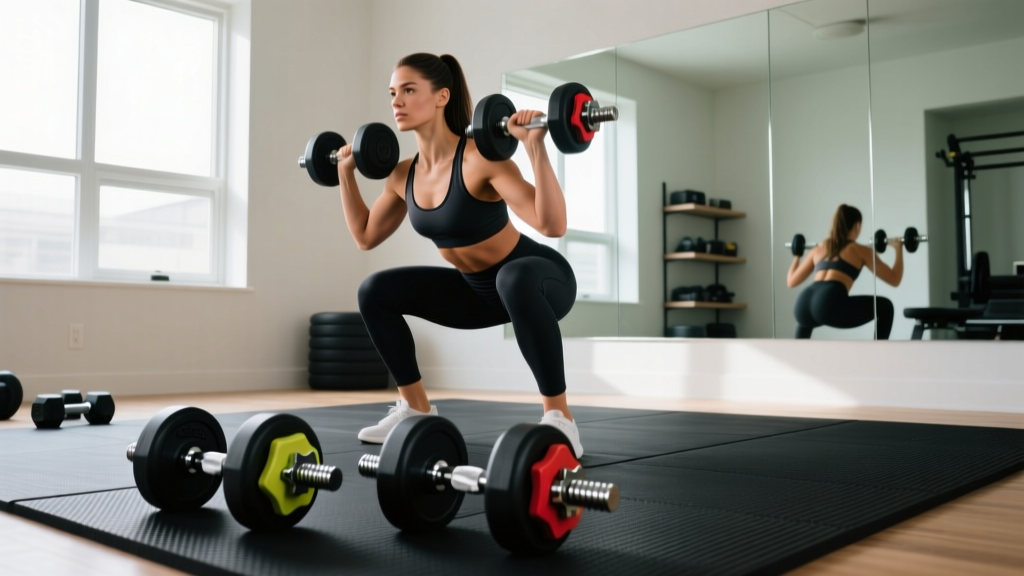
Beyond a women's leg workout with dumbbells: Collar & clamp guide
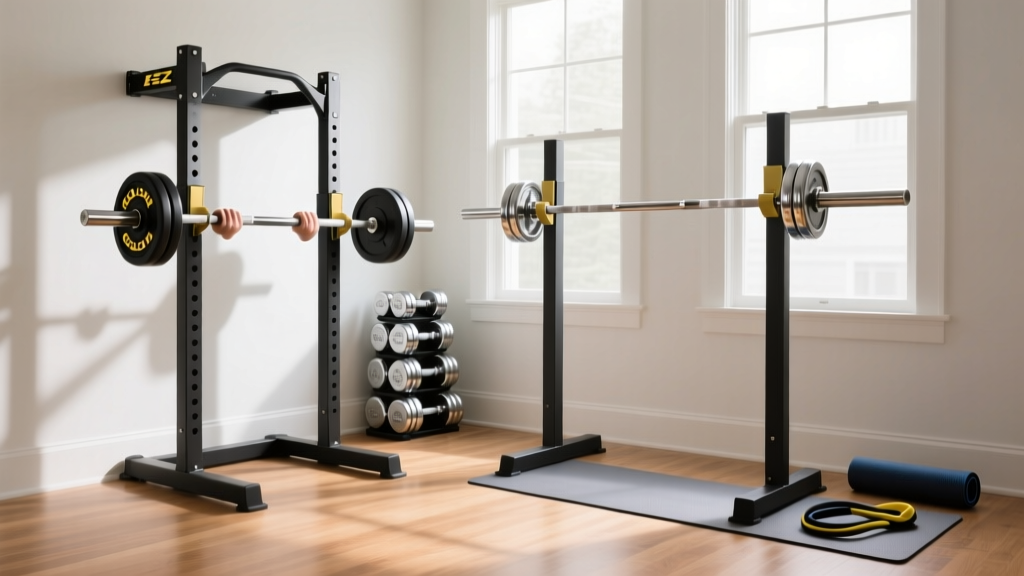
EZ Curl Bar vs Straight Bar: Space Layouts & Gold Gym Dumbbells
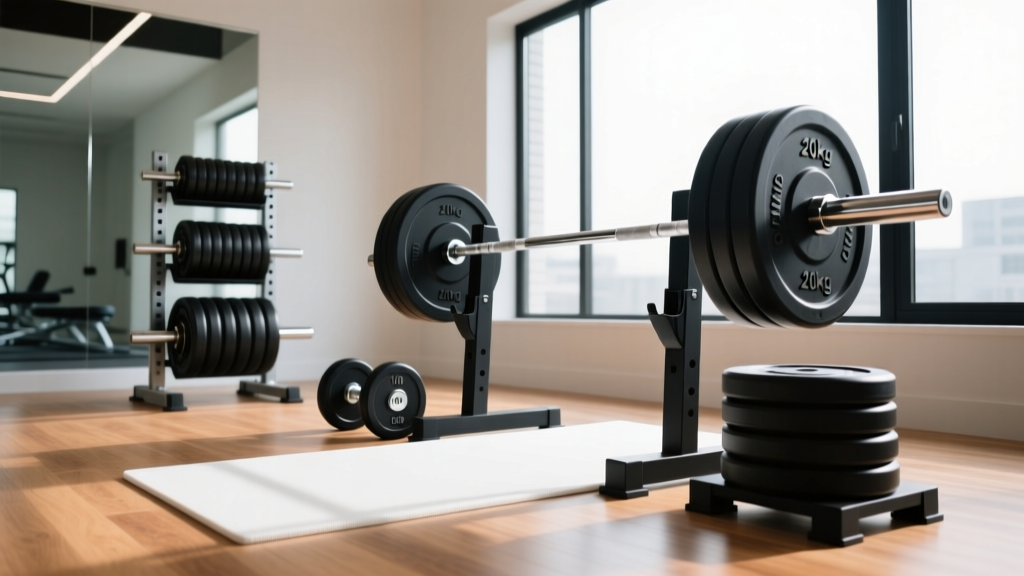
Wood Chopper with Dumbbell Setup: Olympic vs Standard Weight Plates

EZ vs Straight Bar: Beyond the Beginner Upper Body Dumbbell Workout
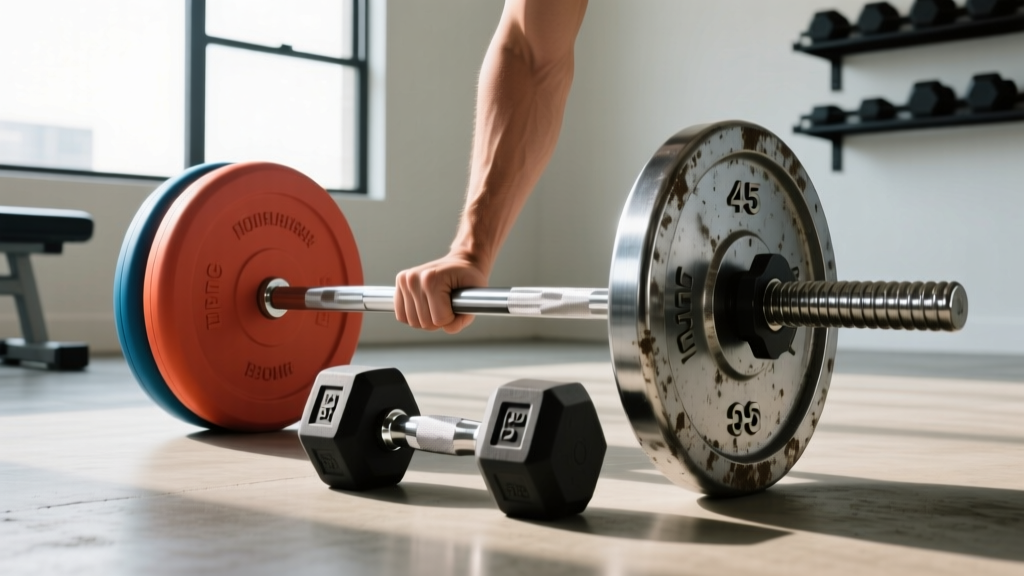
Bumper vs Iron Plates: Care for an Upper Pec Dumbbell Workout
