
Bumper vs Iron Plates: Space Layouts for Dumbbell Lying Leg Raises
Optimize your home gym layout by comparing bumper vs iron plate storage. Learn how to free up floor space for dumbbell lying leg raises and core work.

The 2026 Home Gym Zoning Dilemma: Heavy Storage vs. Floor Work
As home gym design matures in 2026, lifters are moving beyond simply cramming equipment into a garage and are instead adopting commercial facility zoning principles. The most common spatial conflict in a multi-use gym is the battle between heavy plate storage and open floor work. You need robust, accessible storage for your barbell loads, but you also need unobstructed clearance for floor-based mobility and core movements.
Nowhere is this conflict more apparent than when comparing bumper plates to traditional cast iron plates. Your choice of weight plates directly dictates your storage footprint, which in turn determines where you can safely and effectively perform exercises that require a full range of limb extension—such as dumbbell lying leg raises. In this guide, we break down the exact spatial mathematics of plate storage and how to design a layout that accommodates both heavy Olympic lifting and dedicated core zones.
The Core Clearance Rule
Any exercise requiring a bench or floor mat demands a Spatial Envelope—a 3D clearance zone accounting for limb extension, equipment overhang, and user error. When storing plates near this zone, you must account for the physical overhang of the plates on the storage pegs, not just the footprint of the storage rack itself.
Bumper vs. Iron Plates: The Spatial Footprint Breakdown
To understand how plate selection impacts your gym layout, we must look at the physical dimensions of standard 45-pound plates. While both bumper plates and cast iron plates share a standardized 17.7-inch diameter (to ensure the barbell sits at the correct height off the floor), their thickness and storage requirements vary drastically.
| Feature | 45lb Bumper Plate (e.g., Rogue HG 2.0) | 45lb Cast Iron Plate (e.g., York Legacy) |
|---|---|---|
| Diameter | 17.7 inches | 17.7 inches |
| Thickness (per plate) | 2.55 inches | 1.30 inches |
| Storage Depth (per pair) | 5.5 inches | 3.0 inches |
| Drop Zone Required | 6x6 ft minimum (impact rated) | None (controlled lowering) |
| Avg Cost (2026 Market) | ~$3.50 / lb | ~$1.60 / lb |
According to the Rogue Fitness HG 2.0 specifications, a pair of 45lb bumpers consumes 5.5 inches of horizontal peg space. If you own three pairs of bumpers (315 lbs total), you need over 16 inches of continuous peg depth. Standard A-frame plate trees often max out at 15-inch pegs, forcing lifters to buy wider, more intrusive storage racks or leave plates stacked on the floor, creating dangerous tripping hazards in tight spaces.
Designing the Core Zone for Dumbbell Lying Leg Raises
Why does plate thickness matter for core work? Consider the biomechanics of the dumbbell lying leg raise. As detailed in ExRx.net's biomechanical directory, securing a hex dumbbell between the feet alters the resistance curve, heavily targeting the lower rectus abdominis. To achieve a full stretch and maximal muscle fiber recruitment, the lifter must allow their legs to drop below the horizontal plane of the bench at the bottom of the eccentric phase.
Calculating the Spatial Envelope
If you are performing dumbbell lying leg raises on a standard flat utility bench (typically 45 inches long and 18 inches wide), the bench itself is only the starting point. Let us map the exact spatial envelope required:
- Bench Footprint: 45" x 18"
- Leg Extension Clearance: An additional 24 inches past the foot of the bench to allow the legs to drop and swing without hitting a wall or rack.
- Head/Arm Clearance: 18 inches behind the bench for arm positioning and dumbbell retrieval.
- Lateral Clearance: 24 inches on both sides for mounting, dismounting, and spotting.
This creates a total required floor zone of roughly 87 inches by 66 inches. If you place a floor-standing plate tree loaded with thick bumper plates at the foot of the bench, the 17.7-inch diameter of the plates will intersect directly with the downward arc of your legs. You will either kick the plates, injure your feet, or artificially limit your range of motion, completely defeating the purpose of the exercise.
Storage Configurations: Reclaiming Your Square Footage
To solve the spatial conflict between heavy plate storage and open core zones, you must choose the right plate type and pair it with the correct storage apparatus. Here is how to optimize your layout based on your equipment.
Scenario A: The Bumper Plate Gym (Max Drop-Zone)
If your training revolves around Olympic weightlifting or CrossFit-style workouts, bumper plates are mandatory. However, their thickness demands aggressive space optimization.
- Ditch the Floor Tree: Remove A-frame plate trees from the center of the room. They consume 4 to 6 square feet of floor space and create massive overhang hazards.
- Install Wall-Mounted Cradles: Utilize heavy-duty wall-mounted plate storage (such as the Titan Fitness Wall-Mount Plate Holders). By mounting these on the wall adjacent to your squat rack, you eliminate the floor footprint entirely.
- Define the Drop Zone: Bumpers require a dedicated 6x6 foot impact zone lined with 3/4-inch horse stall mats. Keep your core and mobility zones strictly outside this perimeter.
Scenario B: The Cast Iron Gym (Maximum Density)
If you are a powerlifter, bodybuilder, or general fitness enthusiast who does not drop weights from overhead, cast iron plates are the undisputed kings of space efficiency.
- High-Density Pegging: Because 45lb iron plates are only 1.3 inches thick, a standard 15-inch storage peg can easily hold five pairs (450 lbs) with room to spare.
- Under-Bench Storage: Iron plates can be stored on low-profile, horizontal plate posts that slide directly under your flat bench when not in use. This is impossible with bumpers due to their width.
- Integrated Rack Storage: Mount plate storage directly onto the uprights of your power rack or squat stand. Because iron plates are thin, they will not interfere with your barbell racking or your walking path.
Expert Layout Tip: Never store plates on the floor near your core zone. Even a single pair of 45lb plates left on the ground creates a 17.7-inch tripping hazard and visually shrinks the room. In 2026, the standard for a premium home gym is zero floor-stored iron. If you must leave bumpers on the floor, use a dedicated, flush-mounted floor plate cradle to contain the footprint.
Final Verdict: Which Plate Wins the Space War?
When designing a multi-use garage gym where heavy lifting and dedicated core work like dumbbell lying leg raises must coexist, cast iron plates are the superior choice for space optimization. Their slim 1.3-inch profile allows for high-density storage on wall mounts and rack-integrated pegs, completely freeing up the central floor mat for unrestricted limb extension and mobility work.
However, if your programming demands the use of bumper plates, you can still achieve a highly functional layout by strictly enforcing vertical wall storage and establishing a hard physical boundary between your 6x6 foot drop zone and your 87x66 inch core zone. By respecting the spatial envelope of your exercises and the physical dimensions of your equipment, you can build a home gym that feels twice its actual square footage.
More gear to consider
All reviews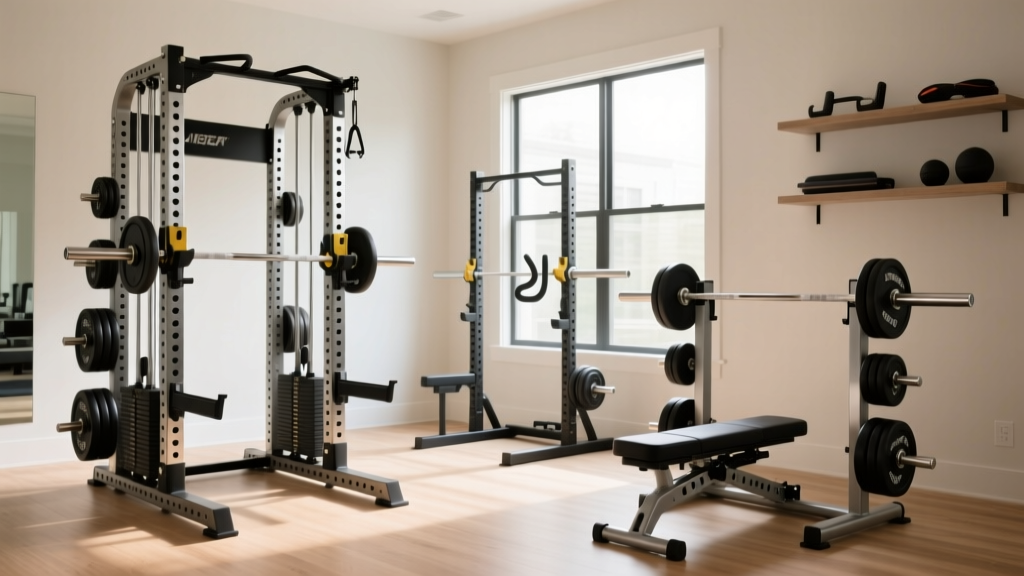
Power Rack vs Squat Rack vs Squat Stand + Incline Dumbbell Curl GIF

Power Rack vs Squat Stand: Bench Dumbbell Workout Routine Setups

Rack Storage & Care for the Incline Dumbbell Bench Press Exercise

The Best Dumbbell Only Back Workout & Top Adjustable Dumbbell Picks

Bumper vs Iron Plates: Trends & Dumbbell Side Bend Muscles Worked
