Planet Fitness Treadmills vs. Home Stationary Bikes: Value Analysis
We break down the 5-year costs of Planet Fitness treadmills vs. buying upright, recumbent, or spin stationary bikes to find the best cardio value.

The 2026 Cardio Dilemma: Gym Memberships vs. Home Equipment
As we navigate the fitness landscape in 2026, consumers are increasingly scrutinizing the return on investment (ROI) of their cardiovascular routines. The classic debate centers on a fundamental financial crossroads: should you commit to a commercial gym membership to access commercial-grade Planet Fitness treadmills and cardio floors, or is it more economical to invest in a home stationary bike?
This is not merely a question of convenience; it is a complex budget breakdown involving hidden fees, biomechanical longevity, and equipment depreciation. According to the American Heart Association, adults need at least 150 minutes of moderate-intensity aerobic activity per week. Fulfilling this mandate requires a sustainable, cost-effective setup. Below, we deconstruct the true 5-year costs and biomechanical value of utilizing Planet Fitness facilities versus purchasing specific types of home stationary bikes: upright, recumbent, and spin.
Key Takeaway: While a Planet Fitness Black Card membership appears cheap at $24.99/month, the 5-year cumulative cost—including annual fees, startup costs, and commuting—often exceeds $2,200. A mid-tier home stationary bike pays for itself in roughly 14 to 18 months for the average user.Deconstructing the Planet Fitness Treadmills & Cardio Floor
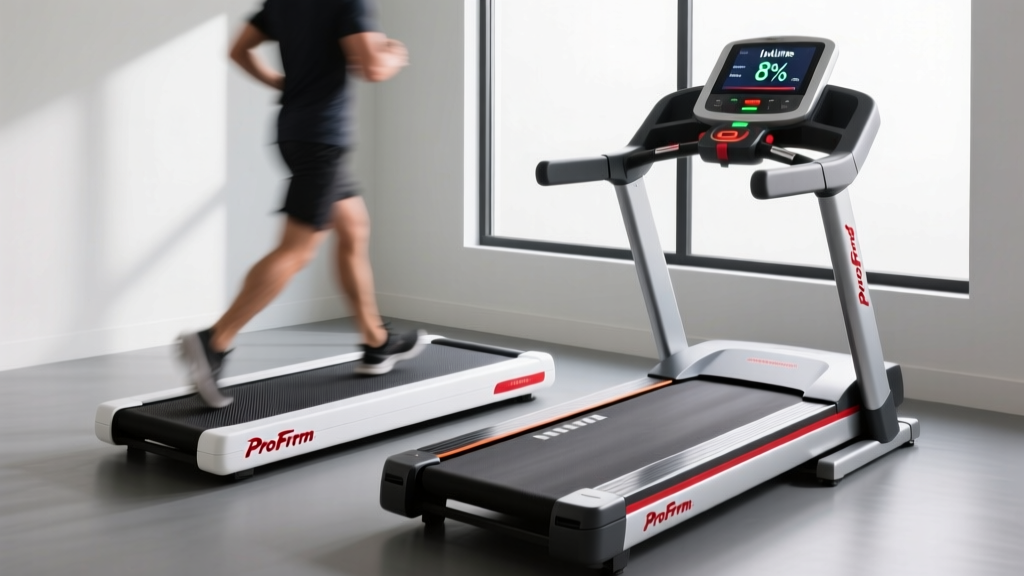
Planet Fitness typically outfits its floors with commercial-grade Matrix Fitness or Life Fitness equipment. The Matrix T7xe treadmills, for instance, feature a 4.0 HP continuous duty motor, a 20-inch by 60-inch running belt, and a 15% incline capacity. These are exceptional machines, but accessing them comes with a layered financial structure.
The Hidden Costs of the 'Low-Cost' Gym Model
- Base Membership: The Black Card membership is $24.99 per month (Standard is $15, but restricts club access and guest privileges).
- Startup & Annual Fees: Expect a $1 to $49 startup fee, plus a mandatory $49 annual maintenance fee billed every November.
- The Commute Tax: The AAA regularly reports that the average cost to drive a new vehicle hovers around $0.67 per mile when factoring in gas, depreciation, and maintenance. A 10-mile round trip to the gym costs $6.70 per visit. If you go 4 times a week, that is $1,393 annually in vehicular wear and fuel alone.
- Time Depreciation: A 20-minute round-trip commute plus 5 minutes waiting for an available treadmill during peak hours (5 PM - 7 PM) adds 100 minutes of 'dead time' to your weekly schedule.
The Home Stationary Bike Spectrum: Upright, Recumbent, and Spin
If you pivot away from the gym, the home market offers three distinct stationary bike categories. Each serves a specific biomechanical need and price point.
1. Upright Bikes: The Versatile Middle Ground
Upright bikes mimic the geometry of a traditional road bike but with a wider saddle and higher handlebars for comfort. They engage the core and upper body more than recumbent models.
- Top 2026 Contender: Schwinn IC4 / Bowflex C6.
- Price Range: $799 - $999.
- Technical Specs: 40-pound perimeter-weighted flywheel, micro-adjustable magnetic resistance (100 levels), and a Q-factor (distance between pedals) of roughly 165mm, which is slightly wider than a road bike to accommodate casual riders.
- Value Proposition: Excellent for hybrid users who want to stream classes via Bluetooth FTMS protocol without being locked into a proprietary hardware ecosystem.
2. Recumbent Bikes: Rehab, Longevity, and Lumbar Support
Recumbent bikes feature a step-through design and a bucket seat with a backrest. The pedals are positioned in front of the body, drastically reducing shear force on the lumbar spine and minimizing hip flexion impingement.
- Top 2026 Contender: NordicTrack Commercial R35 or Sole R92.
- Price Range: $1,299 - $1,999.
- Technical Specs: 32-inch step-through clearance, heavy-duty steel framing (often weighing 150+ lbs to prevent wobble during high-cadence intervals), and dual-grip pulse sensors.
- Value Proposition: Unmatched for users with sciatica, osteoarthritis, or those recovering from lower-body surgeries. The Mayo Clinic frequently recommends low-impact, supported cycling for joint preservation.
3. Spin / Indoor Cycles: High-Intensity Performance
Spin bikes are designed for aggressive riding positions, out-of-the-saddle sprints, and precise wattage tracking. They prioritize inertia and stiffness over comfort.
- Top 2026 Contender: Keiser M3i or Peloton Bike+.
- Price Range: $1,445 (Peloton) to $2,295 (Keiser).
- Technical Specs: The Keiser M3i utilizes a lightweight 4.5-pound flywheel paired with a high gear ratio and magnetic eddy current resistance, achieving +/- 1 watt accuracy. This is critical for serious cyclists doing ERG-mode threshold training.
- Value Proposition: Ideal for competitive cyclists and HIIT enthusiasts who require exact power metrics and a rigid frame that does not flex during 1,000-watt sprint efforts.
5-Year Budget Breakdown: PF vs. Home Bike Ownership
To determine true value, we must project costs over a 60-month (5-year) period. This matrix assumes 4 workouts per week.
| Expense Category | Planet Fitness (Black Card) | Home Upright Bike (e.g., Schwinn IC4) | Home Recumbent (e.g., Sole R92) |
|---|---|---|---|
| Equipment / Initiation | $49 | $899 | $1,499 |
| Monthly Fees (x60) | $1,499.40 | $0 | $0 |
| Annual Fees (x5) | $245 | $0 | $0 |
| Commute Costs (10mi RT) | $6,968 (at $0.67/mi) | $0 | $0 |
| Maintenance / Accessories | $300 (shoes, wipes) | $150 (mat, lube) | $150 (mat, lube) |
| Total 5-Year Cost | $9,061.40 | $1,049 | $1,649 |
| Cost Per Workout (1,040 sessions) | $8.71 | $1.00 | $1.58 |
Note: Even if you eliminate the vehicular commute cost by walking to a local Planet Fitness, the 5-year gym cost remains at $2,093.40, which is still double the cost of a premium home upright bike.
Biomechanical Value: Treadmills vs. Cycling
Financials aside, the physiological ROI of your chosen machine dictates long-term adherence. Harvard Health Publishing notes that vigorous stationary cycling and running at a 10-minute-mile pace yield nearly identical caloric expenditures (roughly 300-400 calories per 30 minutes for a 155-pound individual). However, the joint impact varies wildly.
The Impact Factor
Planet Fitness treadmills, despite featuring commercial cushioning systems like the Matrix Ultimate Deck, still subject the knees, hips, and lower back to ground reaction forces equivalent to 1.5 to 2.5 times your body weight with every footstrike. For a 200-pound individual, that is up to 500 pounds of force per step. Over a 5-mile run, that equates to roughly 5,000 impacts.
Conversely, stationary bikes (upright, recumbent, and spin) operate on a closed kinetic chain. The foot is fixed to the pedal, eliminating impact shock. Recumbent bikes further eliminate axial loading on the spine, making them the undisputed champions of biomechanical longevity for aging populations or those with herniated discs.
The Verdict: Decision Framework for 2026
Choosing between utilizing Planet Fitness treadmills and investing in a home stationary bike requires aligning your budget with your physiological needs.
- Choose the Home Upright/Spin Bike if: You are a busy professional valuing time-efficiency, you want to utilize third-party apps like Zwift or TrainerRoad, and you have a dedicated 4x6 foot space in your home. The break-even point against a gym membership plus commute is under 12 months.
- Choose the Home Recumbent Bike if: You are managing lower back pain, recovering from joint replacement, or prefer to read, work on a laptop, or watch TV while maintaining a steady-state Zone 2 heart rate without upper body fatigue.
- Stick with Planet Fitness if: You require the social accountability of a gym environment, you want access to heavy free-weights and cable machines in addition to cardio, or your living situation strictly prohibits heavy fitness equipment due to noise or landlord restrictions.
Ultimately, while the commercial-grade Planet Fitness treadmills are excellent pieces of engineering, the financial and temporal friction required to use them consistently makes the home stationary bike market the superior value proposition for dedicated cardiovascular health in 2026.
More gear to consider
All reviews
Elliptical vs Treadmill: Is a Treadmill With Hand Weights Better?

Does Treadmill Burn Belly Fat? Curved vs Motorized Head-to-Head

Cardio Machine Noise Comparison: Hitting Your Treadmill Mile Pace
Elliptical vs Treadmill: Cardio ROI and Treadmill Tune Up Costs
Pro Form Crosswalk Treadmill Belt Maintenance & Care Guide