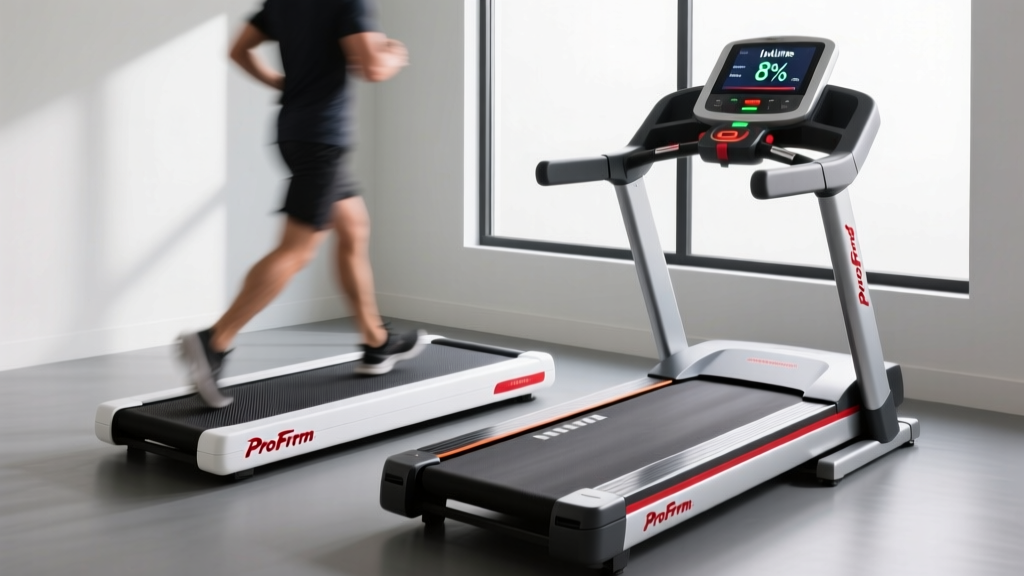
Walking Pad vs. ProForm Treadmill Incline: 2026 Showdown
We compare the best walking pads against a ProForm treadmill incline. Discover which compact cardio machine fits your home gym and fitness goals in 2026.

The Compact Cardio Dilemma: Walking Pads vs. Traditional Treadmills
The home fitness landscape in 2026 has bifurcated into two distinct camps: ultra-compact walking pads designed for passive, under-desk movement, and traditional folding treadmills built for active, structured training. As remote work remains a permanent fixture, consumers are increasingly torn between the convenience of a stowable walking pad and the biomechanical benefits of a full-sized machine. When buyers search for a reliable ProForm treadmill incline mechanism, they are usually comparing the structured intensity of traditional cardio against the low-impact, high-frequency movement of walking pads.
In this head-to-head review, we pit the best-selling premium walking pads (like the UREVO Strol 2E and Sperax 3-in-1) against ProForm's mid-range and premium incline treadmills (the Carbon TLX and Pro 2000). We will dissect motor telemetry, belt friction coefficients, joint impact, and real-world failure modes to help you make an evidence-based purchasing decision.
Contender 1: The Anatomy of a Premium Walking Pad
Walking pads have evolved significantly since their inception. The 2026 models from top-tier brands feature foldable handrails, auto-tracking belt alignment, and app integration. However, their physical limitations are dictated by their compact footprint.
Motor Telemetry: Peak HP vs. Continuous HP
The most critical misunderstanding in the walking pad market is motor rating. Most walking pads advertise a '2.5 HP' motor. This is Peak Horsepower, meaning the motor can only sustain that output for a few seconds before thermal throttling kicks in. For a 180-pound user walking at 3.5 mph, a peak-rated motor operates near its thermal limit. Prolonged use at high speeds or on an incline (if the model supports it) will trigger the internal thermal cutoff switch, abruptly stopping the belt.
Belt Dimensions and Ply Thickness
Standard walking pads feature a 15-inch to 16.5-inch wide belt with a 44-inch length. The belts are typically 2-ply and 1.4mm thick. While sufficient for a casual 2.0 mph stroll, the narrow width forces the user to maintain strict lateral discipline, making it unsuitable for jogging or high-intensity interval training (HIIT).
Contender 2: The ProForm Treadmill Incline Advantage
Stepping up to a dedicated treadmill fundamentally changes the workout dynamic. The engineering behind the ProForm treadmill incline system relies on heavy-duty linear actuators and Continuous Horsepower (CHP) motors, designed for sustained, high-load performance.
Biomechanics and Caloric Expenditure
If your goal is high-intensity interval training or maximizing caloric burn, the ProForm treadmill incline auto-adjust feature is non-negotiable. According to the CDC Physical Activity Guidelines, incorporating varying intensities and inclines into your aerobic routine significantly improves cardiovascular health and muscular endurance. Walking at a 10% incline on a ProForm Carbon TLX recruits the posterior chain (glutes, hamstrings, and calves) far more effectively than flat walking, increasing caloric expenditure by up to 40% without the joint impact of running.
Deck Cushioning and Joint Preservation
Walking pads sit directly on the floor, offering zero shock absorption. Every heel strike transmits kinetic energy straight up the tibia to the knee joint. In contrast, ProForm utilizes their proprietary ProShox cushioning system, which utilizes elastomer shocks beneath the deck. The Mayo Clinic notes that proper footwear and shock absorption are critical for preventing plantar fasciitis and shin splints, making the suspended deck of a ProForm treadmill vastly superior for users logging more than 15 miles a week.
Expert Callout: The Incline Actuator TestWhen testing the ProForm treadmill incline mechanism, pay attention to the transition speed. A high-quality linear actuator (found in the ProForm Pro 2000) shifts from 0% to 12% in roughly 4 seconds without jerking the deck. Cheaper incline motors stutter, which can disrupt your stride and cause ankle instability during fast-paced intervals.
Head-to-Head Comparison Matrix
Below is a direct specification comparison between a top-tier 2026 walking pad, ProForm's mid-range folding model, and their premium incline trainer.
| Feature | Premium Walking Pad (e.g., Sperax 3-in-1) | ProForm Carbon TLX | ProForm Pro 2000 |
|---|---|---|---|
| Motor Rating | 2.5 HP (Peak) | 2.75 CHP | 3.25 CHP |
| Belt Dimensions | 16.5' x 45' | 20' x 55' | 20' x 60' |
| Incline Capability | 0-8% (Manual Pin) | 0-10% (Auto Actuator) | -3% to 12% (Auto) |
| Top Speed | 7.6 MPH | 10 MPH | 12 MPH |
| Deck Cushioning | None (Rigid MDF) | ProShox Standard | ProShox Elite |
| 2026 Price Range | $299 - $399 | $699 - $799 | $1,199 - $1,399 |
Real-World Failure Modes and Edge Cases
As equipment reviewers, we track post-warranty failure rates and user complaints. Here is where both categories experience mechanical breakdowns:
- Walking Pad Belt Fraying: Because walking pads use smaller front and rear rollers (typically 2.5 inches in diameter), the belt wraps at a sharper angle. This creates immense friction at the seam, leading to delamination after 800 to 1,200 miles of use.
- ProForm Incline Motor Burnout: While the ProForm treadmill incline system is robust, users who frequently pause their workouts while the machine is elevated at 12% place a static load on the actuator gear. Over time, this can strip the internal plastic gears of the lift motor. Always lower the deck to 0% before pausing for extended periods.
- Electronic Interference: Walking pads placed directly on thick carpets often suffer from static buildup, which can discharge into the control board and fry the LED display. Always use a high-density PVC equipment mat beneath a walking pad.
'Research highlighted by Harvard Health Publishing indicates that while brisk walking significantly lowers cardiovascular risk, the consistency of the habit matters more than the intensity. If a walking pad is the only way you will consistently log steps during a 10-hour workday, it is the superior choice for your specific lifestyle.'
The 2026 Buying Framework: Which Should You Choose?
Your decision should not be based on which machine is 'better' in a vacuum, but rather how your biomechanics and living space align with the equipment.
Choose a Walking Pad If:
- You work from home and need to combat sedentary behavior with low-intensity, steady-state (LISS) movement while typing.
- Your available footprint is less than 10 square feet, and you need to slide the machine under a sofa or bed.
- Your primary goal is step-count accumulation rather than cardiovascular conditioning or glute hypertrophy.
Choose a ProForm Incline Treadmill If:
- You want to perform structured workouts, including incline intervals, tempo runs, and heart-rate zone training.
- You suffer from joint pain or shin splints and require the kinetic dampening of a suspended, cushioned deck.
- You weigh over 220 pounds, requiring the continuous torque of a 2.75+ CHP motor to prevent belt hesitation during foot strikes.
Frequently Asked Questions
Can I safely jog on a premium walking pad?
No. Even if a walking pad advertises a top speed of 7.6 mph, the 44-inch belt length does not allow for a natural running gait. You will subconsciously shorten your stride to avoid stepping on the motor housing, which alters your pelvic tilt and can lead to lower back pain over time.
Does the ProForm treadmill incline require manual adjustment?
No. Modern ProForm models feature automated, motorized incline systems controlled via the console or Bluetooth-connected fitness apps. The machine uses a telescoping linear actuator to raise and lower the front roller assembly seamlessly during your workout.
How often should I lubricate the belt on my machine?
For ProForm treadmills, you should check the belt friction every 90 days and apply 100% silicone lubricant if the deck feels dry. For most 2026 walking pads, the belts are pre-infused with a dry lubricant matrix and require zero maintenance; applying liquid silicone to these specific belts will actually attract dust and ruin the traction.
More gear to consider
All reviews
Air Bike vs Assault Bike: Value Beyond iFIT Treadmill Workouts
Rowing Machine Guide: Technique vs Walking Barefoot on Treadmill

Elliptical vs Treadmill Layouts: Bowflex T16 Treadmill Reviews
Setup Guide: NordicTrack T Series 16 vs Curved Manual Treadmills

Beyond the Treadmill Cat: Upright vs Recumbent vs Spin Bikes
