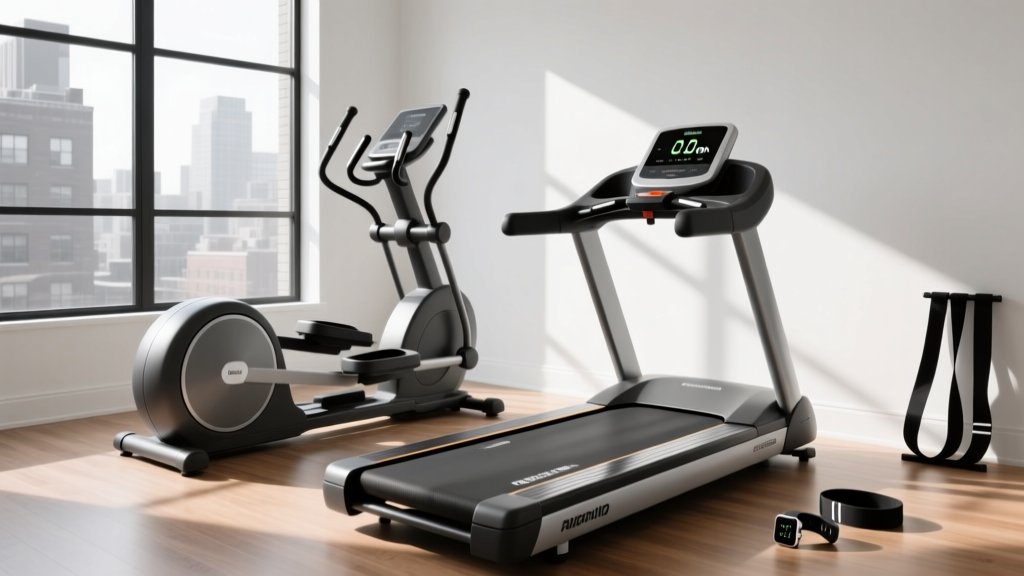
Elliptical vs Treadmill: Cardio ROI and Treadmill Tune Up Costs
Compare ellipticals and treadmills for 2026 home cardio. We analyze market trends, cardio ROI, and long-term treadmill tune up costs to guide your purchase.

The 2026 Home Cardio Market: Beyond the Sticker Price
The home fitness equipment market has undergone a radical maturation since the pandemic-era buying sprees. As we navigate 2026, consumer behavior has shifted dramatically from impulse purchasing based on upfront sticker price to a rigorous evaluation of Total Cost of Ownership (TCO). When debating the classic elliptical vs treadmill for home cardio, modern buyers are no longer just asking which machine burns more calories. They are asking which machine will survive a decade of daily use without requiring a small fortune in maintenance.
This trend report dissects the biomechanical return on investment (Cardio ROI) alongside the mechanical realities of home gym ownership. Specifically, we will analyze the hidden long-term costs of friction-based cardio machines, focusing heavily on the necessity, frequency, and financial impact of a professional treadmill tune up compared to the maintenance profile of magnetic-resistance ellipticals.
Deconstructing the Treadmill Tune Up: Maintenance as a Market Driver
Treadmills remain the undisputed kings of cardiovascular output, but they are fundamentally high-friction environments. The continuous rubbing of a PVC or urethane belt against a walking deck generates immense heat, static electricity, and mechanical drag. In 2026, industry data shows that motor and control board failures account for over 60% of out-of-warranty treadmill repairs, and the vast majority of these are directly linked to neglected belt friction.
The Anatomy of a Professional Treadmill Tune Up
A comprehensive treadmill tune up is not merely wiping down the console. It is a precise mechanical calibration. When you hire a certified fitness equipment technician (typically costing between $150 and $250 per visit), the service includes:
- Deck Inspection and Reversal: High-end models like the Sole F80 or NordicTrack Commercial 1750 feature reversible phenolic resin decks. A technician will check for micro-grooves and flip the deck to double its lifespan. Cheaper MDF (medium-density fiberboard) decks cannot be reversed and must be replaced ($200–$400) once the laminate wears through.
- Precision Lubrication: Applying exactly 1 ounce of 100% pure silicone lubricant beneath the belt. Crucial Note: Petroleum-based sprays like WD-40 will instantly dissolve the chemical backing of the belt, causing catastrophic delamination.
- Belt Tension and Tracking Calibration: Adjusting the rear roller bolts to ensure the belt lifts exactly 2 to 3 inches in the center. Over-tightening strains the motor bearings; under-tightening causes the belt to slip, creating a severe safety hazard during high-speed sprints.
- Static Mitigation and Motor Hood Vacuuming: Dust and pet hair act as insulators inside the motor compartment. Technicians use specialized vacuums to clear the motor brushes and control board, preventing static discharge from frying the lower control board—a $300+ replacement part.
DIY vs. Professional Treadmill Tune Up Costs
| Service Level | Estimated Cost | Recommended Frequency | Risk Factor |
|---|---|---|---|
| DIY Silicone Lube & Vacuum | $15 - $25 | Every 130 miles / 3 months | High (if belt tension is ignored) |
| Professional Basic Tune Up | $150 - $199 | Annually | Low |
| Pro Tune Up + Belt/Deck Swap | $350 - $600 | Every 3-5 years | Low |
Elliptical Mechanics: The Low-Friction Alternative
If treadmills are defined by friction, ellipticals are defined by momentum and magnetic resistance. Models like the Sole E95 or Bowflex Max Trainer M9 utilize heavy flywheels and eddy-current magnetic braking systems. Because there is no physical contact between the brake and the flywheel, the primary wear-and-tear is shifted away from the drive system and onto the pivot joints.
Wear Patterns and Failure Modes
The elliptical's maintenance schedule is far less demanding than the treadmill tune up, but it is not entirely maintenance-free. The critical failure points include:
- Pivot Bearings vs. Bronze Bushings: Premium 2026 ellipticals use sealed cartridge bearings at the pedal arms and crank. These are maintenance-free but cost upwards of $80 per joint to press out and replace when they eventually grind. Budget models use bronze bushings that require monthly lithium grease applications to prevent the infamous "elliptical squeak."
- Drive Belt Tension: The ribbed Kevlar drive belt connecting the pedals to the flywheel can stretch over thousands of revolutions, leading to a "slipping" sensation at the top of the stride. This requires removing the plastic shroud and adjusting the motor mount tensioner.
- The Alternator Edge Case: On self-generating commercial ellipticals (like those from Precor or Life Fitness), the alternator that powers the console and provides resistance can fail. Unlike a treadmill motor, which can sometimes be repaired with a simple brush replacement, a fried alternator is a $500+ proprietary part that often totals an older machine.
"The market is seeing a distinct bifurcation. Consumers who prioritize high-intensity interval training (HIIT) and sprint mechanics are accepting the mandatory treadmill tune up costs as a business expense. Meanwhile, aging demographics and users with documented joint pathologies are migrating heavily to ellipticals, accepting a lower peak caloric ceiling in exchange for near-zero routine maintenance."
— 2026 Home Fitness Equipment Retailer Index
Cardio ROI: Metabolic Output vs. Joint Reaction Forces
To accurately compare these machines, we must evaluate the Cardio ROI—how much physiological benefit you extract per unit of joint stress. According to biomechanical analyses referenced by the Mayo Clinic, ellipticals offer a distinct advantage in reducing joint reaction forces. The continuous foot contact on an elliptical eliminates the "ground strike" impact of running, which can generate forces equal to 2.5 times your body weight on the tibia and femur.
However, treadmills offer superior neuromuscular translation. If your goal is to improve your 5K time or train for a hiking expedition, the treadmill's biomechanical specificity is unmatched. The CDC's physical activity guidelines emphasize the importance of weight-bearing exercises for maintaining bone mineral density—a benefit inherently provided by the impact of treadmill walking or running, which is largely absent on an elliptical. For deep kinesiological breakdowns of muscle activation patterns across different cardio modalities, the EXRX exercise directory remains an invaluable, data-rich resource for fitness professionals.
5-Year Total Cost of Ownership (TCO) Matrix
To ground this market analysis in hard data, we have modeled the 5-year TCO for two premium, mid-market staples: the Sole F80 Treadmill and the Sole E95 Elliptical. This assumes a heavy usage profile (5 hours per week, approximately 1,500 miles of treadmill belt travel annually).
| Cost Category | Sole F80 (Treadmill) | Sole E95 (Elliptical) |
|---|---|---|
| Upfront Retail Price (2026) | $2,199 | $2,499 |
| Routine Maintenance (5 Yrs) | $120 (DIY Silicone Lube) | $0 (Sealed Bearings) |
| Professional Tune Ups (2 Visits) | $350 | $0 |
| Wear Parts Replacement | $250 (1x Belt Swap at Yr 4) | $0 |
| Energy Consumption (5 Yrs) | $180 (3.0 HP Motor Draw) | $45 (Low-draw console) |
| Total 5-Year Investment | $3,099 | $2,544 |
Analysis: Despite the elliptical carrying a $300 premium at the point of sale, the treadmill's mandatory friction-management costs and higher electrical draw result in the elliptical being over $500 cheaper to own over a half-decade. Furthermore, the treadmill requires active time investment from the owner to perform the treadmill tune up procedures, whereas the elliptical remains largely "set and forget."
Strategic Purchasing: Parsing the 2026 Warranty Fine Print
As you finalize your home gym strategy, the warranty is your ultimate hedge against mechanical failure. In 2026, manufacturers have become increasingly sophisticated in how they segment coverage. When evaluating a treadmill, do not be blinded by a "Lifetime Frame and Motor" warranty. The motor itself rarely fails; it is the lower control board and the drive belt that succumb to heat and friction. Look for a minimum of 3 years on parts and electronics.
For ellipticals, scrutinize the coverage on the crank arm and pivot bearings. Many brands classify these as "wear items" and limit them to 90 days of coverage, despite them being the most critical structural components of the machine. If you are a heavy user (200+ lbs) or plan on aggressive HIIT routines, the lateral torque applied to elliptical pivot joints is immense. Ensure your warranty explicitly covers the crank assembly for at least two years.
The Final Verdict
The choice between an elliptical and a treadmill in 2026 is no longer just about fitness goals; it is a calculation of mechanical tolerance and financial foresight. If your training demands the biomechanical specificity of running and you are willing to commit to the strict, non-negotiable schedule of a treadmill tune up, the treadmill remains an unparalleled cardiovascular tool. However, if your priority is sustainable, high-volume calorie expenditure with minimal mechanical intervention and a lower total cost of ownership, the modern magnetic elliptical is the undisputed market champion.
More gear to consider
All reviews
SF-T1407M Manual Walking Treadmill Review vs Top Walking Pads

Using a Wellfit Treadmill Discount Code? Belt Care Value Guide

Technogym Treadmill Guide: Curved vs Motorized & tweeklynutrition
NordicTrack T Series 8.5 S Treadmill Black: Feature Compare & Fixes

Will a Treadmill Reduce Belly Fat? Rowing Machine Setup & Technique
