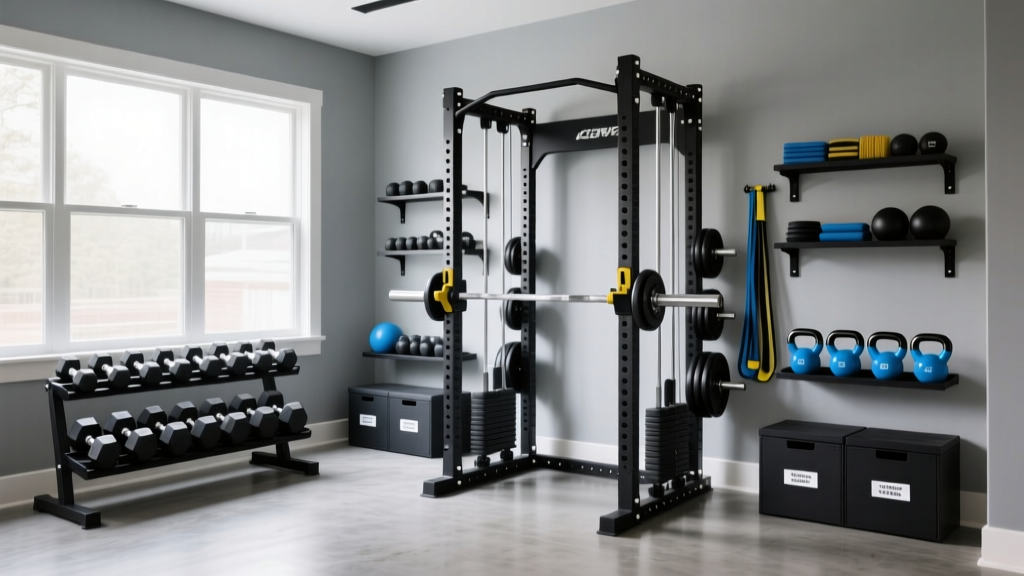
Weatherproofing Your Outdoor Home Gym Layout for Longevity
Master your outdoor home gym layout with expert weatherproofing tips. Learn rust prevention, UV protection, and seasonal maintenance for longevity.

Strategic Zoning: Designing a Weather-Resilient Layout
Building an outdoor training space is a dream for many fitness enthusiasts, but the elements are entirely unforgiving. A poorly planned home gym layout exposed to rain, UV radiation, and humidity will result in rusted knurling, seized barbell bearings, and degraded rubber flooring within a single season. When designing an outdoor setup, your first line of defense is not a chemical coating, but strategic spatial planning.
Mapping Sun Paths and Wind Tunnels
Before bolting down a single upright, map your yard's solar exposure. In the Northern Hemisphere, a south-facing setup receives maximum UV exposure, which accelerates the degradation of rubber bumper plates and polyurethane belts. Position your primary lifting zone on the north or east side of your property to capitalize on morning sun and afternoon shade. Furthermore, avoid placing your rig between two parallel fences or structures. This creates a wind tunnel effect that can turn a moderate breeze into a hazardous crosswind during overhead presses or when using resistance bands.
Pro Tip: Install a corrugated polycarbonate roof or a heavy-duty shade sail (rated for 85% UV blockage) over your primary lifting platform. Ensure the roof has a minimum 15-degree pitch to prevent water pooling and debris accumulation.
Material Science: Selecting Outdoor-Rated Gear
The biggest mistake lifters make when configuring an outdoor home gym layout is bringing indoor-rated equipment outside. Standard powder-coated steel and black oxide barbells will oxidize rapidly when exposed to ambient moisture. As of 2026, manufacturers have vastly improved outdoor-specific formulations, but you must know exactly what to look for.
| Component | Ideal Outdoor Material | Vulnerability | Maintenance Frequency |
|---|---|---|---|
| Power Rack / Rig | Hot-Dip Galvanized (HDG) Steel | White rust if zinc coating is scratched | Bi-annual inspection |
| Barbell Shaft | Stainless Steel or Cerakote | Cerakote chipping on sleeves; stainless scratching | Monthly brushing & oiling |
| Bumper Plates | Virgin Polyurethane (PU) | Standard crumb rubber cracks in UV/freeze cycles | Seasonal UV protectant spray |
| Cable Pulleys | UHMW Plastic with Sealed Bearings | Nylon wheels warp in extreme heat | Quarterly silicone lube |
For power racks, insist on Hot-Dip Galvanized steel that meets the ASTM A123 standard. Unlike electro-galvanizing (which provides a micro-thin layer of zinc), hot-dipping submerges the steel in molten zinc, creating a metallurgical bond that costs roughly 15-20% more upfront (expect to pay $1,800 to $2,500 for a galvanized folding rack or 6-post monster rig) but offers decades of corrosion resistance.
⚠️ Barbell Bearing Warning
Never leave a barbell with needle bearings outdoors permanently. Needle bearings require tight, delicate seals. High humidity and temperature fluctuations cause condensation inside the sleeve, seizing the bearings and ruining the bar's spin. For an outdoor layout, always choose a barbell with bronze or composite bushings. Bushings are far more forgiving of moisture ingress and can be restored with basic maintenance.
The Moisture & Rust Prevention Protocol
Even with galvanized steel and stainless shafts, secondary components like plate trees, j-cups, and spotter arms are often finished with standard powder coat. According to facility maintenance guidelines outlined by the National Strength and Conditioning Association (NSCA), proactive environmental control and routine lubrication are mandatory for high-humidity facilities.
The 3-Step Anti-Corrosion Routine
- Degrease and Debride: Every 90 days, wipe down all bare metal and knurling with a nylon brush and a 50/50 mix of isopropyl alcohol and water. This removes dead skin, chalk, and ambient salts that act as catalysts for oxidation.
- Apply a Lanolin-Based Inhibitor: Avoid standard WD-40, which is a solvent that strips existing oils and leaves metal bare. Instead, use a lanolin-based corrosion inhibitor like Fluid Film NAS or Boeshield T-9. These products creep into microscopic pores in the steel and displace moisture.
- Buffer the Knurling: Spray the lubricant onto a microfiber towel first, then wipe the barbell knurling. Spraying directly onto the bar will clog the knurl grooves with sticky residue, attracting dirt and dead skin.
Flooring Foundations: Drainage and UV Protection
Your flooring dictates the structural integrity of your entire home gym layout. Standard interlocking EVA foam or cheap rubber mats will trap water underneath, creating a hidden breeding ground for mold and a rust-accelerator for any equipment resting on them.
For a permanent outdoor setup, install 3/4-inch thick vulcanized rubber pavers (often used in commercial playgrounds) over a crushed gravel base. Crucially, the sub-base must be graded to a 2% slope (1/4 inch per foot) to ensure rapid water runoff. If you are building a wooden platform, use marine-grade plywood sealed with a polyurethane deck coating, and leave 1/8-inch expansion gaps between the boards to accommodate swelling during high-humidity months.
Seasonal Maintenance Calendar
Longevity is a byproduct of consistency. Post this calendar inside your outdoor rig to ensure your equipment survives the extremes.
- Spring (The Thaw): Inspect all bolted connections. Winter freeze-thaw cycles cause metal to contract and expand, loosening carriage bolts on rigs and platforms. Torque all hardware to the manufacturer's specifications. Apply a fresh coat of UV-protectant (like 303 Aerospace Protectant) to all rubber bumper plates and resistance bands.
- Summer (Heat & Hydration): Extreme heat degrades polyurethane belts on cable machines and warps plastic pulleys. Keep a silicone spray on hand for cable guide rods. Furthermore, outdoor training in peak summer requires strict heat management. The Centers for Disease Control and Prevention (CDC) emphasizes monitoring the heat index and ensuring adequate electrolyte replacement when training in outdoor environments exceeding 85°F (29°C).
- Autumn (Debris Management): Falling leaves and pine needles hold moisture against steel and rubber. Sweep the layout weekly. Check the weather-stripping on any outdoor storage cabinets where you keep your chalk, belts, and collars.
- Winter (The Shutdown): If you live in a climate with heavy snow and sub-freezing temperatures, bring your barbell, plates, and collars indoors. Snow accumulation on a rig is fine if it's galvanized, but freezing water will split plastic pulley housings and snap cable swages.
Frequently Asked Questions
Can I leave my adjustable dumbbells outside?
No. Adjustable dumbbells (like Nuobell or PowerBlock) feature intricate internal mechanisms, small springs, and tight tolerances. Even a 5% humidity shift can cause internal condensation, leading to catastrophic failure of the selector pins. Always store adjustable dumbbells in a climate-controlled indoor environment.
Is Cerakote better than Stainless Steel for outdoor bars?
Stainless steel is superior for longevity. While Cerakote offers excellent corrosion resistance on the shaft, the sleeves are often left bare or finished in black oxide to maintain proper sleeve rotation. Once the sleeve rusts, it can pit and damage your bumper plates. A fully stainless steel barbell ($350-$450 range) is the ultimate buy-it-for-life investment for an outdoor layout.
How do I protect my cable crossover machine outdoors?
Cable machines are highly vulnerable due to the exposed steel cables and guide rods. You must install a custom-fit waterproof tarp or a hard-shell polycarbonate enclosure over the machine when not in use. If the steel cables develop surface rust, they will fray and snap under load, posing a severe safety hazard.
By treating your outdoor home gym layout as a dynamic, weather-exposed system rather than a static indoor room, you can build a training sanctuary that withstands the elements for decades. Prioritize drainage, invest in metallurgically sound steel, and commit to a rigorous seasonal maintenance protocol.
More gear to consider
All reviews
Joe Rogan Home Gym Vibe: Beginner Starter Kit & Layout

2026 Garage Trends: Body Solid G6BR Home Gym, Flooring & Ventilation

CAP Home Gym Weight Guide: How Much Iron Do You Actually Need?

2026 Electrical & Safety Requirements for a Home Gym in Garage

Bowflex PR1000 Home Gym: The Ultimate Beginner Starter Kit Guide