Home Gym Construction: Rubber Rolls vs. Tiles Compared
Compare rubber rolls vs. interlocking tiles for your home gym construction. Expert tips on costs, installation, and remodeling for garages and basements.

The Foundation of Your Home Gym Construction
When planning a dedicated workout space, the most critical remodeling decision you will make happens before any equipment crosses the threshold: the flooring. In 2026, the home gym construction landscape has evolved, with supply chain stabilizations bringing down freight costs for heavy materials, yet the debate between rubber rolls and interlocking tiles remains fierce. Choosing the wrong flooring for your specific subfloor can lead to trapped moisture, ruined concrete, or catastrophic noise transfer to the rooms below.
This head-to-head product comparison dives deep into the two undisputed heavyweights of home gym remodeling: Vulcan Prime 3/8-inch Rubber Rolls and Rogue HG 2.0 3/4-inch Interlocking Tiles. We will break down exact pricing, installation realities, structural requirements, and the hidden edge cases that most generic buying guides completely ignore.
Contender 1: Vulcan Prime 3/8-Inch Rubber Rolls
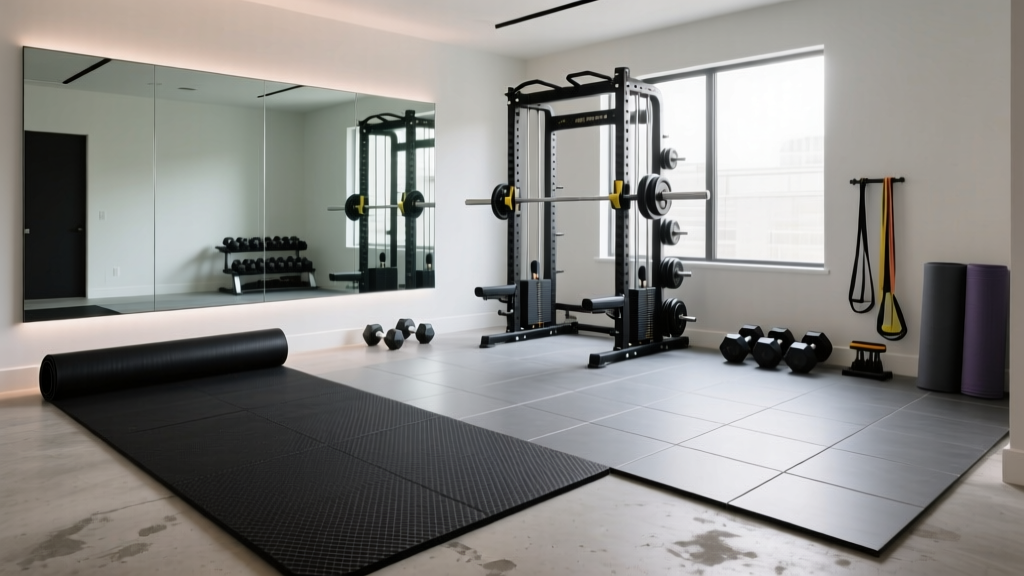
Rubber rolls have long been the gold standard for commercial gyms and large garage conversions. The Vulcan Prime series, specifically the 3/8-inch (9.5mm) heavy-duty variant, offers a continuous, near-seamless surface that is virtually impervious to heavy barbells and dropped dumbbells.
Specifications and 2026 Pricing
- Cost: Approximately $2.65 to $2.95 per square foot.
- Weight: 2.5 lbs per square foot (a standard 4x10 foot roll weighs roughly 100 lbs).
- Composition: Recycled SBR rubber with EPDM color flecks.
- Width: 4 feet (lengths customizable up to 30 feet).
For a standard 400-square-foot two-car garage remodel, you are looking at a base material cost of roughly $1,120. However, the true cost of rolls lies in the installation labor. Because of the immense weight and the need for precise cutting around pillars and doorways, this is strictly a two-person job. You will need a heavy-duty utility knife, a straight edge, and a fresh supply of hook blades to slice through the dense vulcanized rubber.
Contender 2: Rogue HG 2.0 Interlocking Tiles (3/4-Inch)
Interlocking tiles are the undisputed champions of the solo DIY remodeler and modular spaces. The Rogue HG 2.0 tiles, machined with precision waterjet-cut puzzle edges, provide an ultra-tight seam that prevents chalk and sweat from seeping into the subfloor.
Specifications and 2026 Pricing
- Cost: Approximately $5.15 to $5.50 per square foot.
- Weight: 4.2 lbs per square foot (a 2x2 foot tile weighs roughly 17 lbs).
- Thickness: 3/4-inch (19mm), offering superior drop protection.
- Dimensions: 2x2 feet or 2x4 feet interlocking modules.
Outfitting that same 400-square-foot garage with Rogue tiles will cost upwards of $2,140—nearly double the price of rolls. Yet, what you lose in material savings, you make up for in installation flexibility. A single person can easily carry, place, and interlock these tiles over a weekend. Furthermore, if you are renting or plan to move your gym to a new property, tiles can be disassembled and relocated without destroying the material.
Head-to-Head Comparison Matrix
| Feature | Vulcan 3/8" Rubber Rolls | Rogue HG 2.0 3/4" Tiles |
|---|---|---|
| Material Cost (per sq ft) | $2.65 - $2.95 | $5.15 - $5.50 |
| Installation Crew | 2+ People Required | 1 Person (Solo DIY) |
| Seam Visibility | Minimal (if taped correctly) | Visible Puzzle Lines |
| Drop Protection | Good (Requires plywood base for heavy drops) | Excellent (Standalone 3/4" thickness) |
| Relocation Ease | Poor (Adhesive ruins backing) | Excellent (Modular design) |
| Subfloor Breathability | Traps Moisture (Requires vapor barrier) | Moderate (Seams allow micro-venting) |
Real-World Remodeling Scenarios: Which Should You Choose?
The 'best' product is entirely dictated by the architectural reality of your space. Here is how to match the flooring to your specific home gym construction scenario.
Scenario A: The Unfinished Garage Conversion (Concrete Subfloor)
If you are remodeling an unsealed garage, moisture is your primary enemy. Concrete is porous and wicks groundwater. If you lay rubber rolls directly over bare concrete, you will create a microclimate that breeds black mold within six months. According to the EPA's Indoor Air Quality guidelines, trapped moisture combined with organic dust leads to severe respiratory hazards.
The Fix: If using Vulcan Rolls, you must first lay a 6-mil polyethylene vapor barrier, followed by a 3/4-inch OSB subfloor, before gluing the rubber down. If you want to skip the wood subfloor, the Rogue 3/4-inch Tiles are superior here; their thickness and interlocking seams allow you to lay them directly over a sealed concrete floor, and you can easily pull them up once a year to sweep and check for efflorescence.
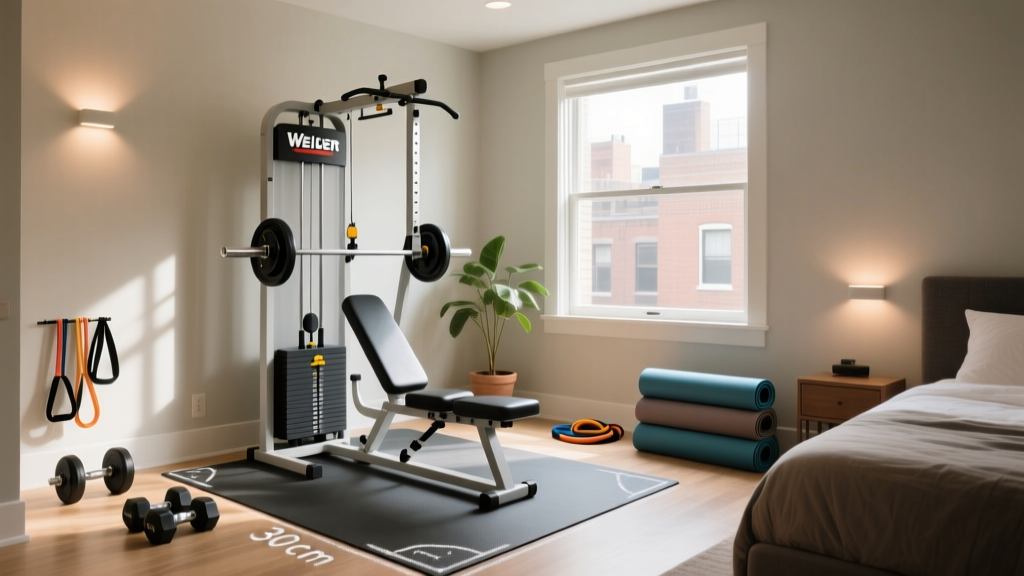
Scenario B: The Basement or Upper-Level Bedroom Remodel
Remodeling a space above a living area requires strict attention to acoustics. Dropping a 45-pound bumper plate generates low-frequency impact noise that travels through floor joists. You need a flooring solution with a high Impact Insulation Class (IIC) rating.
The Fix: The Rogue 3/4-inch Tiles win this category effortlessly. The 19mm thickness absorbs the kinetic energy of dropped weights far better than 3/8-inch rolls. For maximum noise deadening in an upstairs remodel, pair the Rogue tiles with a 5mm acoustic cork underlayment. This combination will push your IIC rating well above 50, keeping the peace with anyone in the room below.
Warning: The Carpet Subfloor Trap
Never install rubber rolls or tiles directly over plush carpet. The carpet padding will compress unevenly under heavy racks, causing your power rack to wobble and your interlocking tiles to separate at the seams during heavy deadlifts. If your remodel space is carpeted, you must either rip the carpet out to expose the wood/concrete subfloor, or lay down a 3/4-inch plywood platform over the carpet before installing your rubber flooring.
Hidden Remodeling Costs & Edge Cases
When budgeting your home gym construction, the price per square foot is just the beginning. Experienced remodelers account for the following hidden variables:
- Acclimatization Time: Recycled rubber off-gasses and expands/contracts with temperature. You must unroll or unbox your flooring and let it sit in the climate-controlled room for a minimum of 48 hours before installation. Failing to do so will result in bubbling seams a month later.
- Expansion Gaps: Rubber expands in the summer heat. You must leave a 1/4-inch gap between the flooring and the drywall. Cover this gap with rubber baseboard cove molding.
- Subfloor Leveling: Rubber rolls will telegraph every imperfection in your concrete. If your garage floor has a slope greater than 1/8-inch over 10 feet, you will need to use a self-leveling compound like Henry 555 LevelPro before laying rolls. Tiles are more forgiving of minor subfloor pitting.
- Adhesive vs. Tape: For rolls, avoid full-spread polyurethane glue unless the gym is permanent. Use double-sided acrylic tape around the perimeter and at the seams. It holds firm against lateral foot drag but allows for removal if you decide to sell your home and revert the space to a standard garage.
Expert Verdict for Your 2026 Build
Ultimately, the choice between rolls and tiles comes down to your budget, your labor availability, and the permanence of your remodel. According to the Rogue Fitness flooring catalog, the precision-machined edges of modern tiles have largely eliminated the 'shifting seam' issue that plagued older interlocking models, making them a highly viable option for heavy lifting.
Choose Vulcan Rubber Rolls if you are outfitting a massive space (over 600 sq ft), have a helper for installation, and want a seamless, commercial-grade aesthetic on a tighter budget. Choose Rogue HG 2.0 Tiles if you are executing a solo DIY remodel, require superior drop protection for Olympic lifting, or need the flexibility to relocate your gym in the future. Both options, when paired with proper subfloor preparation, will provide a lifetime of performance for your home gym construction project.
For more detailed specifications and current bulk freight quotes, you can consult suppliers like Rubber Flooring Inc to ensure your 2026 remodel stays on schedule and under budget.
More gear to consider
All reviews
Smart Home Gym Designs and Layout: Garage Flooring & Airflow Fixes

Electrical Safety Mistakes With Your Marcy MWM-990 Stack Home Gym

Marcy Home Gym 1005 Setup: Electrical & Safety Mistakes

Beginner Home Gym Starter Kit: Bowflex PR3000 Space Layout Guide

Shared Home Gym Weights Setup: A Step-by-Step Couple's Guide