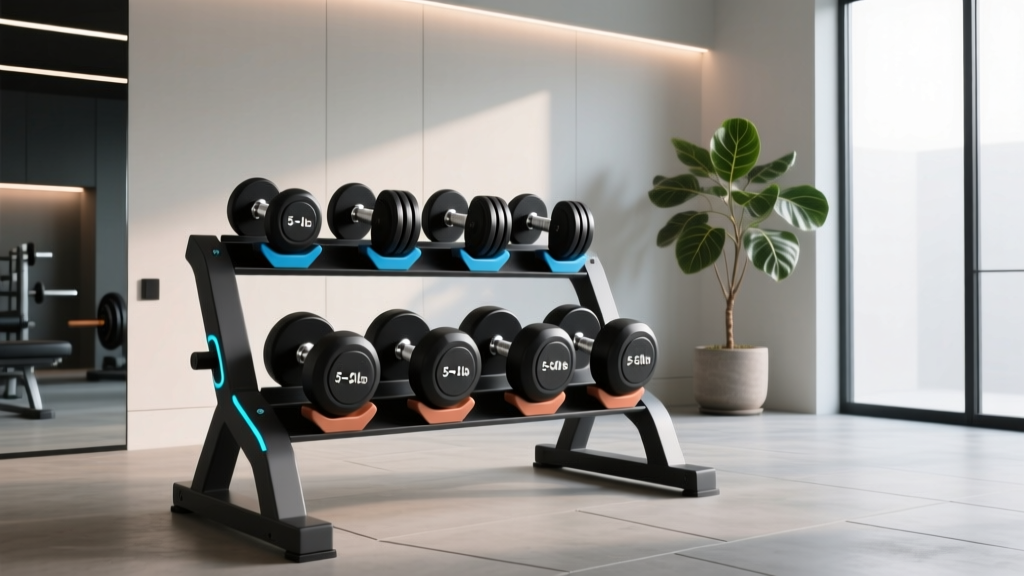
2026 Dumbbell Rack Trends: Optimizing Proper Incline Dumbbell Press
Discover 2026 dumbbell rack market trends and storage solutions engineered to optimize biomechanics for a safe, proper incline dumbbell press.

The Evolution of Free Weight Storage: Beyond Tidiness
In the commercial fitness and high-end home gym sectors, the approach to dumbbell storage has undergone a radical transformation. As we navigate the 2026 fitness equipment market, facility owners and biomechanics experts are no longer viewing dumbbell racks merely as organizational tools. Instead, modern storage solutions are being engineered as critical extensions of the lifting platform. This shift is most evident when analyzing the setup and execution of heavy, technically demanding movements—most notably, the proper incline dumbbell press.
According to recent facility optimization data highlighted in the IHRSA Global Report, boutique strength studios and premium commercial gyms have increased their capital expenditure on ergonomic free-weight storage by 28% over the last three years. The driving force? Reducing injury liability and improving performance flow. When a lifter transitions from a heavy rack to an incline bench, the spatial relationship between the storage tier and the bench dictates the safety of the shoulder joint. This market analysis breaks down the 2026 trends in dumbbell rack design, material science, and spatial planning, specifically through the lens of optimizing the proper incline dumbbell press.
The Biomechanical Bottleneck of the Incline Press
To understand why rack design matters, we must first examine the biomechanics of the lift. The proper incline dumbbell press requires strict scapular retraction and depression to protect the rotator cuff and isolate the clavicular head of the pectoralis major. As detailed in the ExRx Kinesiology Database, any disruption to the thoracic arch or scapular positioning during the pickup or the drop phase compromises the lift and invites impingement.
⚠️ The Proximity Failure Mode: In older gym layouts, racks were pushed flush against walls or benches to save space. For a 30-degree incline press, if the dumbbell rack is closer than 30 inches to the head of the bench, the lifter cannot safely execute the 'knee-kick' setup. They are forced to twist their torso to retrieve 80lb+ dumbbells, instantly breaking scapular retraction before the first rep even begins.The 2026 market has responded to this bottleneck by introducing racks with integrated spatial awareness, angled tiering, and specialized drop-zones that accommodate the unique swing path of an incline press dismount.
2026 Market Trends in Dumbbell Storage
1. Ergonomic Tier Pitching and Shelf Depth
The flat, horizontal shelves of the early 2010s are being phased out of premium facilities. The current industry standard for the top two tiers of a commercial rack is a 15-degree to 20-degree downward pitch. This angled cradle allows the lifter to grip the handle of a heavy dumbbell (e.g., 100lbs+) with a neutral wrist, pulling it backward toward the body rather than deadlifting it straight up from a flat surface. Furthermore, shelf depths have expanded from the traditional 12 inches to 16 or 18 inches to accommodate the longer handles and bulkier urethane heads of modern 120lb+ competition-grade dumbbells.
2. The 36-Inch Clearance Standard
Equipment manufacturers are now publishing 'Clearance Matrices' alongside their rack specifications. For a proper incline dumbbell press setup, the 2026 standard mandates a minimum 36-inch radial clearance from the edge of the rack to the head of the adjustable bench. This specific measurement allows the lifter to sit parallel to the rack, grab the dumbbells, and safely pivot onto the 30-degree or 45-degree incline without the elbows striking the steel uprights of the storage unit.
3. Acoustic Dampening and Urethane Integration
With the rise of hybrid commercial spaces that blend heavy lifting with recovery zones, noise pollution from dropped weights is a major concern. Modern racks feature UHMW (Ultra-High-Molecular-Weight) polyethylene liners on the cradles. When paired with premium urethane dumbbells, this reduces the acoustic decibel spike of racking heavy weights by up to 40%, a massive selling point for high-end urban gyms.
2026 Commercial Rack Comparison Matrix
Below is a comparative analysis of three dominant tiered storage solutions in the 2026 market, evaluated specifically on their compatibility with heavy incline pressing workflows.
| Brand & Model | Tier Pitch Angle | Steel Gauge & Load | Incline Clearance Rating | 2026 Est. Price |
|---|---|---|---|---|
| Rogue 3-Tier Dumbbell Rack | 15° Pitch (Top 2 Tiers) | 11-Gauge / 1,200 lbs total | Excellent (Requires 32" min) | $495 - $550 |
| Eleiko Presto Storage | 20° Ergonomic Curve | Reinforced Alloy / 1,500 lbs | Superior (Integrated Bench Guide) | $1,450 - $1,600 |
| Titan Fitness 3-Tier | Flat (0°) | 14-Gauge / 800 lbs total | Poor (High Shelf Strike Risk) | $279 - $310 |
As noted in the Rogue Fitness 3-Tier Dumbbell Rack specifications, the 11-gauge steel construction is vital. Cheaper 14-gauge alternatives (like the budget tier options) suffer from 'shelf bowing' when loaded with multiple pairs of 100lb+ dumbbells, which alters the pickup angle and introduces a dangerous variable to the incline press setup.
Material Science: Urethane vs. Virgin Rubber in Storage
The type of dumbbell being stored dictates the necessary rack cradle design. In 2026, premium facilities have largely migrated from virgin rubber to cast-core urethane dumbbells (typically rated at an 85A to 90A Shore A durometer). Urethane is highly resistant to UV degradation and does not off-gas, but it is less 'grippy' than rubber.
"When storing 90A urethane dumbbells on a flat steel rack, the slightest vibration from a dropped barbell nearby can cause the dumbbells to 'walk' or roll off the shelf. The 2026 standard requires either a 15-degree negative pitch or raised UHMW lips on the cradle edges to secure urethane sets safely."
— Facility Design Task Force, International Fitness Equipment Alliance
For the proper incline dumbbell press, where a lifter might be hoisting 120lb urethane bells, a rolling dumbbell on a flat rack is a catastrophic failure mode. The angled tiers of modern racks solve this by using gravity to seat the dumbbell head firmly against the backstop of the cradle.
Facility Manager's Decision Framework
If you are outfitting a gym or upgrading a home facility in 2026, use this 4-step framework to ensure your storage solutions support heavy incline pressing:
- Audit Your Heaviest Users: Identify the maximum dumbbell weight used for incline presses in your facility. If users regularly exceed 80lbs per hand, a flat-shelf rack is an immediate liability. You must upgrade to a 15-degree pitched tier system.
- Map the Swing Path: Place your incline bench at a 30-degree angle. Sit on the bench and mimic the pickup and drop motion with a broomstick. Measure the exact radius your elbows travel. Ensure your rack is positioned at least 4 inches outside this maximum radius.
- Verify Steel Deflection Ratings: Request the deflection data from the manufacturer. A fully loaded top shelf (e.g., five pairs of 100lb dumbbells) should not sag more than 1/8th of an inch under static load.
- Implement Visual Cueing: Use floor tape to mark the 'Safe Setup Zone' for incline benches relative to the dumbbell rack. This trains members to position the bench correctly, ensuring they have the spatial freedom to execute the proper incline dumbbell press without striking the rack.
Conclusion: Storage as a Performance Catalyst
The 2026 dumbbell rack market has definitively proven that storage is not an afterthought; it is the starting line of the lift. By embracing ergonomic tier pitching, rigorous spatial clearance standards, and heavy-duty steel construction, modern racks actively facilitate the biomechanical requirements of complex movements. For the serious lifter and the discerning gym owner, investing in an optimized storage solution is a direct investment in the safety, longevity, and performance of the proper incline dumbbell press.
More gear to consider
All reviews
Bumper vs Iron Plate Care & Dumbbell Reverse Fly Muscles Worked

RDL with One Dumbbell to Barbell: Beginner Guide to Weight & Knurling

All Over Body Workout With Dumbbells: Cast Iron vs Competition Kettlebells
Preserving Loadable Dumbbell Grips: Maintenance and Longevity Tips

Barbell Weight & Knurling: Setup for Dumbbell Hang Squat Clean
