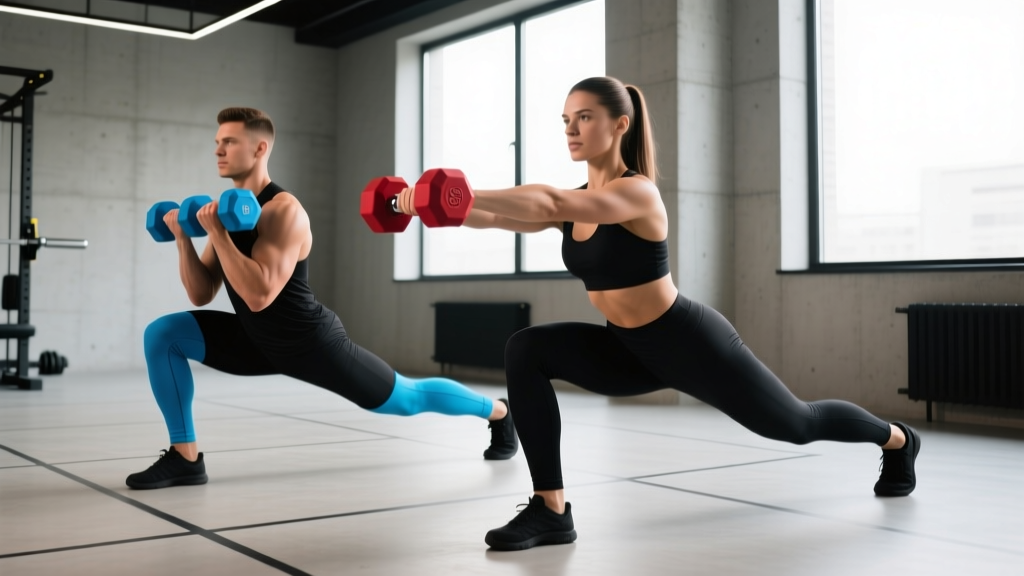
Bulgarian Split Squat One or Two Dumbbells: Neoprene Troubleshooting
Troubleshoot your bulgarian split squat one or two dumbbells setup. Expert guide on using neoprene coated dumbbells for home leg hypertrophy.

The Home Gym Reality: Neoprene Dumbbells and Unilateral Loading
As of 2026, the home fitness market remains dominated by space-saving, floor-friendly equipment. For many lifters, this means relying on neoprene coated hex dumbbells—like the ubiquitous CAP Barbell or Yes4All series—for their daily programming. While these dumbbells are excellent for protecting hardwood floors and reducing noise, they introduce unique biomechanical variables that are rarely discussed in mainstream fitness literature.
Nowhere is this more apparent than during unilateral leg training. When programming leg day in a home gym, the debate over the bulgarian split squat one or two dumbbells configuration is a frequent point of confusion. Because neoprene dumbbell sets typically cap out at 25 to 50 pounds per hand, lifters must strategically manipulate leverage, grip, and tempo to achieve true muscular failure. This troubleshooting guide dissects the specific physical properties of neoprene dumbbells and how to optimize your Bulgarian split squat (BSS) to avoid common pitfalls.
The Neoprene Grip Factor: Why Your Hands Fail Before Your Quads
Before addressing loading schemes, we must address the equipment itself. A standard cast-iron dumbbell handle measures roughly 28mm in diameter. In contrast, the neoprene coating process adds significant bulk. Most 15lb to 50lb neoprene dumbbells feature a contoured handle that swells to 32mm–35mm at the center.
This 4mm to 7mm increase in diameter drastically alters the grip demand. According to biomechanical data cataloged by the ExRx.net Biomechanics Database, thicker handles require increased activation of the flexor digitorum superficialis and profundus muscles. When performing a high-rep BSS set, the grip often becomes the limiting factor, masking true quadriceps and gluteal fatigue.
⚠️ Troubleshooting Callout: The 'Grip-Out' Failure Mode
If you are failing reps on your BSS but your quads do not feel a deep, burning pump, you are experiencing a grip-out. Neoprene becomes notoriously slippery when exposed to sweat, unlike chalk-friendly bare iron or knurled steel. The Fix: Switch to a single-dumbbell contralateral hold (detailed below) to cut grip demand in half, or use liquid chalk specifically formulated for rubberized grips.
Decoding the Bulgarian Split Squat One or Two Dumbbells Dilemma
Should you hold a dumbbell in each hand, or just one? The answer depends entirely on your training goal and the specific weight caps of your home neoprene set. Below is a decision matrix to help you troubleshoot your loading scheme.
| Variable | Two Dumbbells (Bilateral) | One Dumbbell (Contralateral) | One Dumbbell (Ipsilateral) |
|---|---|---|---|
| Grip Demand | High (Limits max reps) | Moderate (50% reduction) | Moderate (50% reduction) |
| Core Activation | Symmetrical / Low anti-rotation | High anti-rotation (Obliques) | High lateral flexion demand |
| Glute Medius Bias | Standard | Elevated (Pelvic stabilization) | Standard |
| Best Used For | Maximal load / Heavy sets of 5-8 | Hypertrophy / Athletic transfer | Core integration / Balance |
'Unilateral loading, particularly in a contralateral stance, forces the central nervous system to manage rotational torque, resulting in higher electromyographical (EMG) activation of the quadratus lumborum and external obliques compared to bilateral holding.' — National Center for Biotechnology Information (NCBI) archives on unilateral resistance training.
4 Critical Mistakes When Using Neoprene Coated Sets
Even with the correct loading scheme, the physical dimensions of neoprene dumbbells can sabotage your form. Watch out for these common errors:
1. The 'Floor Strike' ROM Limitation
Neoprene hex dumbbells are incredibly bulky. A 40lb neoprene bell is significantly wider and taller than a 40lb machined iron bell. When you descend into the bottom of a Bulgarian split squat, the dumbbells hang by your sides. If you have a long torso or are performing the movement on a flat floor without a front-foot deficit, the bulky neoprene heads will strike the floor before your hip reaches full depth. Troubleshooting: Elevate your front foot on a 2-inch weight plate or a firm aerobic step to increase the range of motion and prevent the neoprene from acting as a physical block.
2. Rushing the Eccentric Phase
Because home neoprene sets rarely exceed 50 lbs per hand, lifters often treat the BSS as a high-speed endurance movement, bouncing out of the hole. The American Council on Exercise (ACE) emphasizes that muscle damage and hypertrophy are maximized during the eccentric (lowering) phase. Bouncing eliminates the stretch-mediated hypertrophy response.
3. Ignoring Pelvic Tilt in Contralateral Holds
When holding a single neoprene dumbbell in the opposite hand (contralateral), the natural instinct is to lean away from the weight to compensate for the load. This lateral leaning shifts the tension away from the working leg's gluteus medius and places undue shear force on the lumbar spine. Keep your belt buckle squared to the floor.
4. Sweaty Neoprene Slippage
Unlike urethane or rubber, neoprene has a porous, almost fabric-like texture that absorbs sweat and becomes slick. Failing to wipe down the handles between sets with a microfiber towel and mild degreaser will lead to dangerous mid-rep slips.
Advanced Hypertrophy Protocols for Capped Neoprene Weights
If your home gym's heaviest neoprene dumbbells are 25 lbs (50 lbs total), you will eventually stall on standard straight sets of 10. Use these advanced troubleshooting protocols to force adaptation without buying heavier equipment:
- The 1.5 Rep Method: Descend fully, come halfway up, descend back to the bottom, and then stand up fully. That equals one rep. This doubles the time spent in the stretched position where the gluteus maximus is most active.
- Strict 3-1-1-0 Tempo: Lower the weight for 3 seconds, pause for 1 second in the deep stretch (eliminating the stretch reflex), explode up for 1 second, and do not pause at the top. A set of 8 reps with this tempo will take 40 seconds of continuous time-under-tension, making 25 lb neoprene bells feel like 60 lbs.
- Pre-Exhaustion Supersets: Perform a set of bodyweight sissy squats or banded leg extensions to failure immediately before picking up your neoprene dumbbells for the BSS. This ensures the quads fail before your grip does.
Frequently Asked Questions (FAQ)
Can I do a goblet hold with a single heavy neoprene dumbbell for BSS?
While possible, holding a bulky 50lb neoprene dumbbell in a goblet position during a BSS restricts thoracic extension and shifts the center of mass too far forward, which can cause you to lose balance on the descent. The contralateral suitcase hold is vastly superior for hip mechanics.
Why do my neoprene dumbbells smell after heavy leg days?
Neoprene is a synthetic rubber that traps dead skin cells, salts, and bacteria from sweaty palms. If not wiped down with an enzyme-based cleaner, they will develop a permanent sour odor. Store them in a climate-controlled room, not a damp garage.
Is the Bulgarian split squat better than lunges for home gyms?
Yes. Lunges require significant forward floor space and generate higher impact forces when stepping. The BSS is stationary, requires only a couch or bench to elevate the rear foot, and isolates the working leg with zero momentum, making it the safest and most effective unilateral movement for home environments.
More gear to consider
All reviews
Bumper vs Iron Plates: Single Arm Overhead Dumbbell Extensions Space
2026 Kettlebell Guide: Cast Iron vs Competition & Dumbbell Side Curl

Best Dumbbell Racks and Storage for Dumbbell Trap Exercises (2026)

Barbell Collar Comparison and Dumbbell Squeeze Press Muscles Worked

Bumper vs Iron Plates: Gym Layouts & Dumbbell Shoulder Raises
