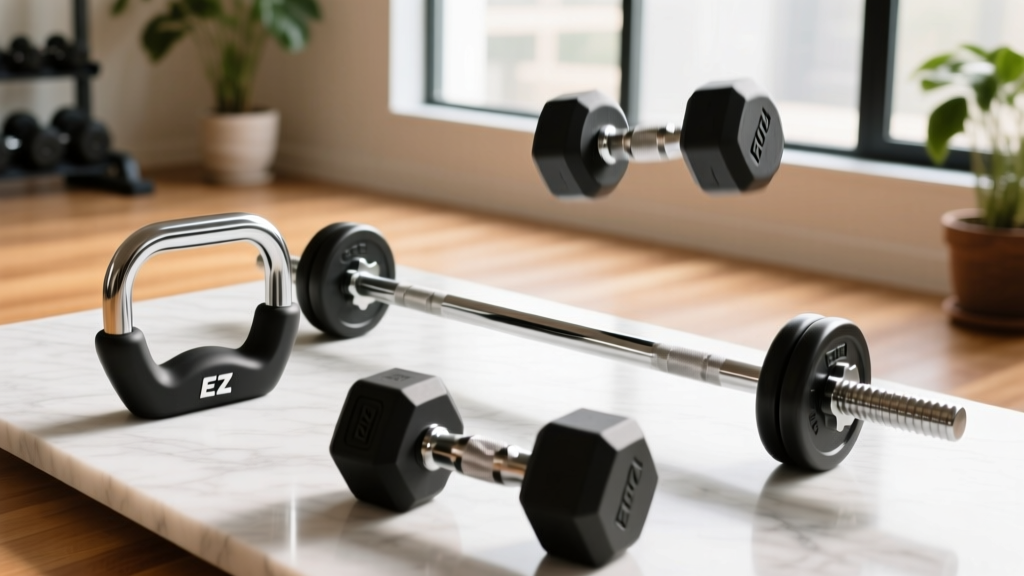
Olympic vs Standard Plates & What Muscle Does Dumbbell Row Work?
Troubleshoot your home gym setup. We compare Olympic vs standard weight plates and explain what muscle does dumbbell row work to optimize your back training.

The 1-Inch vs. 2-Inch Mistake: Standard vs. Olympic Plates
The most expensive mistake a home gym owner can make isn't buying the wrong squat rack; it is investing heavily into the wrong weight plate ecosystem. In 2026, the market is still flooded with cheap, vinyl-filled concrete plates featuring a 1-inch center hole, marketed toward beginners. However, as your strength progresses, the limitations of standard plates become a critical failure point in both equipment safety and exercise biomechanics.
Standard plates (1-inch hole) are designed for lightweight, entry-level spin-lock dumbbell handles and cheap solid-steel barbells. Olympic plates (2-inch hole, or precisely 50mm) are the global standard for serious lifting, designed to fit rotating-bar sleeves that absorb torque during explosive movements. Mixing these up, or trying to adapt standard plates for heavy compound lifts, leads to warped bars, stripped dumbbell collars, and compromised range of motion.
| Feature | Standard Plates (1-Inch) | Olympic Plates (2-Inch) |
|---|---|---|
| Center Hole | 1 inch (25mm) | 2 inches (50mm) |
| Max Load per Handle | ~40 lbs (before thread strip) | 300+ lbs (on loadable handles) |
| 2026 Avg. Cost (Cast Iron) | $1.10 - $1.40 / lb | $1.60 - $2.20 / lb |
| Calibration Tolerance | ± 5% to 15% | ± 2% (Commercial) to ± 10g (Calibrated) |
| 45lb Plate Diameter | Often 11 to 12 inches | Standardized 17.7 inches (450mm) |
What Muscle Does Dumbbell Row Work? (And How Plate Size Ruins Form)
When clients and readers ask me what muscle does dumbbell row work, the textbook answer is straightforward. However, the practical answer depends entirely on the equipment you are using to execute the movement. According to the ACE Exercise Library, the dumbbell row is a multi-joint, compound pulling exercise. Here is the exact muscular breakdown:
- Latissimus Dorsi (Primary): The massive V-taper muscles responsible for shoulder extension and adduction.
- Rhomboids & Middle Trapezius (Secondary): Responsible for scapular retraction (squeezing the shoulder blades together at the top of the movement).
- Posterior Deltoids (Synergist): Assists in pulling the humerus backward.
- Biceps Brachii & Brachioradialis (Synergist): Elbow flexion during the pull.
- Erector Spinae (Stabilizer): Maintains a rigid, neutral spine in the hinged position.
The Plate Interference Effect: Why Standard Plates Kill Lat Engagement
Here is where equipment troubleshooting meets exercise anatomy. To fully engage the latissimus dorsi, you must achieve a deep stretch at the bottom of the row. If you are using standard 1-inch dumbbell handles loaded with standard 10lb cast iron plates, you face a severe biomechanical issue: thickness.
A standard 10lb plate is often 1.5 inches thick. Loading three on each side of a 14-inch handle creates a massive, bulky cylinder that physically hits your torso or the bench before your shoulder can achieve full flexion. This robs you of the bottom 20% of the range of motion—the exact point where the lats are under the most mechanical tension. Conversely, high-density Olympic urethane plates are significantly thinner, allowing for a deeper stretch and superior lat activation.
Loadable Dumbbells: The Ultimate Troubleshooting Fix
If you want the versatility of adjustable dumbbells without the bulk of standard plates or the $400+ price tag of dial-adjustable sets (like PowerBlocks), Olympic loadable dumbbell handles are the gold standard for 2026 home gyms. Models like the IronMaster Quick-Lock V2 or the Rogue ML Series Loadable Dumbbell feature 2-inch sleeves.
By pairing these handles with precision-machined Olympic plates, you solve the ROM (Range of Motion) issue. Furthermore, Olympic sleeves rotate. When you perform a heavy single-arm dumbbell row, the rotational force (torque) placed on your wrist and elbow is immense. A fixed standard handle transfers all that torque to your joints. An Olympic sleeve with bronze bushings or needle bearings absorbs the spin, protecting your connective tissue.
'The difference in lat activation between a standard bulky dumbbell and a sleek, loadable Olympic dumbbell is night and day. If your plates are hitting your ribs before your arm is fully extended, you are doing a mid-back row, not a lat row.' — Biomechanics & Home Gym Setup Audit, 2025
Material Matters: Cast Iron vs. Urethane vs. Rubber
Beyond the hole size, the material of your plates dictates the longevity of your gym floor and the accuracy of your progressive overload. Let's troubleshoot the most common material mistakes:
- Virgin Rubber (The Smelly Mistake): Cheap Olympic plates made from recycled or low-grade virgin rubber off-gas heavily. In a closed garage gym, this VOC (Volatile Organic Compound) smell can cause headaches and will not dissipate for months.
- Cast Iron (The Noisy Classic): Highly durable and the most accurate in terms of weight calibration. However, dropping cast iron plates on anything other than specialized horse-stall mats will crack your concrete slab. As noted by Rogue Fitness steel plate specifications, machined steel plates offer exact calibration but require strict maintenance to prevent oxidation.
- Urethane (The 2026 Standard): Urethane is virtually odorless, highly resistant to UV degradation, and absorbs impact better than rubber. While it commands a premium (averaging $3.50 to $4.50 per pound in 2026), it is the only logical choice for commercial-grade home gyms where dropping weights is part of the programming.
Quick Troubleshooting Checklist for Back Day
Use this diagnostic flow to fix your dumbbell row setup and ensure you are targeting the correct musculature:
- Issue: Lower back pain during single-arm rows.
Fix: Your standard plates are likely uncalibrated, causing an asymmetrical load. Switch to calibrated Olympic plates, or use a chest-supported incline bench to remove erector spinae involvement. - Issue: Biceps fatiguing before the back.
Fix: You are 'pulling' with the hand rather than 'driving' with the elbow. Use lifting straps (like Versa Gripps) to remove grip and bicep limitations, forcing the rhomboids and lats to take the load. - Issue: Dumbbell handle collars loosening mid-set.
Fix: Standard spin-lock collars fail under the dynamic vibration of heavy rows. Upgrade to Olympic handles with snap-ring or magnetic lock collars.
Final Verdict: Stop Compromising Your Biomechanics
Understanding kinesiology and muscle engagement is only half the battle; having the correct steel and iron to facilitate that engagement is the other. Standard 1-inch plates have a place in light rehabilitation or ultra-budget starter kits, but they actively hinder your ability to perform heavy, full-ROM dumbbell rows. By upgrading to 2-inch Olympic plates—specifically high-density urethane or machined steel—you not only secure your equipment against catastrophic failure but also unlock the true anatomical potential of your back training.
More gear to consider
All reviews
What Do Dumbbell Curls Work? Adjustable Dumbbell Review & Fixes

Olympic vs Standard Plates: Loading the Dumbbell Squat Thruster
Compact Gym Layouts: Loadable Dumbbells for Arnold Dumbbell Curls
How Heavy Is The Thomas Inch Dumbbell? Grip History & Barbell Collar Troubleshooting

Rogue vs. Rep: Weight, Knurling & Incline Dumbbell Press Standards