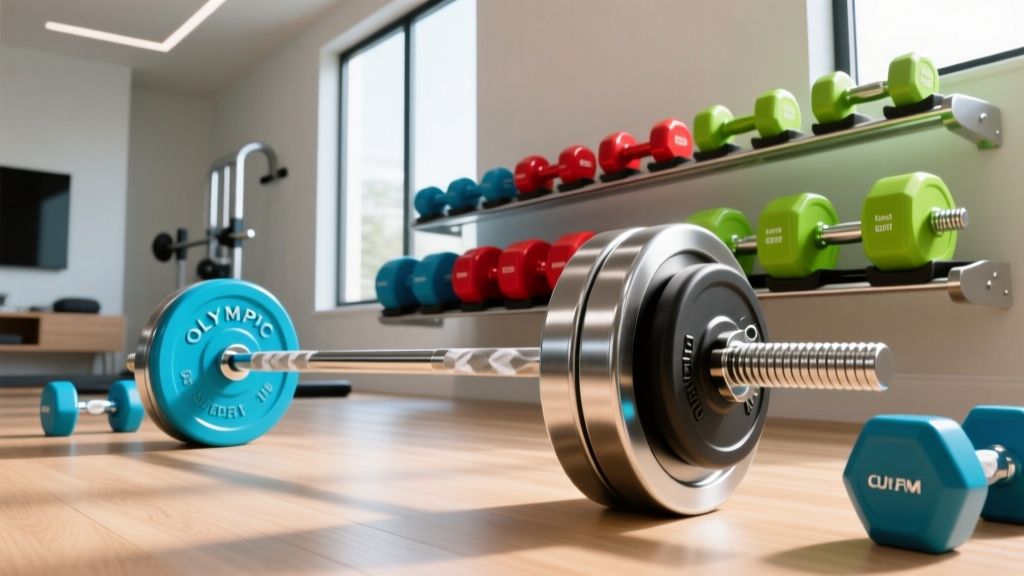
Olympic vs Standard Plates & the Decline Dumbbell Triceps Extension
Troubleshoot Olympic vs standard weight plate mistakes. Learn how plate diameter and thickness impact your decline dumbbell triceps extension setup.

Building a functional home gym requires more than just buying the heaviest iron you can find. One of the most pervasive mistakes lifters make is misunderstanding the biomechanical and spatial implications of weight plate types: Olympic vs standard. While the debate usually centers around barbell deadlifts or squat rack compatibility, the true test of your equipment knowledge lies in isolation movements. Specifically, the decline dumbbell triceps extension serves as the ultimate stress test for your plate selection, loadable dumbbell handles, and bench clearance.
In this troubleshooting guide, we will break down the exact dimensional differences between 1-inch standard and 2-inch Olympic plates, identify the common setup failures that ruin your triceps range of motion, and provide a step-by-step calibration guide to fix your home gym configuration.
The Dimensional Divide: Standard vs. Olympic Specs
Before troubleshooting specific exercises, we must establish the hard data. Standard plates (designed for 1-inch / 25.4mm sleeves) and Olympic plates (designed for 2-inch / 50.8mm sleeves) differ vastly in diameter, thickness, and weight distribution. As of 2026, the market has shifted heavily toward precision-cast Olympic iron and low-odor urethane, but standard plates remain a budget staple that introduces unique spatial challenges.
| Feature | Standard Plates (1-inch) | Olympic Plates (2-inch) |
|---|---|---|
| Center Hole Diameter | 25.4mm (1 inch) | 50.8mm (2 inches) |
| Typical 10lb Plate Diameter | 8.5' - 9.0' | 9.0' - 10.5' |
| Typical 25lb Plate Diameter | 11.5' (Cast Iron) | 17.7' (Bumper) / 14.5' (Iron) |
| Max Handle Sleeve Load | ~35-45 lbs per side | 100+ lbs per side |
| Common Failure Mode | Sleeve thread stripping, cement cracking | Floor clearance issues, rubber degradation |
The Biomechanical Bottleneck: Decline Dumbbell Triceps Extension
Why focus on the decline dumbbell triceps extension? According to exercise biomechanics databases like ExRx, the long head of the triceps brachii crosses the shoulder joint. To achieve maximum hypertrophy and stretch-mediated growth, the arm must be positioned overhead or on a decline, allowing the elbow to flex past 90 degrees (ideally reaching 110 to 120 degrees of flexion).
When you lie on a 15 to 30-degree decline bench, your head is positioned close to the floor. If you are using plate-loaded dumbbell handles rather than fixed hex dumbbells, the diameter of your weight plates dictates whether you can achieve this stretch without the plates physically smashing into the floor or the bench's rear stabilizer legs.
CRITICAL TROUBLESHOOTING INSIGHT: A standard decline bench headrest sits approximately 17 to 19 inches from the floor. If you load an Olympic dumbbell handle with 25lb bumper plates (which have a standardized 17.7-inch diameter, meaning an 8.85-inch radius from the center of the handle), the bottom edge of the plate will be less than 9 inches from the floor when your arms are extended straight up. As you lower the weight past your head for the triceps extension, the plate will strike the floor before your triceps reach a full stretch, completely nullifying the biomechanical benefit of the decline angle.Common Mistakes and Setup Failures
Mistake 1: Using Cement-Filled Standard Plates for Isolation Work
Many beginners purchase vinyl-encased cement standard plates to save money (often priced around $1.00/lb compared to $2.50/lb for cast iron). The problem? Cement plates are incredibly thick. A 10lb cement plate can be over 2.5 inches thick. When loaded onto a 14-inch standard dumbbell handle, the sheer thickness pushes the weight far away from the grip center, altering the moment arm and placing undue shear stress on the wrist during the eccentric lowering phase of the triceps extension.
Mistake 2: Ignoring Spin-Lock Collar Slippage on Declines
Gravity is unforgiving on a decline angle. Standard 1-inch handles typically use threaded spin-lock collars. During a decline dumbbell triceps extension, the dumbbells are inverted and tilted at extreme angles. If the standard collar is not tightened with a wrench or excessive hand torque, the plates can shift outward, causing the collar to unthread mid-set. Olympic handles utilize spring clips or heavy-duty clamp collars, which are vastly superior for decline and overhead isolation work.
Mistake 3: Failing to Elevate the Bench for Olympic Clearance
Lifters who upgrade to Olympic loadable dumbbell handles (like the Rogue Loadable Dumbbell Straps or Ironmaster Olympic handles) often forget to account for the larger sleeve diameter and the necessity of using larger plates to balance the handle's heavy baseline weight. This results in an abbreviated range of motion.
Step-by-Step Calibration Guide
To properly configure your home gym for the decline dumbbell triceps extension while navigating the Olympic vs standard weight plate dilemma, follow this troubleshooting flow:
- Measure Your Bench Height: Use a tape measure to find the exact distance from the floor to the lowest point of the bench's headrest frame. (Average: 17.5 inches).
- Calculate Your Plate Radius: Take the diameter of your chosen plate and divide by two. Add 2 inches to account for the dumbbell handle sleeve and collar. This is your 'clearance radius'.
- Perform the Dry-Run Test: Before loading the handles, lie on the decline bench with an empty handle. Lower it past your head to your maximum comfortable stretch. Have a partner measure the distance from the floor to the end of the sleeve.
- Select the Correct Plate Type:
- If clearance is under 10 inches: You MUST use standard 1-inch cast iron plates (specifically 5lb and 10lb denominations, which have small diameters of 5' and 8.5' respectively) or switch to fixed urethane dumbbells.
- If clearance is over 14 inches: You can safely use Olympic cast iron plates. Avoid Olympic bumper plates entirely for this specific movement due to their uniform 17.7' diameter.
- Elevate if Necessary: If you only own Olympic plates and loadable handles, place 2x4 wooden risers or commercial rubber stall mats under the rear legs of your decline bench to artificially increase the headrest height by 2 to 3 inches, restoring your range of motion.
'The effectiveness of a stretch-mediated hypertrophy exercise is entirely dependent on the equipment allowing the joint to reach its terminal range of motion. If your plates hit the floor before your muscle reaches maximum elongation, you are essentially performing a partial-rep floor press for your triceps.' — Biomechanics principles echoed by the American Council on Exercise (ACE) regarding equipment adaptation.
Real-World Edge Cases & Material Degradation
Beyond dimensions, the material composition of your plates affects the troubleshooting process. Standard plates are almost exclusively cast iron or cement. Olympic plates come in cast iron, rubber, and urethane.
- Rubber Olympic Plates (The Smell & Flaking Issue): Cheap recycled rubber Olympic plates (often imported and priced around $1.50/lb) off-gas heavily and become brittle over time. If you drop them during a heavy triceps extension failure set, the rubber edges can chip, creating uneven resting surfaces that cause the dumbbell to roll dangerously when placed on the floor between sets.
- Standard Iron Rust & Grip Interference: Uncoated standard iron plates rust quickly in humid garages. The rust flakes off onto your hands and the knurling of your dumbbell handles, reducing grip friction. Since the decline dumbbell triceps extension requires a secure, wrist-neutral grip to protect the elbow joint, rust-compromised handles are a safety hazard.
- Urethane Olympic Plates (The 2026 Gold Standard): Virgin urethane Olympic plates (pricing typically $3.50 - $5.00/lb) offer the durability of rubber without the odor, and they are often cast in a 'grip' or 'edge' design that makes loading and unloading the dumbbell handles significantly faster, saving time during high-volume arm supersets.
Frequently Asked Questions (FAQ)
Can I use Olympic bumper plates for the decline dumbbell triceps extension?
No. Bumper plates have a standardized 450mm (17.7-inch) diameter regardless of weight (even the 10lb and 15lb technique plates). On a standard 17-inch high decline bench, a bumper plate will strike the floor before your triceps achieve a meaningful stretch. Use fixed hex dumbbells or standard cast iron plates instead.
Are loadable dumbbell handles better than fixed dumbbells for this exercise?
Fixed hex dumbbells are superior for the decline dumbbell triceps extension. They offer a compact profile, immediate weight changes, and zero risk of collar slippage on a decline angle. Loadable handles are a budget space-saver but introduce clearance and balance variables that complicate isolation movements.
Why do my standard spin-lock collars keep loosening on decline movements?
Standard spin-lock collars rely on friction and threaded grooves. On a decline angle, the continuous micro-vibrations of the eccentric triceps lowering phase, combined with gravity pulling the plates downward, can slowly unthread the collar. Upgrade to 1-inch quick-release clamp collars or switch to an Olympic setup with spring clips to eliminate this safety hazard.
Final Verdict: Match the Plate to the Movement
The debate between weight plate types—Olympic vs standard—is not just about how much weight your barbell can hold; it is about spatial geometry. While Olympic plates are the undisputed king of heavy compound lifts, standard cast iron plates (or fixed dumbbells) often hold the tactical advantage for strict, ground-adjacent isolation work like the decline dumbbell triceps extension. By auditing your bench height, calculating your plate radius, and selecting the appropriate collar mechanism, you can troubleshoot your setup and ensure every rep delivers maximum triceps elongation without equipment interference.
More gear to consider
All reviews
EZ Curl vs Straight Bar & Dumbbell Chest Press: Women's Budget Guide

Dumbbell Resistance Exercises vs Kettlebells: Cast Iron Value Analysis

Dumbbell Arm Workout for Men: Neoprene Weight Mistakes and Fixes

Beyond Dumbbell Clip Art: Power Rack vs Squat Rack Guide

Bumper vs Iron Plates: Budget Guide & 15 Pound Dumbbell Exercises