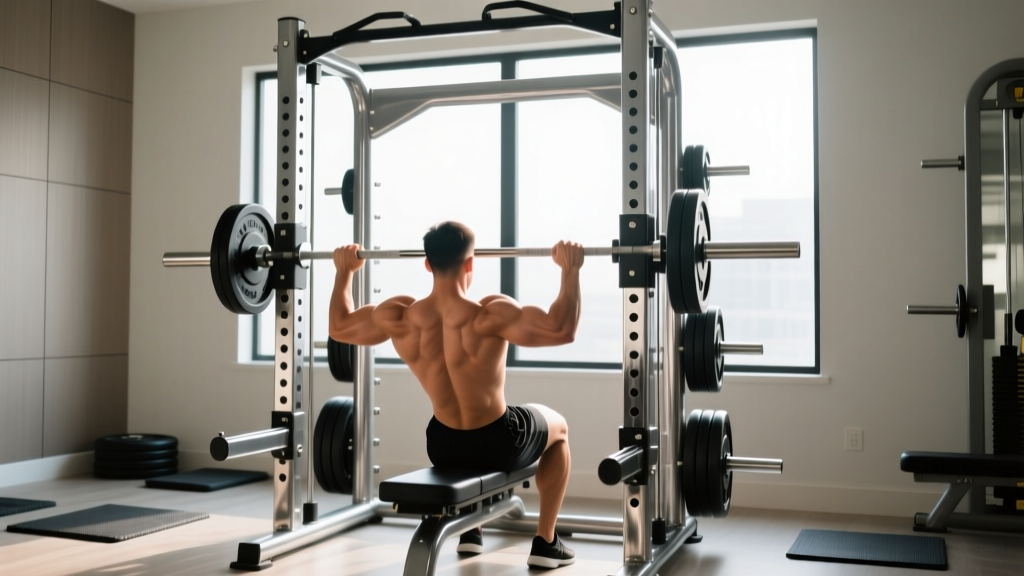
Rack Mistakes for Chest Exercises Without Dumbbells: Power vs Stand
Avoid critical setup mistakes when performing chest exercises without dumbbells. Compare power racks, squat racks, and stands for safe bench pressing.

The Core Problem: Horizontal Pressing on Vertical Equipment
When athletes transition to chest exercises without dumbbells—relying entirely on barbells, safety pins, and resistance bands—the structural integrity of their home gym equipment becomes a matter of life and death. Dumbbells offer a natural fail-safe: if you fail a rep, you simply drop them to the floor. Barbells do not offer this luxury. A failed barbell bench press or heavy pin press traps the lifter under hundreds of pounds of steel, making your rack your only mechanical spotter.
Yet, a staggering number of home gym owners attempt heavy horizontal pressing on equipment designed exclusively for vertical loading. The confusion between a power rack (full cage), a squat rack (half rack), and independent squat stands leads to catastrophic setup errors. According to the American Council on Exercise (ACE), improper spotting and lack of mechanical safety catches are leading causes of severe weightlifting injuries. This troubleshooting guide dissects the most common mistakes lifters make when matching their rack type to chest-focused barbell training, and how to fix them.
Mistake #1: Trusting Freestanding Squat Stands for Heavy Bench Presses
The most dangerous mistake in the home gym community is using independent squat stands (like the Titan T-2 or Rogue SML-2C) for barbell bench pressing without a human spotter. Squat stands are engineered with a heavy base plate to support vertical loads directly over the uprights. However, when you slide a bench between the stands, the barbell rests several inches in front of the upright's center of gravity.
⚠️ CRITICAL SAFETY WARNING: Never perform heavy barbell bench presses on freestanding squat stands without a dedicated human spotter. If you fail a rep and the barbell strikes the spotter arms, the forward kinetic energy and shifted center of gravity can cause the entire stand to tip forward, dumping the weight directly onto your neck or chest.Troubleshooting the Squat Stand Dilemma
If you only own squat stands and need to perform chest exercises without dumbbells, you must pivot to floor presses or banded push-ups. If you insist on benching, you must bolt the stands to a reinforced concrete floor using wedge anchors and utilize aftermarket 24-inch safety spotter arms. However, even bolted stands lack the lateral stability of a connected cage. For dedicated horizontal pressing, squat stands are fundamentally the wrong tool.
Mistake #2: Misjudging Spotter Arm Length and Upright Depth
Upgrading to a half rack (squat rack) or a full power rack solves the tipping issue, but introduces a new variable: spotter arm geometry. Many lifters purchase a power rack like the Rep Fitness PR-1100 or Rogue RML-390F and assume the included safety pins are sufficient for bench pressing. They are not.
Standard J-cups and pin-pipe safeties sit flush against the upright. When benching, your chest is positioned 12 to 18 inches away from the uprights. If you fail a rep and your elbows drop, a flush-mounted pin will not catch the barbell before it crushes your sternum. You need extended safety spotter arms that reach under the lifter's range of motion.
Rack Comparison Matrix for Horizontal Pressing
| Feature | Power Rack (Full Cage) | Squat Rack (Half Rack) | Squat Stand (Independent) |
|---|---|---|---|
| Base Footprint | 48" x 48" (Avg) | 48" x 36" (Avg) | 48" x 48" (Base) / 24" x 24" (Upright) |
| Spotter Arm Length | 24" - 30" (Standard) | 18" - 24" (Varies) | 12" - 18" (Often Add-on) |
| Safety for Bench Press | Excellent (Enclosed) | Good (If arms are long enough) | Dangerous (High tip risk) |
| Estimated Price Range | $800 - $1,800+ | $500 - $900 | $250 - $450 |
Mistake #3: Ignoring Westside Hole Spacing for Pin Presses
One of the most effective chest exercises without dumbbells is the barbell pin press (or Anderson press). This movement involves starting the barbell from a dead stop on safety pins, eliminating the stretch reflex and building immense starting strength. However, executing pin presses requires precise height adjustments, often in increments of a single inch.
Many budget power racks (like older Titan T-2 models or entry-level Amazon brands) feature standard 2-inch hole spacing throughout the entire upright. If your optimal pressing depth falls between two holes, you are forced to either press from too high (reducing range of motion) or too low (risking shoulder impingement at the bottom position). Biomechanical data from the ExRx.net biomechanics database highlights that even a one-inch deviation in bench press depth drastically alters pectoral versus anterior deltoid recruitment.
The Troubleshooting Fix: UHMW and Westside Spacing
To fix this, you must invest in a rack featuring 'Westside' hole spacing. This design provides 1-inch hole spacing in the 'bench zone' (the middle section of the uprights) and 2-inch spacing at the top and bottom. Premium racks like the Rogue RML-390F Monster Lite or the Rep Fitness PR-4000 come standard with 1-inch spacing and UHMW-lined J-cups to protect your barbell knurling. If you already own a 2-inch spaced rack, you can troubleshoot this by purchasing adjustable-height pin pipes or utilizing specialized sandwich-style J-cups that allow for micro-adjustments independent of the upright holes.
Troubleshooting Your Current Setup: A Step-by-Step Audit
Before your next chest day, run through this mechanical audit to ensure your rack is configured safely for horizontal pressing.
- The Roll Test: Place your bench inside the rack. Lie down and unrack the bar. Slowly lower the bar to your chest. Have a spotter gently push the bar forward and backward. If the bar can roll off the spotter arms before hitting the uprights, your arms are too short or positioned incorrectly.
- The Clearance Check: Ensure the safety spotter arms are set exactly 1 to 2 inches below your maximum chest expansion. If they are too high, you will hit the pins before completing the rep. If they are too low, they won't save you from a crush injury.
- The Lateral Stability Test: Grab the uprights and apply lateral force. If the rack wobbles, check your hardware. Bolts stretch over time. Use a torque wrench to tighten all structural bolts to the manufacturer's specifications (usually between 70-90 ft-lbs for 5/8" hardware on 11-gauge steel).
- The Band Peg Audit: If you use accommodating resistance (bands) for banded bench presses, ensure your band pegs are located at the base of the rack, not attached to the spotter arms. Pulling heavy bands from spotter arms creates upward leverage that can snap the pins or bend the tubing.
Frequently Asked Questions
Can I use a squat rack for bench pressing if I bolt it to the floor?
Yes, bolting a half rack or squat stand to a concrete slab using 3/8" wedge anchors significantly mitigates the tipping risk. However, you still must ensure the spotter arms extend at least 20 inches past the uprights to cover the lifter's torso. Bolting solves the tip issue, but not the geometry issue.
What is the best rack for a garage gym with low ceilings?
If you have ceilings under 84 inches, you cannot use a standard 90-inch power rack. Look for 'short' power racks, such as the Rogue RML-390C (which includes a pull-up bar that doesn't add height) or the Rep Fitness PR-4000 in the 80-inch configuration. These maintain full 3x3 tubing and Westside spacing while allowing for safe bench pressing in low-clearance environments.
Are flip-down safeties better than pin-pipe safeties for chest exercises?
For squats, flip-down safeties are excellent because they are easy to adjust. For chest exercises without dumbbells like the bench press, flip-down safeties are notoriously frustrating. They often protrude too far or lack the 1-inch micro-adjustability needed to dial in the exact depth for a pin press or floor press. Strap safeties or extended spotter arms are vastly superior for horizontal pressing.
Final Verdict: Invest in the Cage
When your programming shifts heavily toward barbell-based chest exercises without dumbbells, the rack ceases to be just a storage unit for your barbell; it becomes an active piece of safety equipment. While squat stands are perfect for squats and overhead presses, they are a liability for the bench press. Transitioning to a fully enclosed power rack with 3x3 11-gauge steel, Westside hole spacing, and 24-inch UHMW-lined spotter arms is not just an upgrade in convenience—it is a non-negotiable requirement for long-term, injury-free training.
More gear to consider
All reviews
Barbell Collar Types Compared: Securing Dumbbell Rear Shoulder Raises

Dumbbell Rack Maintenance for Incline Dumbbell Extension Safety
How to Spot Dumbbell Chest Press & Choose Olympic vs Standard Plates

Power Rack vs Squat Rack vs Stand: PowerBlock Elite EXP Dumbbells
Building a Custom 55 Dumbbell: Olympic vs Standard Plate Mistakes
