
Olympic vs Standard Plates: Guide & Incline Dumbbell Press Form
Compare Olympic vs standard weight plates for your home gym. Plus, learn how plate selection impacts your incline dumbbell press form and wrist health.

The Core Divide: 2-Inch Olympic vs 1-Inch Standard Plates
When outfitting a home gym, the decision between Olympic and standard weight plates is one of the most foundational choices you will make. This choice extends far beyond simply buying iron; it dictates the type of barbells, dumbbell handles, and storage racks you can use for the next decade. The primary differentiator is the center hole diameter. Standard plates feature a 1-inch (25.4mm) center hole, designed to fit lightweight, often solid-steel or basic tubular bars. Olympic plates, governed by international lifting standards, feature a 2-inch (50.6mm) center hole, engineered to slide onto heavy-duty barbell sleeves equipped with bushings or needle bearings.
While standard plates are frequently marketed to beginners due to their lower entry price and inclusion in budget department-store gym kits, they come with severe limitations in weight capacity, durability, and biomechanical ergonomics. Olympic plates, conversely, are the undisputed standard for serious lifters, commercial facilities, and competitive powerlifters. But how does this foundational equipment choice impact your daily training, specifically upper-body isolation movements? The answer lies in adjustable dumbbell ergonomics.
Detailed Comparison Matrix: Olympic vs Standard
Before analyzing the biomechanical implications, it is crucial to understand the raw specifications and market realities of both plate categories. The table below contrasts standard cast iron, Olympic cast iron, and calibrated steel Olympic plates.
| Feature | Standard (1-Inch) | Olympic Cast Iron (2-Inch) | Olympic Calibrated Steel |
|---|---|---|---|
| Hole Diameter | 25.4mm (1 Inch) | 50.6mm (2 Inches) | 50.4mm (Precision Machined) |
| Max Bar Capacity | 150 - 250 lbs | 700 - 1,500 lbs | 1,500+ lbs (IPF Rated) |
| Weight Tolerance | +/- 5% to 10% | +/- 2% to 5% | +/- 10 grams |
| Average Cost (2026) | $1.00 - $1.50 / lb | $2.00 - $3.50 / lb | $8.00 - $14.00 / lb |
| Sleeve Spin Mechanism | None (Solid Bar) | Bronze Bushings / Bearings | Needle Bearings |
How Plate Type Dictates Adjustable Dumbbell Ergonomics
Why does plate selection matter for upper body isolation? It comes down to adjustable dumbbell ergonomics and your incline dumbbell press form. Many budget-conscious lifters purchase 1-inch standard spin-lock dumbbell handles (such as the ubiquitous 14-inch CAP Barbell spin-lock set) to save money. However, these handles require thick, threaded collars to secure the 1-inch plates. When you load a 1-inch handle with multiple standard plates, the overall width of the dumbbell increases dramatically.
According to biomechanical data cataloged by ExRx, executing a proper incline dumbbell press requires bringing the weights down until the elbows are at or slightly below the torso line, maintaining a 45-degree tuck to protect the rotator cuff. If your adjustable dumbbells are excessively wide due to bulky standard plates and large spin-lock collars, the inner plates will physically collide with the incline bench pad or your own forearms before your pectorals achieve a full stretch.
⚠️ The Biomechanical Trap: When standard plate-loaded dumbbells hit the bench prematurely, lifters subconsciously compensate by flaring their elbows outward to 90 degrees to achieve a deeper range of motion. As noted in kinetic analyses by the National Strength and Conditioning Association (NSCA), extreme elbow flaring during pressing movements places massive shear stress on the anterior glenohumeral ligaments, drastically increasing the risk of shoulder impingement and pec tears.Step-by-Step: Perfecting the Incline Dumbbell Press Form
To ensure optimal hypertrophy and joint longevity, your equipment must allow for the following technical execution. If your 1-inch dumbbells prevent this, it is time to upgrade to Olympic loadable dumbbell straps or fixed urethane sets.
- Scapular Retraction: Pinch your shoulder blades together and drive them down into the bench pad to create a stable shelf.
- The 45-Degree Tuck: As you lower the weights, your elbows should track at a 45-degree angle relative to your torso, not flared straight out.
- Deep Stretch (Equipment Dependent): Lower the dumbbells until you feel a deep stretch in the upper pecs. Sleek Olympic-style handles or fixed dumbbells allow the weights to pass the torso line without hitting the bench.
- Wrist Stacking: Keep the wrists stacked directly over the elbows to prevent joint deviation under heavy loads.
- Converging Press: Press upward and slightly inward, bringing the dumbbells together at the top without clanking them.
Real-World Pricing and Brand Breakdown (2026 Market Data)
The fitness equipment market has stabilized post-pandemic, but inflation and supply chain shifts have altered pricing tiers. Here is what you can expect to pay for premium and budget options in 2026:
- Standard Cast Iron (Yes4All / CAP Barbell): Expect to pay between $1.00 and $1.40 per pound. While cheap, the 1-inch bars required to use them max out around 200 lbs before experiencing permanent plastic deformation (bending).
- Olympic Cast Iron (Rogue Echo / Titan Fitness): The sweet spot for most home gyms. Rogue Fitness and Titan offer reliable Olympic cast iron and basic bumpers ranging from $2.00 to $2.80 per pound. These plates feature machined center hubs that slide smoothly onto Olympic barbell sleeves.
- Olympic Urethane (Rogue / Rep Fitness): Ranging from $3.50 to $5.00 per pound, urethane plates are encased in a thick, odorless rubber-like polymer. They are virtually indestructible, protect your flooring, and offer a premium aesthetic.
- Calibrated Steel (Eleiko / Rogue LB Plates): Priced at $10.00 to $15.00 per pound. These are ultra-thin, precision-machined steel plates accurate to within 10 grams. They are strictly for competitive powerlifters or serious enthusiasts who need to maximize sleeve space for heavy deadlifts.
Failure Modes and Edge Cases
Understanding how equipment fails is critical for long-term purchasing decisions. Standard and Olympic plates present entirely different failure modes over a 5-to-10-year lifespan.
- Standard Thread Stripping: The most common failure point in 1-inch dumbbell systems is the threaded collar. Cross-threading the spin-lock nut or dropping the dumbbell on its end will strip the cheap steel threads, rendering the handle unsafe for heavy incline or floor presses.
- Standard Bar Bending: Standard 1-inch bars are typically made from lower-grade steel with a tensile strength below 100,000 PSI. Loading a standard barbell past 150 lbs for deadlifts or bent-over rows will cause the bar to bend permanently, ruining the sleeve spin and making plate loading difficult.
- Olympic Bushing Wear: While Olympic plates themselves rarely fail (unless dropped on concrete from head-height), the Olympic bars they are loaded onto require maintenance. Cheap Olympic bars use low-grade brass bushings that can seize up if chalk and dust accumulate in the sleeve. High-end bars use needle bearings that require periodic oiling.
- Virgin Rubber Degradation: If you opt for cheap Olympic rubber-grip plates (often imported), be aware that low-grade recycled rubber will dry out, crack, and emit a permanent toxic off-gassing odor in a climate-controlled home gym. Always opt for virgin rubber or urethane.
"The investment in Olympic plates is not just about the iron; it is an investment in the structural integrity of your barbell system and the biomechanical safety of your pressing movements." — FitGearPulse Equipment Testing Lab
Final Verdict: Which Should You Buy?
If you are strictly building a light-duty home gym for basic rehabilitation, light bicep curls, and walking lunges, a standard 1-inch plate system will suffice. It is inexpensive and widely available at big-box sporting goods stores. However, the moment your training involves heavy compound lifts, progressive overload, or strict isolation movements like the incline dumbbell press, standard equipment becomes a liability.
For 95% of lifters, Olympic weight plates are the only logical choice. The 2-inch diameter system ensures compatibility with high-tensile strength barbells, allows for smooth sleeve rotation during Olympic lifts, and provides the ergonomic clearance necessary to maintain flawless incline dumbbell press form without bench interference. Skip the budget 1-inch traps and invest in a high-quality set of Olympic cast iron or urethane plates to future-proof your training for the next decade.
More gear to consider
All reviews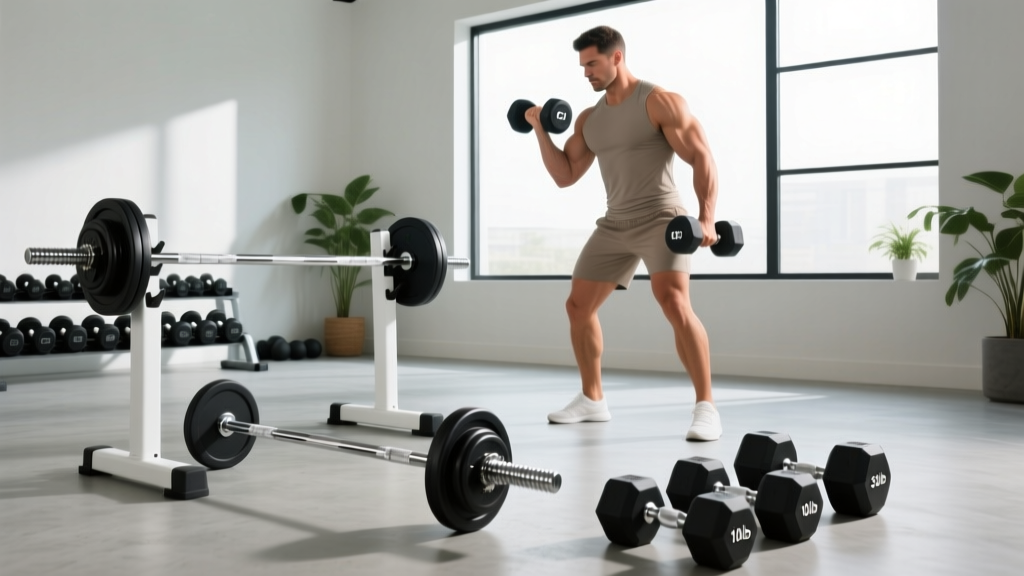
EZ Curl Bar vs Straight Bar: Man Full Body Dumbbell Workout PDF Care

Olympic vs Standard Plates and Exercises with 10lb Dumbbells

How Much Is a Dumbbell? 2026 Loadable Plate Market Trends
EZ Bar vs Straight Bar & Chest Workout Women Dumbbells Trends
Power Rack vs Squat Stand Mistakes & Dumbbell Exercises Names Guide
