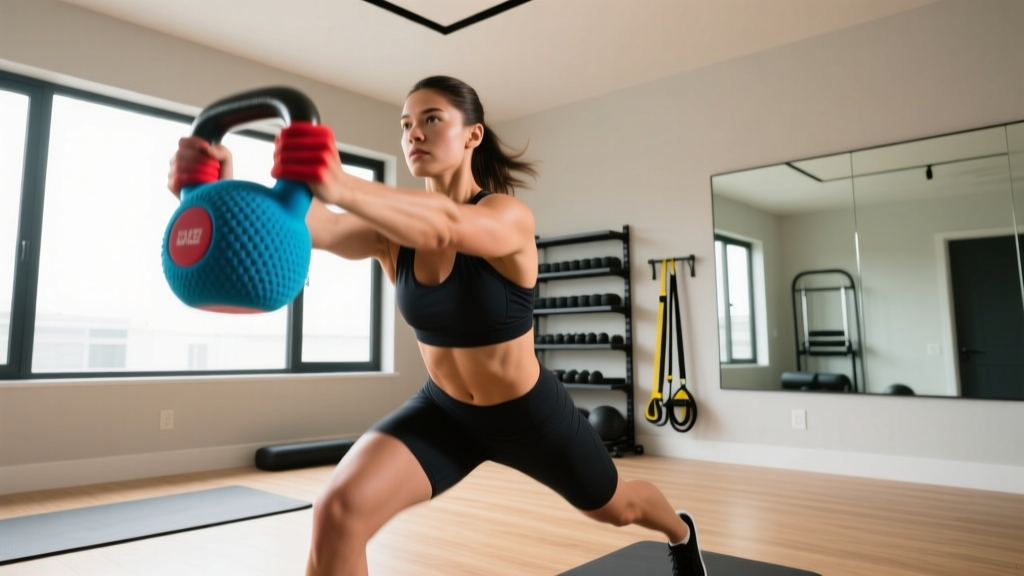
Home Gym Setup for a Dumbbell Leg Workout Women Can Master
Learn how to configure your home gym space, select the best neoprene dumbbells, and execute a highly effective dumbbell leg workout women love.

Designing a dedicated home gym space for lower body training requires more than just clearing out a corner of your living room. When programming a dumbbell leg workout women can perform safely, effectively, and consistently, the intersection of spatial setup, flooring installation, and gear selection becomes critical. Neoprene-coated dumbbells are a staple in residential gyms due to their tactile grip and floor-friendly nature, but lower body training introduces unique load requirements and drop-risk challenges that demand a strategic setup.
This comprehensive walkthrough will guide you through preparing your physical space, selecting the right neoprene weights (and understanding their biomechanical limitations for leg day), and executing a targeted lower-body protocol using your newly optimized environment.
Phase 1: Spatial Preparation & Flooring Installation
Lower body workouts involve heavy loads, wide stances, and the inevitable dropping of weights. While neoprene provides a slight buffer compared to bare cast iron, it will not save your subfloor from a 40-pound impact.
Calculating Your Footprint
For a comprehensive leg day, you need a minimum clearance of 6 feet by 8 feet. This allows for walking lunges, lateral movements, and the full extension of a Romanian Deadlift (RDL) without striking walls or furniture.
Flooring Specifications
- Material: Vulcanized rubber horse stall mats (not EVA foam puzzle mats, which compress too much under heavy unilateral loads like Bulgarian split squats).
- Thickness: 3/4-inch (19mm) is the industry standard for shock absorption.
- Cost: Approximately $55 to $85 per 4x6 foot mat as of 2026.
- Installation: Lay mats over a vapor barrier if placed directly on concrete to prevent moisture trapping. Use double-sided carpet tape on the seams to prevent tripping hazards during dynamic movements.
Phase 2: Sourcing Neoprene Dumbbells for Lower Body
Neoprene (synthetic polychloroprene) is highly valued for its sweat-resistant, matte finish. However, when building a setup specifically for a dumbbell leg workout women often rely on for glute and hamstring hypertrophy, you must understand the 'bulk factor' of neoprene.
The Neoprene Bulk Dilemma
Because neoprene is less dense than urethane or bare steel, a 40-pound neoprene dumbbell is physically larger than a 40-pound urethane dumbbell. This increased bell diameter can interfere with your stance during sumo squats or force your knees outward during RDLs, altering your biomechanics. Therefore, a smart home gym setup utilizes a hybrid approach: neoprene for unilateral and floor-based work, and compact cast iron for heavy bilateral hinges.
| Coating Type | Max Practical Weight | Floor Protection | Ideal Leg Exercise | 2026 Avg Cost/lb |
|---|---|---|---|---|
| Neoprene | Up to 40 lbs | High | Reverse Lunges, Step-ups | $1.40 - $1.80 |
| Urethane | Up to 100+ lbs | Medium-High | Heavy RDLs, Goblet Squats | $2.00 - $2.50 |
| Bare Cast Iron | Up to 100+ lbs | Low (Requires Mats) | Sumo Squats, Heavy Hinges | $0.90 - $1.20 |
Recommended Brands: For the neoprene portion of your setup, Yes4All and CAP Barbell offer the most consistent hex-head molds, preventing the weights from rolling away when you set them down mid-set. Always opt for hex or 12-sided (dodecagonal) heads over round heads for leg workouts to ensure stability during renegade rows or plank transitions.
Phase 3: Storage Solutions & Rack Mounting
Leg workouts require multiple weight jumps. You might use 15-pound neoprene dumbbells for walking lunges, but need 35-pound dumbbells for goblet squats. Fumbling to find weights mid-workout destroys your heart rate and focus.
Installing an A-Frame Rack
For home gyms with ample floor space, a 3-tier A-frame rack is ideal. Installation Steps:
- Position the rack at the periphery of your 6x8 foot rubber mat zone.
- Ensure the heaviest dumbbells (30+ lbs) are stored on the bottom tier to lower the center of gravity and prevent tipping.
- Anchor the top of the A-frame to a wall stud using a simple L-bracket and 2.5-inch wood screws if you have pets or children in the home.
Wall-Mounted Saddle Racks
If square footage is limited, install wall-mounted saddle brackets. Mount them at two heights: waist level (36 inches) for easy grabbing during supersets, and shin level (12 inches) for heavy deadlift pickups to save your lower back from awkward bending.
The Blueprint: A Targeted Dumbbell Leg Workout Women Trust
According to the Centers for Disease Control and Prevention (CDC), adults should engage in muscle-strengthening activities of moderate or greater intensity that involve all major muscle groups on 2 or more days a week. Furthermore, research published in the National Center for Biotechnology Information (NCBI) demonstrates a clear dose-response relationship between weekly training volume (10-20 sets per muscle group) and hypertrophic gains.
Utilize your newly set up space and neoprene dumbbells for this high-volume, joint-friendly protocol:
1. Neoprene Goblet Squat (Quads & Glutes)
- Setup: Hold one heavy dumbbell vertically against your chest. Stand on your rubber mat with feet shoulder-width apart.
- Execution: Descend for 3 seconds, pause for 1 second at the bottom, and drive up explosively.
- Volume: 3 sets of 10-12 reps. Rest 90 seconds.
2. Deficit Reverse Lunges (Glutes & Hamstrings)
- Setup: Hold a neoprene dumbbell in each hand. Stand on a 2-inch thick bumper plate or a sturdy aerobic step to create a deficit, increasing the stretch on the gluteus maximus.
- Execution: Step backward, dropping the rear knee to within one inch of the floor. The neoprene coating ensures a secure grip even as your hands sweat.
- Volume: 3 sets of 10 reps per leg. Rest 60 seconds.
3. Dumbbell Romanian Deadlift (Hamstrings & Lower Back)
Expert Tip: This is where you swap your bulky neoprene dumbbells for compact cast iron or urethane if available. The narrower profile allows you to keep the weights closer to your center of gravity, reducing shear force on the lumbar spine.
- Execution: Hinge at the hips, pushing them back toward the wall behind you. Keep a soft bend in the knees. Lower the weights only until your torso is parallel to the floor.
- Volume: 4 sets of 8-10 reps. Rest 120 seconds.
4. Weighted Calf Raises
- Setup: Stand on the edge of a weight plate or a thick book. Hold dumbbells at your sides.
- Execution: Rise onto your toes, hold for a 2-second peak contraction, and lower slowly.
- Volume: 3 sets to failure.
Maintenance: Preserving Your Neoprene Investment
Neoprene is highly durable, but it is susceptible to degradation from UV exposure and the acidic nature of human sweat. Over time, neglected neoprene becomes sticky and begins to flake, leaving black residue on your hands and flooring.
Post-Workout Protocol: After every leg day, wipe down the handles and bells of your neoprene dumbbells with a microfiber cloth dampened with a 50/50 mixture of distilled water and white vinegar. Avoid harsh chemical cleaners like bleach or ammonia-based glass cleaners, which break down the synthetic rubber polymers. Store the dumbbells on your rack away from direct sunlight to prevent the UV rays from drying out and cracking the coating.
By meticulously preparing your flooring, understanding the physical properties of your gear, and executing a scientifically backed routine, your home gym will become the ultimate environment for lower body transformation.
More gear to consider
All reviews
Bumper Plate vs Iron Plate Guide & Top Pec Workouts With Dumbbells

Neoprene Coated Dumbbells for Home Use: Fixed vs. Dumbbell Clamps
Lying Hamstring Curls with Dumbbells: Rubber Hex vs Urethane 2026
Troubleshooting Neoprene Dumbbell Bench Press Equipment Mistakes

Setup Guide: Olympic vs Standard Plates & Single Dumbbell Exercises