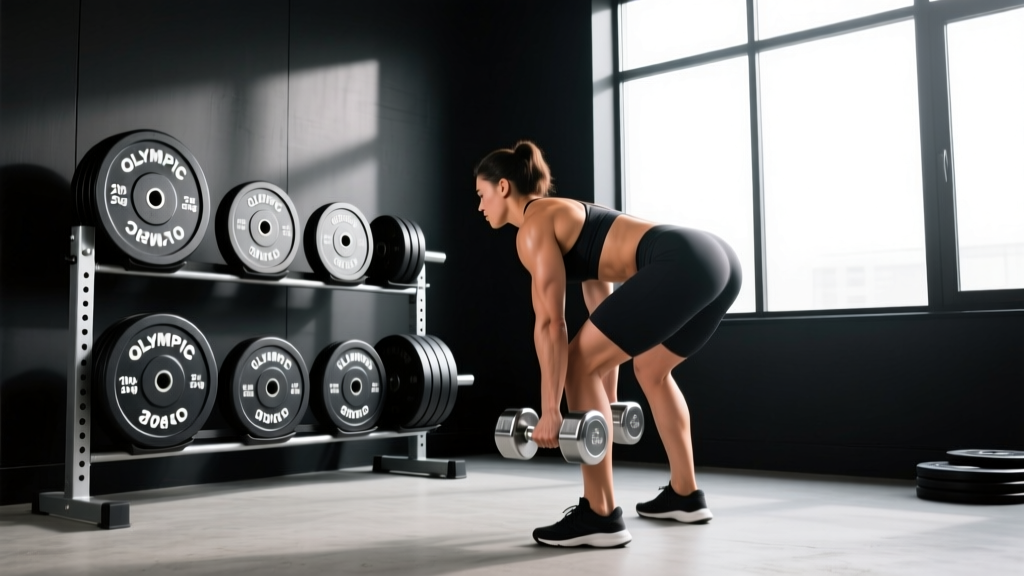
Olympic vs Standard Plates: Buying Guide & Dumbbell RDL for Glutes
Compare Olympic vs standard weight plates for your 2026 home gym, plus a step-by-step beginner guide to mastering the dumbbell RDL for glutes.

The Great Plate Debate: Olympic vs. Standard
When building a home gym, the first major hardware decision you will face is choosing between Olympic and standard weight plates. While beginners often assume "standard" means it is the industry norm, the commercial fitness industry actually operates almost exclusively on Olympic specifications. Understanding the mechanical differences between these two plate types is crucial, not just for your barbells, but for how you load free weights for isolated lower-body movements.
Why are we discussing plate hole diameters in the same breath as learning the dumbbell RDL for glutes? Because your plate selection dictates your dumbbell loading mechanism. Standard plates limit you to inexpensive spinlock handles with short sleeves, capping your weight at roughly 30 lbs per hand. Glutes require heavy progressive overload. To perform a heavy, effective dumbbell RDL for glutes as you advance, you need loadable Olympic dumbbell handles that accept 2-inch Olympic plates, allowing you to safely load 80+ lbs per hand.
FitGearPulse Pro Tip: Before purchasing any weight plates, measure the sleeve diameter of your existing barbells and dumbbell handles with a digital caliper. A 1-inch (25mm) sleeve requires standard plates, while a 2-inch (50mm) sleeve requires Olympic plates. They are entirely incompatible.2026 Market Data: Weight Plate Dimensions & Pricing
The post-pandemic fitness equipment market has stabilized, and 2026 pricing for cast iron and urethane plates reflects a mature supply chain. Below is a direct comparison of the two primary plate categories available to home gym owners.
| Feature | Standard Plates | Olympic Plates |
|---|---|---|
| Hole Diameter | 1 inch (25mm) | 2 inches (50mm) |
| Common Materials | Cast Iron, Cement-filled Plastic | Calibrated Steel, Urethane, Rubber Bumper |
| Max Load Capacity | ~300 lbs (limited by bar yield) | 1,000 to 1,500+ lbs |
| 2026 Avg Price | $1.20 - $1.80 / lb | $2.50 - $5.00 / lb |
| Dumbbell Compatibility | Spinlock handles (max 30-40 lbs/hand) | Loadable dumbbell handles (100+ lbs/hand) |
For budget-conscious beginners, standard cast iron plates from brands like Rogue Fitness or CAP Barbell offer an accessible entry point. However, if your long-term goal involves heavy glute hypertrophy, investing in Olympic plates and compatible loadable dumbbell handles is the superior choice.
Bridging the Gap: Loading Dumbbells for Heavy Hinges
The Romanian Deadlift (RDL) is a hip-dominant hinge pattern that heavily targets the posterior chain. While fixed hex dumbbells are convenient, they max out at 100-120 lbs in most commercial gyms, and buying a full rack for a home gym is cost-prohibitive. This is where Olympic loadable dumbbell handles shine. By sliding 2-inch Olympic bumper plates or steel plates onto a 15-inch Olympic dumbbell sleeve, you can create a custom-weighted dumbbell perfectly calibrated for your dumbbell RDL for glutes.
Using rubber bumper plates on loadable dumbbells also allows you to safely drop the weights onto rubber flooring at the end of a grueling set of RDLs without destroying your garage concrete or the iron itself.
Step-by-Step Guide: The Dumbbell RDL for Glutes
Now that your hardware is sorted, let us break down the biomechanics of the movement. According to kinesiological analyses outlined by ExRx, the dumbbell RDL isolates the hamstrings and gluteus maximus through a stretched position under load. Here is how to execute it flawlessly.
Step 1: The Stance and Grip
Stand with your feet hip-width apart. Hold your loaded dumbbells (or Olympic handle setup) in front of your thighs with a neutral grip (palms facing your legs). A neutral grip keeps the dumbbells close to your center of mass, reducing shear force on the lumbar spine compared to a pronated (overhand) grip. Brace your core as if preparing for a punch.
Step 2: The Hip Hinge Mechanics
Unlock your knees slightly—about a 10 to 15-degree bend. This is not a squat; your shins must remain perfectly vertical. Initiate the movement by pushing your hips straight back toward the wall behind you. Imagine trying to close a car door with your glutes.
Step 3: The Eccentric Lowering Phase
As your hips travel backward, your torso will naturally tilt forward. The dumbbells should graze your thighs and knees on the way down. Lower the weight only until you feel a profound stretch in your hamstrings, typically just below the knee or at mid-shin. Do not force the dumbbells to touch the floor. As noted by the biomechanics experts at Stronger By Science, going past your active range of motion causes pelvic tilt (butt wink), which shifts the load from your glutes directly onto your spinal erectors and lumbar discs.
Step 4: The Glute-Driven Concentric Phase
Reverse the movement by driving your hips forward. Squeeze your glutes aggressively at the top of the movement to achieve full hip extension. Do not hyperextend your lower back at the top; simply stand tall and lock out the hips.
Troubleshooting: Common RDL Failure Modes
Even with perfectly calibrated Olympic plates, poor form will ruin the stimulus. Watch out for these common errors:
- The Squat-Hinge Hybrid: If your knees travel forward over your toes, you are squatting. This shifts the emphasis to the quadriceps. Fix: Place a 4x4 piece of wood behind your heels to physically block forward knee travel.
- Dumbbell Drift: If the dumbbells swing away from your legs, the moment arm on your lower back increases exponentially. Fix: Engage your lats by imagining you are squeezing oranges in your armpits.
- Asymmetrical Lowering: When using independent dumbbells, one side often drops faster than the other, causing spinal rotation. Fix: Use a mirror to ensure both dumbbell heads reach the exact same depth simultaneously.
"The gluteus maximus is the largest muscle in the human body and responds best to heavy, progressive overload. Using standard 1-inch plates on short spinlock dumbbells will cap your progression prematurely. Transitioning to Olympic-compatible loadable handles ensures your hardware never becomes the bottleneck for your glute development."
Final Verdict: Equipping Your Glute-Focused Home Gym
If you are strictly a beginner focusing on upper-body isolation and light conditioning, standard 1-inch plates offer a budget-friendly entry point. However, if your primary goal involves heavy posterior chain development and mastering the dumbbell RDL for glutes, the 2-inch Olympic system is non-negotiable. The ability to load heavy, calibrated plates onto specialized dumbbell handles bridges the gap between fixed dumbbells and barbell deadlifts, giving you the ultimate tool for targeted glute hypertrophy in a home gym environment.
More gear to consider
All reviews
Barbell Weight & Knurling Guide + Incline Dumbbell Lateral Raise
Barbell Collar Types Compared: Mistakes Beyond Dumbbell Arm Circles

Dumbbell Crossover Mistakes: Troubleshooting Neoprene Home Weights

EZ vs Straight Bar: Space Layouts and Dumbbell Press Form

Olympic vs Standard Plates: Mistakes & Dumbbell Toe Touches
