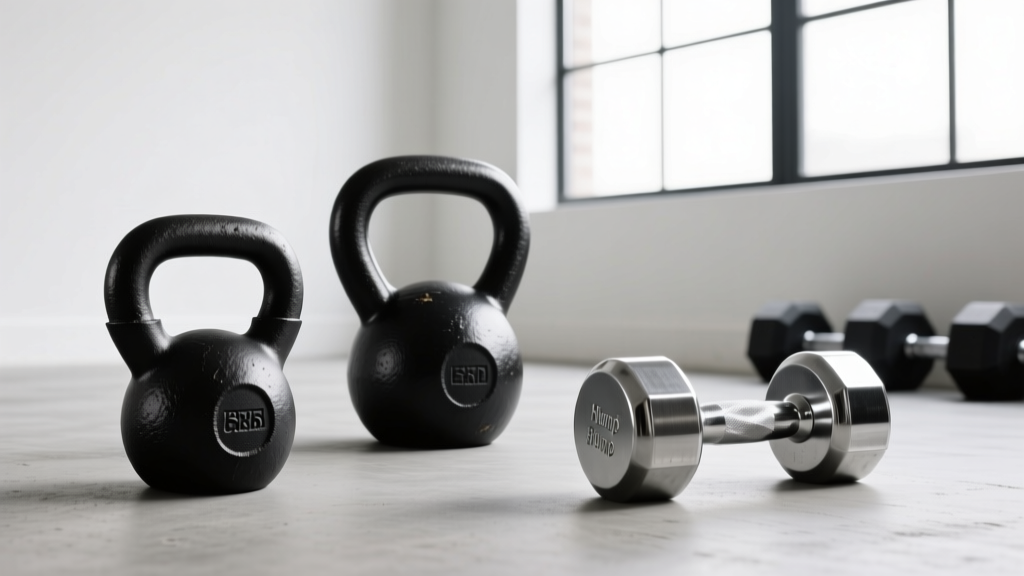
Cast Iron vs Competition Kettlebells & Neck Hump Dumbbell Exercises
Compare cast iron vs competition kettlebells for 2026. Learn maintenance care for longevity and discover dumbbell exercises for neck hump postural rehab.

The 2026 Buyer’s Matrix: Cast Iron vs. Competition Steel
As we navigate the 2026 home gym landscape, the debate between cast iron and competition kettlebells remains a cornerstone of free weight procurement. While casual lifters often default to the cheapest option available, serious athletes and physical therapy enthusiasts understand that the geometry, metallurgy, and coating of a kettlebell drastically alter both equipment longevity and human biomechanics. Choosing the right bell isn't just about aesthetics; it dictates your grip mechanics, rack position, and ultimately, your cervical spine health.
Below is a comprehensive breakdown of the two primary categories, highlighting exact specifications and current market pricing to guide your investment.
| Feature | Cast Iron Kettlebells (e.g., Rogue E-Coat) | Competition Kettlebells (e.g., Kettlebell Kings) |
|---|---|---|
| Material & Build | Single-piece cast iron, gravity poured | Steel shell, hollow core with filler |
| Dimensions | Variable (scales with weight) | Uniform (280mm W x 210mm H globally) |
| Handle Diameter | 33mm - 35mm (varies by weight) | Strict 35mm across all weights |
| Coating | E-Coat or Powder Coat | Powder-coated steel or bare steel |
| Avg. Cost (2026) | $1.80 - $2.50 per lb | $4.50 - $6.50 per lb |
| Primary Use Case | Grinds, presses, general strength | Snatch, jerk, high-rep ballistic cycling |
Maintenance Care & Longevity: Defeating Rust and Chalk Buildup
Free weights are financial investments. Without a rigorous maintenance protocol, a $150 kettlebell can degrade into a rusted, chalk-clogged liability within a single humid summer. The care requirements for cast iron and competition bells are fundamentally different due to their metallurgical compositions.
Cast Iron Care: Managing the E-Coat
Modern cast iron bells, like the Rogue E-Coat series, utilize electro-coating. This process provides a thin, durable finish that preserves the tactile feedback of the iron. However, e-coat leaves microscopic pores exposed. In environments where ambient humidity exceeds 55%, these pores invite flash rust.
- The Weekly Wipe: Never leave sweat on cast iron. The lactic acid and salts in human sweat accelerate oxidation. Wipe the handle and bell with a dry microfiber cloth immediately post-workout.
- Oil Application: Once a month, apply a micro-thin layer of 3-IN-ONE Multi-Purpose Oil or WD-40 Specialist Corrosion Inhibitor. Do not use standard WD-40, as it is a solvent that will strip existing protective oils.
- Rust Remediation: If surface rust appears, use a brass wire brush (not steel, which will gouge the iron) to gently agitate the spot, followed by an immediate oil application.
Competition Bell Care: Chalk and Paint Degradation
Competition bells are engineered for high-rep ballistics, meaning chalk is mandatory. Magnesium carbonate is highly alkaline and, when mixed with sweat, forms a caustic paste that degrades the powder-coated paint in the bell's horns over time.
- The Nylon Brush Protocol: Keep a stiff nylon bristle brush near your rack. After every session, aggressively brush the inside of the horns to dislodge impacted chalk.
- Deep Cleaning: Quarterly, use a damp cloth with a mild, pH-neutral dish soap to wipe down the horns. Dry immediately to prevent water from seeping into the steel shell's microscopic weld seams.
Storing free weights in an uninsulated garage subjects them to extreme diurnal temperature shifts, causing condensation to form on the iron. If you must store weights in a garage, invest in a commercial-grade dehumidifier or utilize sealed silica gel desiccant buckets inside your weight storage racks.
Ergonomics & The Cervical Spine: How Bell Shape Impacts Posture
Why does a kettlebell buying guide need to address spinal alignment? Because the geometry of your equipment directly influences your 'rack position'—the resting point of the weight against your forearm and torso during presses or squats.
Cast iron kettlebells feature wider, more flared horns and a lower center of mass. For lifters with limited thoracic mobility, forcing the arm into the external rotation required to rack a wide-horned cast iron bell can cause compensatory forward head posture. Over time, chronic forward head posture stresses the C7-T1 junction (the base of the neck), leading to the development of cervicothoracic kyphosis, colloquially known as a 'dowager's hump' or 'neck hump'. According to the Mayo Clinic, postural kyphosis is heavily exacerbated by repetitive mechanical stress and poor ergonomic alignment during loaded movements.
Competition kettlebells, with their narrower, standardized horns, allow for a more neutral wrist and a tighter, more upright rack position, reducing the leverage pull on the cervical spine. However, if a lifter has already developed postural deviations from years of poor desk ergonomics or improper lifting, transitioning to targeted dumbbell work is often the safest rehabilitation route.
Corrective Protocol: Dumbbell Exercises for Neck Hump
While kettlebells are unparalleled for ballistic power, dumbbells offer independent limb isolation, making them the superior tool for rehabilitating the deep cervical flexors, rhomboids, and lower trapezius. Harvard Health emphasizes that targeted resistance training is critical for reversing postural degradation and strengthening the posterior chain.
Integrate these specific dumbbell exercises for neck hump correction into your routine twice a week to rebuild the musculature that supports the cervical spine.
1. Prone Incline Y-T-W Raises
This movement targets the lower trapezius and rhomboids, the primary antagonists to the upper trap dominance that pulls the head forward.
- Set an adjustable bench to a 30-degree incline. Lie face down, chest supported.
- Hold light dumbbells (5-10 lbs). Crucial Cue: Tuck your chin to create a 'double chin', flattening your cervical spine.
- Y-Raise: Thumbs pointing up, raise arms at a 45-degree angle. Squeeze shoulder blades down and back. (3 sets of 10)
- T-Raise: Arms straight out to the sides, thumbs up. (3 sets of 10)
- W-Raise: Bend elbows to 90 degrees, pulling elbows toward your hips, pinching scapulae together. (3 sets of 10)
2. Dumbbell Farmer's Carry with Cervical Retraction
This builds dynamic postural endurance, forcing the core and deep neck flexors to maintain alignment under load.
- Grab a pair of heavy dumbbells (35-50 lbs each). Stand tall.
- Perform a cervical retraction (chin tuck) as if pulling your head straight back against a wall.
- Walk for 40 yards while maintaining the chin tuck and keeping your shoulders depressed (away from your ears).
- Rest 60 seconds. Repeat for 4 sets.
3. Scapular Depression Shrugs (Reverse Shrugs)
Traditional shrugs build the upper traps, which can worsen a neck hump. Reverse shrugs train the lats and lower traps to pull the scapulae down, opening the chest.
- Hold moderate dumbbells at your sides.
- Instead of shrugging up, actively pull your shoulder blades down toward your back pockets, lifting the dumbbells only an inch or two off the ground via scapular depression.
- Hold the bottom contraction for 3 seconds. (4 sets of 15).
Expert Insight: 'You cannot out-train a bad rack position. If your kettlebell is forcing your head forward to counterbalance the load, the equipment is failing your biomechanics. Switch to a competition bell or utilize dumbbells to rebuild your postural baseline before returning to heavy grinds.' — FitGearPulse Biomechanics Desk, 2026
Storage Solutions to Maximize Equipment Lifespan
Proper storage is the final pillar of free weight longevity. Tossing kettlebells onto a concrete floor chips the e-coat and cracks competition bell welds.
- Vertical vs. Horizontal Racks: For cast iron bells, a 3-tier horizontal wooden rack prevents the metal-on-metal scratching that occurs on vertical peg racks. Wood is forgiving and won't degrade the bell's coating.
- Competition Bell Pegs: Competition bells are best stored on heavy-duty steel vertical peg racks. Ensure the pegs are coated in UHMW plastic to prevent scratching the powder coat on the bell's horns.
- Elevation: Never store free weights directly on concrete. Concrete wicks moisture from the earth, creating a micro-climate of high humidity at floor level that guarantees bottom-side rust. Always use rubber matting or elevated wooden platforms.
Summary: Aligning Gear with Goals
Choosing between cast iron and competition kettlebells requires balancing your budget, your training style, and your maintenance willingness. Cast iron offers an affordable, tactile experience for general strength, provided you commit to rigorous oiling and rust prevention. Competition bells demand a higher upfront investment and chalk management but offer unparalleled ergonomic consistency for high-volume work. Finally, never ignore the warning signs of postural fatigue; utilizing targeted dumbbell exercises for neck hump rehabilitation ensures your spine remains as resilient as the iron you lift.
More gear to consider
All reviews
Bumper vs Iron Plate Care & Incline Dumbbell Skull Crusher Longevity

Budget Breakdown: Loadable Gear for Leg Day Exercises with Dumbbells

Overhead French Press Dumbbell Care: Rubber Hex vs Urethane

Best Neoprene Dumbbells for Dumbbell Swings & Home Gyms

Seated Dumbbell Lateral Raise Mistakes & Adjustable Dumbbell Guide
