
Olympic vs Standard Plates: Setup Guide for Your Dumbbell Rack
Master your home gym installation with our walkthrough on Olympic vs standard weight plates, storage rack assembly, and dumbbell handle integration.

The Foundation: Standard vs. Olympic Plate Dimensions
When building a home gym, many beginners start their fitness journey searching for a basic 'dumbell or dumbbell' set, but as your strength progresses, you inevitably hit a crossroad: upgrading your weight plates and barbell infrastructure. Understanding the physical and metallurgical differences between Standard (1-inch) and Olympic (2-inch) weight plates is the first step in a proper equipment installation. This decision dictates not only your storage rack footprint but also the safety limits of your barbell and plate-loaded dumbbell handles.
Standard plates feature a 25.4 mm (1-inch) center hole, designed for lightweight, entry-level bars. Olympic plates, governed by the International Weightlifting Federation (IWF), feature a 50.4 mm (approx. 2-inch) center hole. This wider diameter accommodates bars with rotating sleeves, heavy-duty knurling, and high tensile strength steel capable of holding 1,000+ pounds without permanent deformation.
⚠️ Structural Warning: Never attempt to drill or modify standard 1-inch cast iron plates to fit an Olympic bar. The structural integrity of the cast iron will be compromised, leading to catastrophic cracking under heavy axial loads.Quick Spec & Pricing Comparison (2026 Market Data)
| Feature | Standard (1-inch) | Olympic (2-inch) |
|---|---|---|
| Center Hole Diameter | 25.4 mm (1") | 50.4 mm (2") |
| Bar Sleeve Compatibility | Solid steel, no rotation | Bushing/Bearing rotating sleeves |
| Max Safe Load (Barbell) | ~200 - 250 lbs | 700 - 1,500+ lbs |
| Avg. Cast Iron Cost | $1.20 - $1.50 / lb | $1.80 - $2.50 / lb |
| Avg. Urethane/Rubber Cost | Rare / Not Recommended | $3.00 - $5.00 / lb |
Step-by-Step Installation: Assembling Your Weight Storage
Before you can load your bars or plate-loaded dumbbells, you must install a robust storage solution. A fully loaded 300 lb plate set exerts massive downward and lateral force on a weight tree. Here is the complete walkthrough for installing a heavy-duty A-Frame Olympic weight tree.
Step 1: Unboxing and Hardware Inspection
Upon delivery, inventory your hardware. A high-quality rack (like those from Rogue or Rep Fitness) will use Grade 8.8 or 10.9 high-tensile steel bolts. You will typically need a 19mm socket wrench, a rubber mallet, and a torque wrench. Lay out the main uprights, the gusseted base plates, and the welded weight horns on a protective rubber mat to prevent scratching the powder coat.
Step 2: Frame Assembly and Torque Specifications
- Base Attachment: Insert the M10 x 80mm hex bolts through the base plate into the lower uprights. Hand-tighten the nylon-insert locknuts.
- Top Crossbar: Slide the top stabilizer bar into the upper uprights. This piece is critical for preventing lateral sway when you aggressively pull a 45 lb plate off the horn.
- Torquing: Using your torque wrench, tighten all frame bolts to the manufacturer's specification—typically between 45 and 55 Nm (Newton-meters). Overtightening can strip the threads on cheaper imported racks, while undertightening leads to dangerous wobbling.
Step 3: Floor Anchoring (Concrete vs. Wood Joists)
If your gym is on a concrete slab, use 3/8" x 3" wedge anchors. Drill a 3/8" hole using a rotary hammer drill, vacuum the concrete dust out of the hole (crucial for anchor grip), and torque the wedge anchors to 30 ft-lbs. If you are installing over a wood-framed subfloor, you must locate the floor joists using a stud finder and secure the base plate with 3/8" structural lag screws directly into the joists to prevent the rack from tipping forward when the front horns are fully loaded.
Integrating Plates with Your Dumbbell Setup
Transitioning from fixed-weight rubber dumbbells to plate-loaded dumbbell handles is a cost-effective way to build a heavy home gym. However, the math and physics change drastically depending on whether you chose Standard or Olympic handles.
The Sleeve Length Dilemma
When configuring plate-loaded dumbbells, sleeve length is your primary constraint. According to equipment reviews on BarBend, standard 1-inch dumbbell handles usually feature a 6-inch sleeve. However, because standard plates are often thicker and lack precise machining, loading more than 50 lbs per hand becomes physically unbalanced and dangerous.
Olympic dumbbell handles (such as the Titan Fitness 20" Olympic Dumbbell Handles) offer a 7.5-inch loadable sleeve. This allows you to slide on two 45 lb Olympic bumper plates and still have 1.5 inches of room for a specialized clamp collar.
Expert Setup Tip: When using Olympic dumbbell handles, always pair them with low-profile 'Lock-Jaw' or clamp-style collars. Traditional spring clips require too much lateral sleeve space and will prevent you from loading maximum weight on a short dumbbell handle.
Loading Protocols and Safety Walkthrough
Proper installation extends beyond the rack; it includes how you load and secure the plates during your lifts. The National Strength and Conditioning Association (NSCA) emphasizes that improper collar usage is a leading cause of home gym injuries related to asymmetrical loading.
Calibrating Your Barbell and Dumbbell Handles
Before your first heavy session, perform a 'dry load' calibration. Slide your plates onto the barbell or dumbbell sleeve. Olympic plates machined to IWF standards have a 50.4 mm hole, which leaves exactly 0.4 mm of tolerance on a 50 mm barbell sleeve. This tight tolerance prevents the 'clanking' and shifting that occurs with cheaper, sand-cast standard plates. If you notice excessive play or wobble on an Olympic bar, inspect the bar's sleeve bushings for wear, as the issue is rarely the plate itself.
Securing the Load
- Spring Collars: Adequate for light standard plates and warm-ups. They provide roughly 15 lbs of lateral clamping force.
- Clamp Collars (e.g., OSO Pro or Lock-Jaw): Mandatory for heavy Olympic lifting, drop sets, and plate-loaded dumbbell work. They provide over 100 lbs of clamping force, ensuring the plates do not slide outward during dynamic movements like dumbbell lunges or snatches.
- Barbell Jacks: For deadlift setups, integrate a barbell jack into your workflow to elevate the bar 2 inches off the floor, saving your lower back during the loading and unloading process.
Real-World Cost and Space Analysis
Setting up a 300 lb weight plate system requires a realistic budget and spatial awareness. In 2026, supply chain stabilizations have brought cast iron prices down from their pandemic peaks, but premium urethane and virgin rubber bumper plates remain a significant investment.
A complete 300 lb Standard cast iron set (pairs of 50s, 40s, 30s, 20s, 10s) will cost roughly $450 and occupy a small A-frame tree footprint of 2 square feet. However, the limitation is the barbell; you will eventually max out a 1-inch bar's safe load capacity.
Conversely, a 300 lb Olympic set (using a mix of iron and Rogue Echo Bumper Plates for deadlifts) will cost between $750 and $900. The weight tree will require a 3-foot by 2-foot footprint to accommodate the wider 17.7-inch diameter of the 45 lb bumper plates. While the upfront cost and spatial requirement are higher, the Olympic setup offers infinite scalability, allowing you to safely load 500+ lbs as your strength advances over the next decade.
Frequently Asked Questions
Can I use standard plates on an Olympic bar?
No, the 1-inch hole of a standard plate will not fit over the 2-inch sleeve of an Olympic bar. While plastic adapter rings exist to convert Olympic bars to accept standard plates, they introduce severe instability and are highly discouraged for any lift where the bar leaves the ground.
Why do Olympic plates have a wider diameter?
Standard 45 lb plates are typically 14.5 inches in diameter, while Olympic 45 lb plates are standardized at 450 mm (17.7 inches). This larger diameter ensures the barbell sits exactly 8.75 inches off the floor, providing the necessary clearance for proper deadlift mechanics and Olympic lifts.
More gear to consider
All reviews
Beginner Dumbbell Workout Plan Using Neoprene Weights

Dumbbell Cross Bench Pullovers: Adjustable Dumbbell Troubleshooting
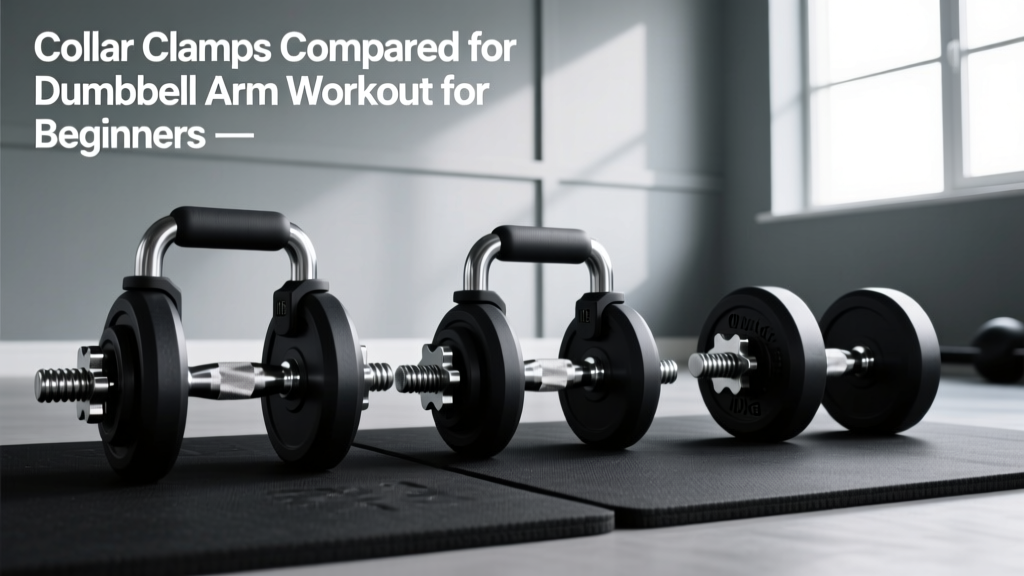
Collar Clamps Compared for Dumbbell Arm Workout for Beginners

Fix Your Push Dumbbell Workout: Adjustable Dumbbell Troubleshooting

Power Rack vs Squat Rack vs Stand: Low Row with Dumbbells Guide
