
Olympic vs Standard Plates: Avoiding the 65 lb Dumbbell Mistake
Discover the critical differences between Olympic and standard weight plates, and how to avoid costly mistakes when building a 65 lb dumbbell setup.

The Core Conflict: 1-Inch Standard vs. 2-Inch Olympic
When outfitting a home gym, the debate between Olympic and standard weight plates is fundamentally a conversation about sleeve diameter, tolerance stacking, and long-term scalability. Standard plates feature a 1-inch (25mm) center hole, designed for lightweight, budget-friendly adjustable dumbbell handles and entry-level barbells. Olympic plates feature a 2-inch (50mm) center hole, built to withstand the extreme torque, drop forces, and heavy loading of commercial-grade equipment.
Sleeve Diameter and Tolerance Stacking
The physical difference is 25mm vs 50mm, but the engineering reality is far more complex. According to facility guidelines outlined by ExRx Weight Room standards, commercial and serious home gyms universally mandate 2-inch Olympic sleeves due to the rotational mechanics of heavy lifting. Standard 1-inch plates are typically cast from lower-grade iron with wide manufacturing tolerances. A cheap 25 lb standard plate might actually weigh 23.5 lbs and have a center hole variance of up to 1/8th of an inch. When you stack multiple plates on a 1-inch handle, this "tolerance stacking" creates severe lateral wobble, which is a nightmare for stabilizing muscles during unilateral movements.
The 65 lb Dumbbell Dilemma: Where Adjustable Handles Fail
For intermediate lifters, pressing or rowing with a 65 lb dumbbell is a major strength milestone. It is the exact weight where many home gym owners hit a frustrating, and often dangerous, bottleneck. To save money, lifters frequently purchase 14-inch standard adjustable dumbbell handles and attempt to load them with 1-inch cast iron plates to reach that 65 lb mark.
Here is the mechanical reality of why this fails:
- Sleeve Space Limitations: A standard 14-inch handle leaves roughly 5.5 inches of loadable sleeve space per side. To reach 65 lbs (including the 5 lb handle), you need to load 30 lbs per side. Using thick, low-density cast iron 10 lb and 5 lb plates, you will physically run out of sleeve space before you can thread the collar on.
- Collar Shear and Thread Stripping: Standard handles rely on star-lock collars with zinc-plated soft steel threading. When you perform a heavy 65 lb dumbbell chest press, the lateral torque placed on the collar is immense. The soft threads routinely strip under this load, causing the plates to slide off mid-rep—a leading cause of home gym foot and face injuries.
- Wrist Clearance: Even if you manage to load a 65 lb dumbbell onto a standard handle using high-density standard plates, the outer diameter of the plates will rub against your wrists during movements like goblet squats or close-grip presses, ruining your biomechanics.
Troubleshooting Matrix: Adjustable Handle Limitations
| Equipment Type | Sleeve Diameter | Max Safe Capacity | 65 lb Dumbbell Viability |
|---|---|---|---|
| Standard 14" Handle | 1 inch (25mm) | 40-50 lbs | Dangerous / Physically Impossible |
| Standard 20" "Long" Handle | 1 inch (25mm) | 60-75 lbs | Poor (Severe wrist interference) |
| Olympic Loadable Handle | 2 inch (50mm) | 120+ lbs | Excellent (Requires 2" plates) |
| Fixed Hex Urethane DB | N/A (Solid) | N/A | Optimal (But expensive) |
Material Degradation and Drop Failures
Beyond the sleeve diameter, the materials used in standard versus Olympic plates dictate the lifespan of your garage floor and your equipment. Standard plates are almost exclusively bare cast iron. In a humid garage environment, they will oxidize and rust within months, leaving orange dust on your clothes and floors. Furthermore, dropping a bare cast iron standard plate from shoulder height during a heavy dumbbell clean will crack concrete and shatter the plate's center ring.
Olympic plates are widely available in rubber, urethane, and virgin rubber bumper formats. Urethane Olympic plates, such as those found in the Rogue Fitness weight plate catalog, offer a "dead bounce" effect. The high-density polyurethane absorbs kinetic energy, protecting both the flooring and the internal steel insert of the plate. As noted in equipment safety analyses by the National Strength and Conditioning Association (NSCA), utilizing shock-absorbing drop surfaces and properly rated bumper plates is critical for mitigating repetitive impact forces in training environments.
"The transition from standard to Olympic isn't just about lifting heavier; it's about respecting the physics of rotational torque. A 65 lb dumbbell built on a 1-inch sleeve is a kinetic time bomb waiting for a lateral stabilizer failure." — Home Gym Engineering Review, 2025
Step-by-Step Recovery: Transitioning Your Home Gym
If you have already made the mistake of buying standard plates and are now locked out of achieving a safe 65 lb dumbbell setup, follow this troubleshooting recovery plan:
- Halt Heavy Adjustable Dumbbell Use: Immediately stop attempting to build heavy adjustable dumbbells (anything over 45 lbs) using 1-inch handles and star-lock collars. The shear risk to your rotator cuffs and toes is too high.
- Repurpose Standard Plates for Accessories: Do not throw your standard plates away. Keep them for lightweight isolation work, such as 15-20 lb tricep kickbacks, lateral raises, or securing resistance bands to the floor.
- Invest in an Olympic Loadable Dumbbell Handle: Purchase a high-quality 2-inch Olympic dumbbell handle (e.g., the Rogue Loadable Dumbbell or Titan Fitness Olympic Handle). These feature 12-inch to 17-inch sleeves and heavy-duty clamp collars.
- Acquire Fractional and High-Density Olympic Plates: To build a precise 65 lb dumbbell on an Olympic handle (which usually weighs 10-15 lbs empty), you need 2.5 lb, 5 lb, and 10 lb fractional Olympic plates. High-density urethane plates keep the physical width of the loaded dumbbell narrow, ensuring clear wrist paths during presses.
- Upgrade Your Barbell Concurrently: If you are buying Olympic plates for dumbbells, ensure your main barbell is also a 2-inch Olympic barbell to maintain ecosystem compatibility.
2026 Cost Analysis: Price Per Pound
Historically, the main argument for standard plates was cost. However, with global supply chains fully normalized in 2026, the price gap has narrowed significantly when factoring in the cost of replacing stripped handles and ruined floors.
- Standard Cast Iron (1-inch): ~$1.20 - $1.50 per pound. (Hidden costs: rust removal, broken collars, floor repair).
- Olympic Cast Iron (2-inch): ~$1.80 - $2.20 per pound. (Excellent for powerlifting, but still noisy and prone to rust if uncoated).
- Olympic Urethane/Rubber Grip Plates: ~$3.50 - $4.50 per pound. (The gold standard for home gyms, offering odorless, high-density, drop-safe performance).
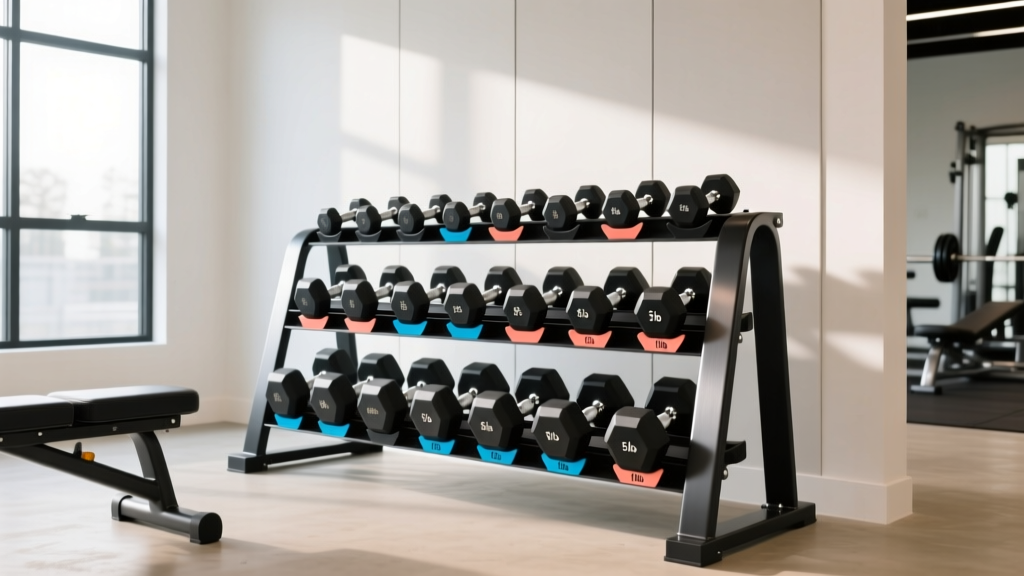
- Fixed 65 lb Hex Dumbbell (Single): ~$130 - $160. (Buying a full rack of fixed dumbbells up to 65 lbs will cost upwards of $2,500, making the Olympic loadable handle + plate route vastly more economical).
Final Verdict: Which Path Should You Take?
If your training goals max out at 30 lb dumbbell presses and light barbell curls, a standard 1-inch setup will suffice, provided you meticulously maintain the threaded collars. However, if you are chasing the 65 lb dumbbell benchmark for hypertrophy and strength, standard equipment will actively hold you back and introduce severe safety hazards. Olympic plates and loadable handles represent a non-negotiable upgrade for serious lifters, offering the mechanical stability, tolerance precision, and material durability required to train heavy, safely, and consistently.
More gear to consider
All reviews
Upper Body Dumbbell Workout Men: Hex vs Urethane Gym Layout Guide

Rack Setup: Barbell Knurling & the Dumbbell Squat Exercise

EZ Bar vs Straight Bar: 2026 Trends & Dumbbell Shoulder Press Shift
Dumbbell Racks for Weighted Sit Ups: 2026 Storage Market Trends
Rubber Hex vs Urethane: Care Tips for Your 5 Minute Dumbbell Workout
