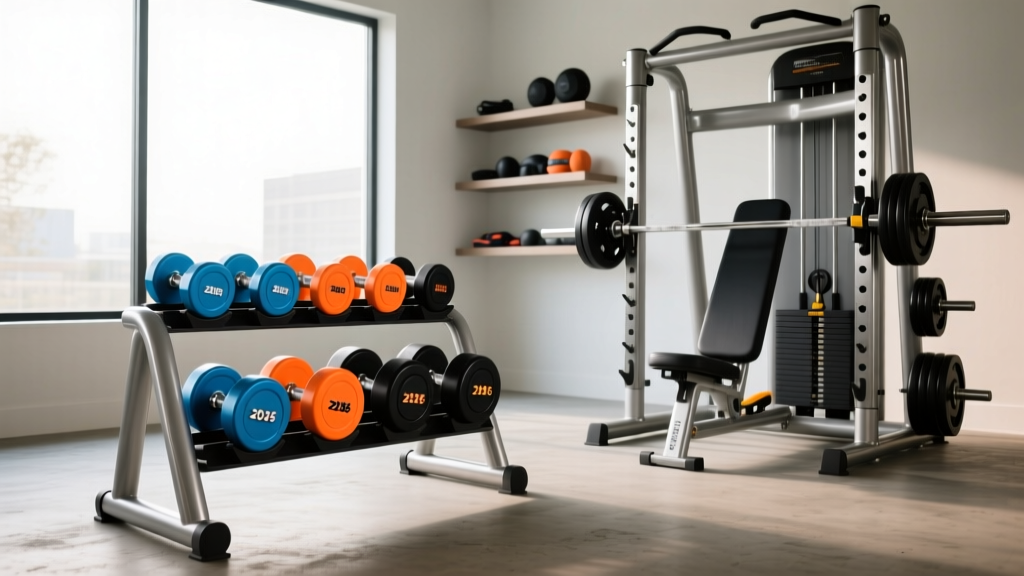
Olympic Barbell Weight & Knurling vs Dumbbell Home Workout No Bench
Upgrading from a dumbbell home workout no bench? Avoid these critical Olympic barbell weight, knurling, and tensile strength mistakes in our 2026 guide.

The Transition Trap: From Dumbbells to the Olympic Barbell
Many lifters begin their strength journey mastering the dumbbell home workout no bench routine. It is an accessible, space-saving way to build foundational muscle using adjustable dumbbells, floor presses, and goblet squats. However, as your strength outgrows 50-pound dumbbells, the natural progression is investing in an Olympic barbell and rack. This is where most home gym owners make catastrophic purchasing errors.
Dumbbells typically feature thick, smooth, or lightly textured handles (often 30mm to 35mm in diameter). An Olympic barbell is a completely different biomechanical tool, featuring a 28mm to 29mm steel shaft with aggressive machining. If you buy a barbell based solely on its 45-pound weight tag without understanding knurling geometry, tensile strength, and shaft diameter, you are setting yourself up for torn calluses, grip fatigue, and permanently bent steel. In this 2026 troubleshooting guide, we break down the exact mistakes lifters make when upgrading their home gym and how to select the right barbell specifications.
⚠️ Troubleshooting Alert: The most common mistake for lifters transitioning from a dumbbell home workout no bench setup is purchasing a cheap, high-PSI powerlifting bar with aggressive 'mountain' knurling. This will tear your hands during high-volume hypertrophy work and ruin your training consistency.Mistake #1: Choosing the Wrong Knurling Profile
Knurling is the cross-hatch pattern machined into the steel shaft to provide grip. When you are used to the smooth rubber or neoprene coating of dumbbells, raw steel knurling can feel like a cheese grater. The industry categorizes knurling into three primary geometric profiles. Understanding these is non-negotiable for a pain-free upgrade.
Hill vs. Mountain vs. Volcano Knurling
- Hill Knurling: The peaks of the knurl are rounded off. It feels smooth and mild. While comfortable for high-rep fitness workouts, it lacks the 'bite' required for heavy deadlifts or squats, especially when chalk and sweat are introduced.
- Mountain Knurling: The peaks are sharp and pointed. This is commonly found on cheap, imported Amazon barbells. It provides immense grip but will aggressively tear your calluses and cause micro-lacerations on your shins during deadlifts.
- Volcano Knurling: The gold standard for premium 2026 barbells. The machining creates a deep crater with a sharp rim. It provides a 'bitey' grip that locks into your skin without puncturing it, offering the perfect balance of security and comfort.
| Knurling Type | Profile Shape | Aggressiveness | Best For | 2026 Example Model & Price |
|---|---|---|---|---|
| Hill | Rounded peaks | Low / Mild | High-rep fitness, beginners | REP Fitness AB-3100 ($249) |
| Mountain | Sharp, pointed peaks | High / Severe | Avoid (causes tearing) | Generic Import Bars ($120-$150) |
| Volcano | Deep crater with rim | Medium / Bitey | Powerlifting, Olympic lifting | Rogue Ohio Bar V2 ($295) |
Mistake #2: Misjudging Shaft Diameter and Grip Fatigue
When performing a dumbbell home workout no bench required, your grip is challenged by the sheer thickness of the dumbbell handle, which often exceeds 32mm. Olympic barbells, however, are much thinner. The standard diameter for an Olympic weightlifting bar is 28mm, while a powerlifting bar is 29mm.
If you buy a 29mm power bar but primarily perform dynamic Olympic lifts (like snatches and cleans), the thicker shaft will cause premature forearm pump and restrict your hook grip. Conversely, if you buy a 28mm weightlifting bar for heavy, low-rep squats, the bar will dig painfully into your traps and feel unstable in your hands. According to equipment standards outlined by USA Weightlifting, a 28mm shaft is mandatory for sanctioned Olympic weightlifting to allow the bar to 'whip' and absorb the shock of the catch phase. For a home gym owner doing a mix of both, a 28.5mm multi-purpose bar is the ultimate troubleshooting fix.
"The transition from thick dumbbell handles to a 28mm barbell shaft requires a two-week grip adaptation period. Do not mistake early grip fatigue for a weak barbell; your central nervous system simply needs time to adapt to the narrower contact surface." — Home Gym Biomechanics Analysis, 2025
Mistake #3: Ignoring Tensile Strength and Permanent Bend
Weight is weight, right? Wrong. A standard Olympic barbell weighs 20kg (approx. 44 lbs) or 45 lbs. But the quality of that weight is dictated by tensile strength, measured in Pounds per Square Inch (PSI). This metric determines how much load the bar can hold before it permanently bends.
- Under 165,000 PSI: Avoid at all costs. These bars will take a permanent 'set' (bend) if you drop them with heavy plates or even just leave them loaded on a rack overnight.
- 190,000 PSI: The 2026 market standard for high-quality multi-purpose bars. It offers enough 'whip' for Olympic lifts while remaining stiff enough for heavy squats. The Rogue Ohio Bar is the benchmark here at 190k PSI.
- 215,000+ PSI: Elite powerlifting territory. These bars are incredibly stiff with zero whip. They are excellent for deadlifts and squats but will violently shake your shoulders during a clean and jerk.
If you are upgrading from dumbbells, you are likely used to dropping weights on rubber mats. Barbell steel requires respect. Always verify the PSI rating on the manufacturer's spec sheet before purchasing.
Mistake #4: Bushing vs. Bearing (The Rotation Factor)
Dumbbells are solid pieces of metal; the handle does not rotate independently of the weights. Barbells, however, feature rotating sleeves. When you perform a clean, the plates spin while the shaft remains stationary in your hands, reducing torque on your wrists.
Bronze Bushings: Solid metal rings that provide a slow, controlled spin. Ideal for powerlifting (squat, bench, deadlift) where you want stability and zero wobble. Needle Bearings: Tiny steel needles that allow for a lightning-fast, frictionless spin. Mandatory for Olympic weightlifting. Premium brands like Eleiko use high-end needle bearings in their competition WL bars (often priced over $1,100) to ensure flawless rotation under extreme loads.
Troubleshooting Tip: If you buy a bushing bar and try to learn power cleans, the lack of rotation will result in severe wrist bruising. If you are doing a hybrid routine, look for a bar with high-quality composite bushings that offer a middle-ground spin rate.
Troubleshooting Your First Olympic Barbell Purchase
Before you click 'checkout' on your first barbell, run it through this 4-step diagnostic checklist to ensure it matches your training style:
- Audit the Knurling: Zoom in on the product photos. Can you see deep craters (volcano), or do the peaks look shaved off (hill)? Avoid sharp mountain peaks unless you are a seasoned deadlifter who loves chalk.
- Check the Center Knurl: Do you plan to back squat? You need a center knurl to grip your shirt. Do you only do deadlifts and presses? A smooth center is more comfortable for floor-based movements and cleans.
- Verify the PSI: Scroll to the specifications tab. If the tensile strength is not listed, or is below 180,000 PSI, close the tab. It is not worth the risk of a bent shaft.
- Match the Sleeve Assembly: Confirm if the bar uses bushings (for slow, heavy power movements) or bearings (for fast, rotational Olympic lifts).
Summary: Bridging the Gap
Leaving the comfort of a dumbbell home workout no bench routine is a massive milestone in your fitness journey. It signals that you are ready for heavier, systemic loading. However, a barbell is a precision instrument, not just a long dumbbell. By prioritizing volcano knurling, respecting the 28mm to 29mm shaft diameter differences, and demanding a minimum of 190,000 PSI tensile strength, you will secure a piece of equipment that lasts a lifetime and keeps your hands intact.
More gear to consider
All reviews
Dumbbell Wood Choppers: Maintaining Loadable Interchangeable Plates
Dumbbell Good Morning Exercise: Rack Storage & Longevity Tips

EZ Curl Bar vs Straight Bar for Your Dumbbell Home Exercise Program
Dumbbell Rack Storage: Optimizing the Dumbbell Forward Raise
Bowflex 1090 Dumbbells With Stand vs Heavy-Duty Adjustable Picks 2026