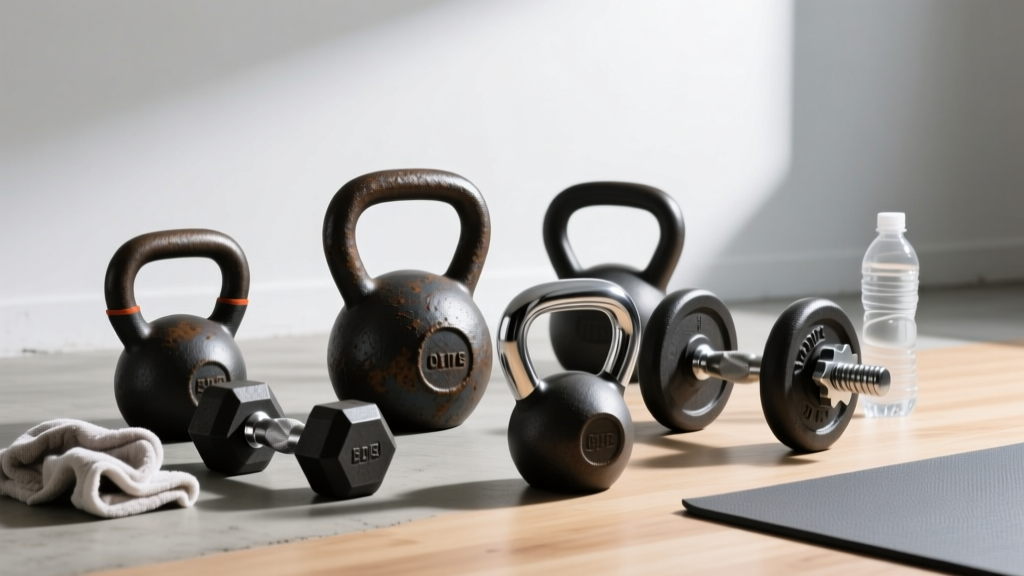
Cast Iron vs Competition Kettlebells & Dumbbell T Raise Value Guide
Analyze cast iron vs competition kettlebell costs. Discover budget frameworks for ballistic training and isolation moves like the dumbbell t raise.

The 2026 Home Gym Audit: Ballistics vs. Isolation
When auditing your home gym budget, you must separate your equipment investments by movement classification. Kettlebells are unparalleled for ballistic hip-hinge movements (swings, snatches) and unilateral grinds (presses, Turkish get-ups). However, strict isolation movements require entirely different biomechanical tools. For example, targeting the rear deltoids, rhomboids, and mid-traps via the dumbbell t raise requires a center-balanced, lightweight implement with a neutral grip profile.
Attempting a strict T-raise with a kettlebell is highly inefficient; the offset center of mass and the bulky bell resting awkwardly against your wrist create unnecessary joint torque and limit the scapular squeeze. Therefore, a smart 2026 budget framework allocates heavy funds to a premium kettlebell for your primary posterior chain lifts, while reserving a separate, smaller budget tier for adjustable dumbbells to handle strict isolation work like the dumbbell t raise. According to the ACE Fitness Exercise Library, maintaining proper joint alignment during rear-delt isolation is critical for preventing shoulder impingement, making the right tool selection a matter of both budget and injury prevention.
With that isolation budget secured, let us break down the true cost, value, and hidden fees of choosing between cast iron and competition kettlebells for your primary lifts.
Cast Iron Kettlebells: The Budget Lifter's Workhorse
Cast iron kettlebells are the traditional choice, forged from a single piece of iron or steel and typically finished with a powder coat, e-coat, or enamel. For the budget-conscious lifter, they offer the lowest barrier to entry.
Cost-Per-Pound Breakdown
As of early 2026, the market average for bare-bones cast iron kettlebells sits between $1.50 and $2.20 per pound. Brands like Yes4All and Amazon Basics occupy the lower end of this spectrum, while premium powder-coated options from Rogue Fitness and Rep Fitness push toward $2.50 per pound. If you need a 24kg (53lb) bell for heavy swings, you are looking at an upfront cost of roughly $85 to $115.
The Hidden Drawback: Inconsistent Dimensions
The primary failure mode of budget cast iron is dimensional inconsistency. Because they are cast in different molds for different weights, the physical size of the bell and the thickness of the handle scale upward as the weight increases.
- Handle Diameter Variance: A 12kg cast iron bell might feature a 28mm handle, while a 32kg bell from the same manufacturer jumps to a 35mm handle. This variance destroys muscle memory for the hook grip required during high-rep snatches.
- Horn Spacing: The distance between the handle and the bell (the 'window') changes. A bell that is too wide will crush your forearm during the rack position of a clean, while a bell that is too narrow will restrict hand insertion.
Competition Kettlebells: The Premium Steel Investment
Competition kettlebells are engineered for one specific purpose: absolute consistency. Originally designed for the sport of Kettlebell Lifting (Girevoy Sport), they are made with a steel shell and a hollow core filled with ball bearings or sand to achieve the target weight.
Uniform Sizing and Technique Consistency
Whether you are lifting an 8kg or a 32kg competition bell, the dimensions remain strictly identical: 280mm in height, 210mm in width, and a 33mm handle diameter. As emphasized by StrongFirst Kettlebell Training standards, this uniformity allows lifters to master the mechanics of the clean, snatch, and jerk without constantly recalibrating their hand insertion or rack position as they progress to heavier weights.
The True Cost of Steel
This precision comes at a premium. Competition bells typically range from $3.80 to $5.50 per pound. A standard 16kg (35lb) competition kettlebell from a reputable brand like Kettlebell Kings or Onnit will cost between $130 and $160. While the initial sticker shock is high, the value proposition emerges in longevity and technical progression; you will never outgrow the physical dimensions of the bell, only the weight inside it.
Head-to-Head Value Matrix
Use the following comparison chart to determine which style aligns with your specific training goals and financial constraints.
| Feature | Cast Iron (Powder Coat) | Competition (Solid Steel) |
|---|---|---|
| Average Cost (per lb) | $1.50 - $2.50 | $3.80 - $5.50 |
| Handle Diameter | Varies (28mm - 35mm) | Strict 33mm |
| Physical Dimensions | Scales with weight | Uniform (280x210mm) |
| Best Use Case | General fitness, heavy grinds, budget builds | Snatches, cleans, rack work, sport prep |
| Durability | Extremely high (solid iron) | High (can dent if dropped on concrete) |
The Hidden Budget Killer: Freight and Dimensional Weight
When calculating your budget breakdown, the most frequently overlooked variable is shipping. Kettlebells are incredibly dense, which triggers 'dimensional weight' and 'overweight' surcharges from standard carriers like UPS and FedEx.
Budget Warning: Purchasing a 'cheap' $75 cast iron 24kg kettlebell from a discount retailer can easily incur $35 to $50 in shipping fees at checkout, effectively raising your cost-per-pound to competition levels. Always calculate the landed cost (Item Price + Shipping + Tax) before comparing value.
To mitigate this, budget lifters should look for brands that offer flat-rate shipping thresholds or free freight shipping on orders over $100. Buying a pair of lighter bells (e.g., two 12kg bells) to cross the free-shipping threshold is often more cost-effective than buying a single heavy bell and paying exorbitant freight fees.
Strategic Framework: Building Your 2026 Arsenal
If you are outfitting a home gym from scratch with a strict $500 budget, here is the optimal allocation strategy to maximize movement variety and equipment quality:
- Allocate $150 for Isolation Tools: Purchase a mid-tier pair of adjustable dumbbells (or a set of fixed hex dumbbells in the 10lb-20lb range). This secures your ability to perform strict, joint-friendly isolation movements like the dumbbell t raise, lateral raises, and tricep extensions without compromising your form.
- Allocate $300 for a Primary Kettlebell: Skip buying three cheap, mismatched cast iron bells. Instead, invest in a single, high-quality 20kg or 24kg Competition Kettlebell. This will serve as your master tool for heavy swings, goblet squats, and unilateral presses.
- Allocate $50 for Accessories: Use the remaining funds for a high-quality lifting chalk and a dense rubber mat to protect your flooring during ballistic drops.
By separating your budget into isolation-specific tools and ballistic-specific tools, you ensure that every dollar spent directly enhances your biomechanical efficiency, safety, and long-term strength progression.
More gear to consider
All reviews
Overhead Dumbbell Press Mistakes: Adjustable Dumbbell Comparison

Olympic Barbell Buying Guide: Weight, Knurling & Gold's Gym Gold Dumbbells Setup
Bumper vs Iron Plates Cost & Back Workout with Dumbbells Chart

Bumper vs Iron Plates: A Dumbbell Plot of Cost & Durability

Bumper vs Iron Plates: Elevating Your Dumbbells Routine Home Setup
