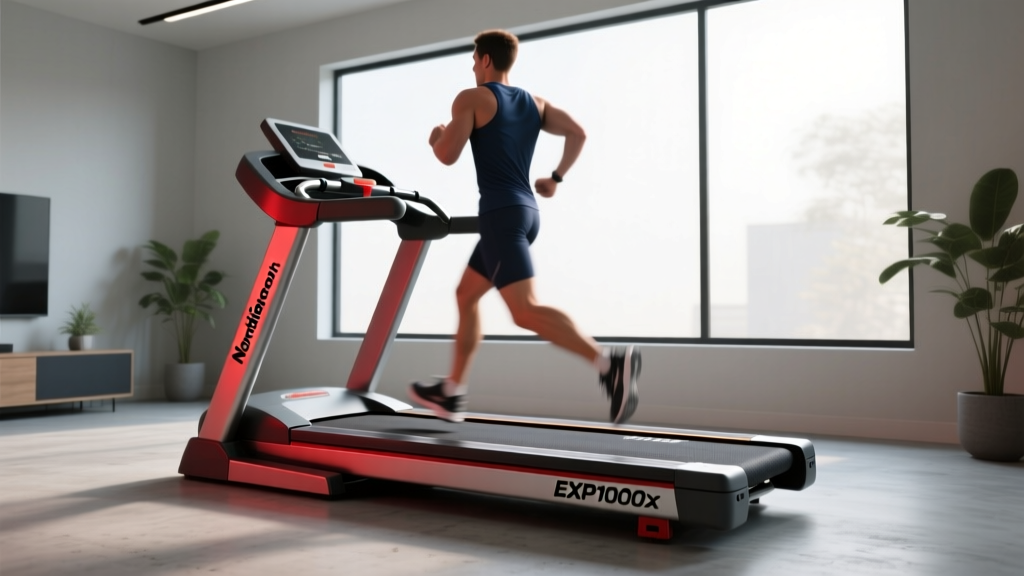
Treadmill Motor Guide: Sizing the NordicTrack EXP1000x Treadmill
Learn how to choose the right treadmill motor size. We break down HP vs. CHP using the NordicTrack EXP1000x treadmill as our beginner-friendly case study.

The Horsepower Illusion: Why Beginners Get Tricked
Walking into the home fitness market in 2026 can feel like navigating a maze of inflated numbers and confusing acronyms. Nowhere is this more apparent than in treadmill motor specifications. When beginners research entry-to-mid-level options like the NordicTrack EXP1000x treadmill, they are immediately confronted with terms like 'Peak HP,' 'Continuous Duty,' and 'PWM Controllers.' Choosing the wrong motor size doesn't just mean a sluggish belt; it leads to thermal shutdowns, voided warranties, and a machine that dies within 18 months.
This step-by-step guide strips away the marketing jargon. We will use the popular NordicTrack EXP1000x treadmill as our baseline case study to teach you exactly how to size a treadmill motor to your body weight, stride, and fitness goals.
⚠️ Marketing Trap Alert: Never buy a treadmill based on 'Peak Horsepower.' Peak HP only measures the maximum output the motor can hit for a fraction of a second before the breaker trips. Always look for CHP (Continuous Horsepower), which measures the power the motor can sustain indefinitely during a 45-minute run.Step 1: Decode the Motor Label
Before evaluating any specific model, you must understand the 'Big Three' motor metrics printed on the manufacturer's spec sheet.
- Continuous Horsepower (CHP): The most critical metric. This is the power the motor delivers consistently without overheating. For walking, 2.0 CHP is the floor. For jogging, 2.5 CHP. For running, 3.0 CHP or higher.
- Peak Horsepower (HP): A marketing gimmick. A motor labeled '4.0 Peak HP' might only have a 2.2 CHP rating. Ignore this number entirely.
- Amp Draw: The electrical current the motor pulls under load. A healthy 2.5 CHP motor should pull between 8 to 12 amps under a 180 lb user at 6.0 MPH. If a spec sheet hides the amp draw, it is a red flag.
Step 2: Map Your Weight to Motor Output
The Centers for Disease Control and Prevention (CDC) emphasizes the importance of consistent, accessible cardiovascular routines. However, consistency is impossible if your treadmill's motor controller overheats and shuts down mid-stride. Motor sizing is directly tied to user weight because heavier users create more friction and downward force on the deck, requiring higher torque from the motor.
| User Weight | Primary Activity | Minimum CHP Required | Recommended CHP (2026 Standard) |
|---|---|---|---|
| Under 150 lbs | Walking / Light Jog | 2.0 CHP | 2.25 CHP |
| 150 - 200 lbs | Jogging / Interval Run | 2.5 CHP | 2.75 CHP |
| 200 - 250 lbs | Running / Incline Walk | 3.0 CHP | 3.25 CHP |
| 250+ lbs | Any Pace | 3.5 CHP | 4.0 CHP (Commercial Grade) |
Step 3: Case Study — The NordicTrack EXP1000x Treadmill
To see these principles in action, let's dissect the motor assembly of the NordicTrack EXP1000x treadmill. Positioned in the highly competitive $699 to $799 entry-level home fitness bracket, the EXP1000x utilizes a 2.6 Continuous Horsepower (CHP) Mach Z motor. Why did engineers spec a 2.6 CHP motor for this specific tier?
Bridging the Gap
A 2.6 CHP motor perfectly bridges the gap between cheap 1.5 HP walking pads and mid-tier $1,500 treadmills with 3.25 CHP commercial motors. For a user weighing up to 220 lbs, the EXP1000x's 2.6 CHP motor maintains a steady 11-amp draw at a 6.0 MPH jogging pace. This keeps the motor operating at roughly 65% of its maximum thermal capacity, which is the sweet spot for longevity.
The Incline Factor
The EXP1000x offers a 10% motorized incline. When you elevate the deck, gravity shifts the load. According to biomechanical data referenced by the American Council on Exercise (ACE), running on a 10% incline increases caloric expenditure and muscular demand by up to 40%. Similarly, it increases the treadmill motor's amp draw by roughly 30%. If this machine had a 2.0 CHP motor, engaging the incline would push the amp draw past 16 amps, triggering the thermal fuse on the motor controller board. The 2.6 CHP spec ensures the machine can handle moderate incline walking without tripping the breaker.
Expert Insight: 'In 2026, brushless DC motors are becoming more common, but the EXP1000x relies on a proven brushed-motor design paired with a high-quality Pulse Width Modulation (PWM) controller. The PWM board regulates voltage to the motor. If the motor is undersized, the PWM board works too hard, generates excess heat, and melts the solder joints. Always match the motor to your heaviest household user.'
Step 4: Identify Hidden Failure Modes
Even a perfectly sized motor like the 2.6 CHP unit in the NordicTrack EXP1000x treadmill can fail prematurely if you ignore the physics of belt friction. As a beginner, you must understand how your maintenance habits directly impact motor lifespan.
- The Dry Deck Death Spiral: Treadmill belts require 100% silicone lubrication every 150 miles or 3 months. A dry belt increases the coefficient of friction against the wooden deck. This forces the motor to work up to 35% harder, spiking the amp draw and cooking the motor windings.
- Overtightening the Belt: Beginners often mistake a slipping belt for a loose motor. They use an Allen wrench to crank the rear roller bolts. An overtightened belt puts immense lateral strain on the motor bearings, leading to a high-pitched whining noise and eventual bearing seizure.
- PWM Thermal Throttling: If you exceed the 300 lb weight capacity of the EXP1000x, the PWM controller will detect the massive current spike and intentionally cut power to the belt to prevent a fire. This is known as thermal throttling, and while it is a safety feature, it is often misdiagnosed by users as a 'broken motor.'
Step 5: Read the Warranty Fine Print
The ultimate lie detector for treadmill motor sizing is the manufacturer's warranty. According to equipment selection guidelines from the Mayo Clinic, investing in durable, well-warranted fitness equipment is crucial for maintaining long-term joint health and exercise adherence.
When evaluating the NordicTrack EXP1000x treadmill, or any competitor in the $700 range, look closely at the motor warranty. NordicTrack typically offers a 10-year warranty on the motor frame and parts for this tier. If a budget brand offers only a 1-year motor warranty on a '3.0 Peak HP' motor, they are signaling that they know the motor will burn out within 14 months. A 10-year motor warranty is the industry baseline for a trustworthy CHP rating.
Final Verdict & Sizing Checklist
Understanding treadmill motors doesn't require an engineering degree; it just requires ignoring the 'Peak HP' marketing fluff and focusing on Continuous Horsepower, user weight, and amp draw.
✅ The Beginner's Motor Sizing Checklist
- Identify the CHP (Continuous Horsepower), not Peak HP.
- Match the CHP to the heaviest user in your household (Add 0.5 CHP if you plan to use max incline frequently).
- Ensure the machine has a minimum 10-year motor warranty.
- Commit to silicone belt lubrication every 3 months to reduce motor amp draw by up to 20%.
- Use the NordicTrack EXP1000x treadmill (2.6 CHP) as your benchmark for what a capable, budget-friendly jogging motor should look like in 2026.
By following this framework, you will avoid the frustration of a stuttering belt and a burnt-out control board, ensuring your home cardio investment supports your fitness journey for years to come.
More gear to consider
All reviews
Commercial 1750 Treadmill Noise Level vs Top Cardio Machines
Treadmill Motor Size Guide: Is the ProForm 385 Treadmill Enough?
Under Desk Treadmill Review: Office Space & c mill treadmill

Sunny Smart Treadmill Review: Small Space Care & Longevity

How Much Does a NordicTrack Treadmill Weigh vs Rowing Machines?