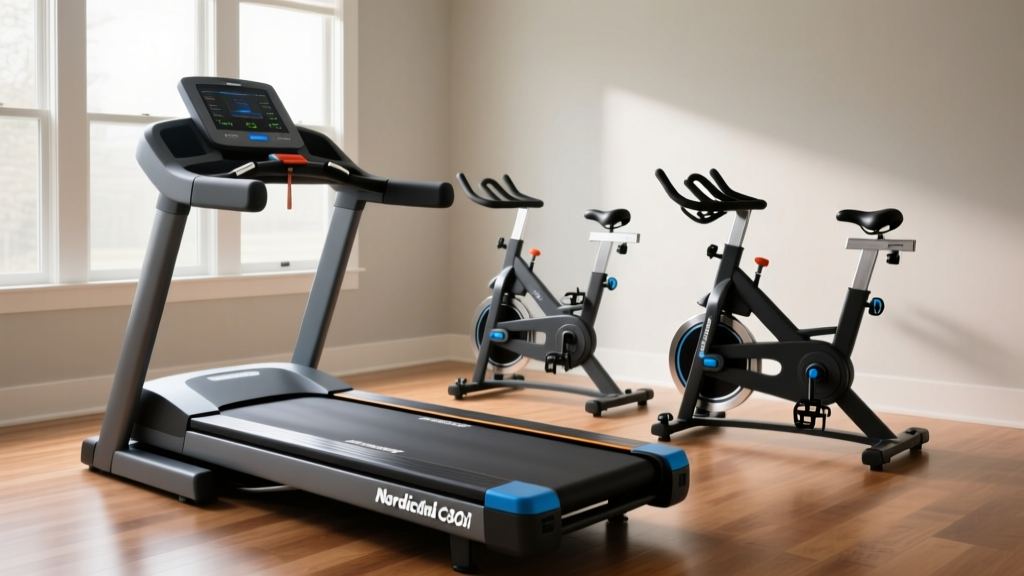
Buying a Treadmill for Backward Treadmill Walking: Step-by-Step
Learn how to choose the right treadmill for backward treadmill walking. Our step-by-step buyer's guide compares belt size, speed, and safety features.

Why Backward Treadmill Walking Changes Your Buying Criteria
As we move through 2026, retro walking—more commonly known as backward treadmill walking—has transitioned from a niche physical therapy tool to a mainstream fitness trend. Whether you are rehabilitating a knee injury, looking to correct muscular imbalances, or simply trying to spike your metabolic rate, walking in reverse offers profound benefits. According to research highlighted by BBC Future, backward walking can improve cardiorespiratory fitness and burn up to 40% more calories than forward walking at the same speed.
However, buying a treadmill for this specific modality requires a completely different evaluation framework than shopping for a standard forward-running machine. When you walk backward, your spatial awareness is compromised, your stride mechanics change, and your center of gravity shifts. A standard budget treadmill with a short deck and jerky speed increments is not just uncomfortable for retro walking; it is a genuine fall hazard.
This beginner-friendly, step-by-step guide will walk you through the exact features you must compare when buying a treadmill optimized for backward treadmill walking.
Step 1: Evaluate the Running Belt Dimensions (The 55-Inch Rule)
When walking forward, you can easily see the edge of the treadmill belt and adjust your stride subconsciously. When walking backward, you are flying blind. Your brain naturally compensates for this lack of visual feedback by slightly lengthening your stride and widening your stance to maintain balance.
- Length: You must avoid compact or walking-pad treadmills with 45-inch to 50-inch belts. The absolute minimum belt length for safe backward treadmill walking is 55 inches. If you are taller than 5'9", you should exclusively look at 60-inch belts to prevent your heel from catching the rear plastic motor cover.
- Width: A standard 18-inch width is too narrow. Your widened retro-walking stance requires a minimum 20-inch width, with 22 inches being the gold standard for lateral stability.
Step 2: Scrutinize Motor and Speed Increment Precision
Not all treadmill motors and consoles are created equal. For backward treadmill walking, the granularity of your speed control is a critical safety feature.
The 0.1 MPH Increment Requirement
Many entry-level treadmills adjust speed in 0.5 mph increments. Jumping from 1.0 mph to 1.5 mph while walking backward can cause a sudden loss of balance, as the backward heel-strike phase requires significant ankle dorsiflexion and quad control. You must ensure the console allows for 0.1 mph micro-adjustments. This allows you to find your exact biomechanical threshold without being forced into a speed that compromises your form.
Continuous Duty Horsepower (CHP)
Walking backward creates an unnatural drag pattern on the belt. The heel strikes the belt and pulls it in a way that differs from the rolling motion of forward walking. Look for a motor with at least 2.5 CHP (Continuous Duty Horsepower) to prevent the belt from stuttering or hesitating under the uneven load profile of retro walking.
Step 3: Feature Comparison Matrix for Retro Walking
To help you visualize how these specs translate to real-world purchasing decisions, we have compared three popular 2026 treadmill models specifically through the lens of backward treadmill walking.
| Model | Belt Dimensions | Speed Increments | Motor (CHP) | Est. Price | Retro-Walking Verdict |
|---|---|---|---|---|---|
| Sole F80 | 22" x 60" | 0.1 mph | 3.5 CHP | $999 | Best Overall: Wide deck and heavy-duty motor handle backward drag flawlessly. |
| Horizon T202 | 20" x 55" | 0.1 mph | 2.75 CHP | $699 | Best Budget: Meets the minimum 55" safety threshold with precise speed controls. |
| ProForm Carbon TLX | 18" x 55" | 0.5 mph | 2.6 CHP | $549 | Avoid for Retro: Deck is too narrow and 0.5 mph jumps are a fall risk. |
| NordicTrack T Series 10 | 20" x 55" | 0.1 mph | 2.8 CHP | $599 | Good Alternative: Solid entry-level option, though side rails are awkwardly placed. |
For a comprehensive breakdown of general treadmill reliability and warranty structures, we highly recommend consulting the Consumer Reports Treadmill Buying Guide before finalizing your purchase.
Step 4: Assess Handrail Ergonomics and Console Design
When you turn around to walk backward, the standard side handrails become virtually useless—and potentially dangerous. Reaching blindly behind you to grab a side rail while the belt is moving forces your shoulders into extreme extension and twists your thoracic spine, completely defeating the postural benefits of the exercise.
What to look for instead:
- Dual-Grip Front Handles: Look for treadmills that feature horizontal grab bars extending from the front of the console (the part that will be behind your back). These allow you to maintain a neutral spine while holding on for balance.
- Low-Profile Consoles: Massive, towering HD touchscreens can feel intimidating and obstructive when they are positioned behind your head during backward walking. A lower-profile console with tactile, physical speed buttons is vastly superior to a touchscreen, as you can reach back and adjust your speed without needing to look at the screen.
Step 5: The Safety Lanyard Routing Protocol (Crucial Setup)
Every reputable treadmill comes with a magnetic safety lanyard that stops the belt if you fall. However, 99% of beginners set this up incorrectly for backward treadmill walking.
⚠️ EXPERT WARNING: The Lanyard Edge CaseIf you clip the safety lanyard to the front of your shirt while facing backward, the cord will not reach the console behind you. If it does reach, it will be pulled taut immediately, stopping the machine. The Fix: Clip the magnetic lanyard to the back of your shirt collar, or route the cord through a back belt loop and clip it to your front pocket. This ensures that if you stumble forward (away from the console), the cord pulls tight and kills the motor instantly.
Step 6: Your First Backward Walking Session
Once your treadmill is assembled and properly placed in a well-lit room (ensure there is at least 4 feet of clearance behind the treadmill in case you step off backward), follow this beginner protocol:
- Mount Safely: Step onto the side rails first. Start the belt at 0.5 mph.
- The Step-Back: Holding the front console handles, gently step one foot backward onto the moving belt, followed by the other.
- Posture Check: Keep your chest upright. Beginners have a tendency to constantly look over their shoulder, which causes severe cervical (neck) strain. Trust the belt; keep your eyes forward (which is the rear of the room).
- Heel-to-Toe Reversal: Focus on landing on your toes first, then rolling back onto your heel. This is the opposite of forward walking and is what activates the vastus medialis (the teardrop quad muscle near the knee).
- Duration: Limit your first session to just 5 to 8 minutes. The neuromuscular fatigue from retro walking sets in much faster than forward walking.
Contraindications and Edge Cases
While backward walking is excellent for patellofemoral pain syndrome and general knee osteoarthritis management, it places unique demands on the ankle joint. Individuals with severe Achilles tendinopathy or limited ankle dorsiflexion should consult a physical therapist before beginning a retro walking program.
— Adapted from Arthritis Foundation Joint Health Guidelines
Frequently Asked Questions
Do I need a treadmill with a high incline for backward walking?
No. In fact, high inclines (above 5%) are generally discouraged for beginners walking backward. An incline shifts your center of gravity further backward, increasing the risk of falling off the rear of the deck. Stick to a 0% to 2% incline to master the biomechanics before attempting graded retro walking.
Can I use a walking pad for backward treadmill walking?
We strongly advise against it. Walking pads lack handrails entirely and typically feature belts that are only 40 to 45 inches long. The combination of no stability support and a short deck makes backward walking on a walking pad a severe tripping hazard.
How often should I incorporate backward walking into my routine?
For beginners, 2 to 3 sessions per week, lasting 5 to 10 minutes each, is sufficient to see improvements in knee stability and quad activation without overloading the calves and Achilles tendons. You can use it as a warm-up before a forward-running session or as a standalone active recovery tool.
More gear to consider
All reviews
What Is the Curved Treadmill Called? Compact Portable Cardio Picks
Stair Climber Guide: 12-3-30 Treadmill Before and After Results

What Does Treadmill Do to Your Body? Noise & Impact Guide

Walkingpad Foldable Treadmill: 2026 Step-by-Step Buying Guide

Space-Saving Maintenance: ProForm CrossFit 415 Treadmill Belt Care