Rowing Technique & Buying Guide for ProForm Pro 1000 Treadmill Users
Master rowing machine buying and technique. Troubleshoot common mistakes to perfectly cross-train with your ProForm Pro 1000 treadmill for optimal cardio.

Why ProForm Pro 1000 Treadmill Owners Need a Rower
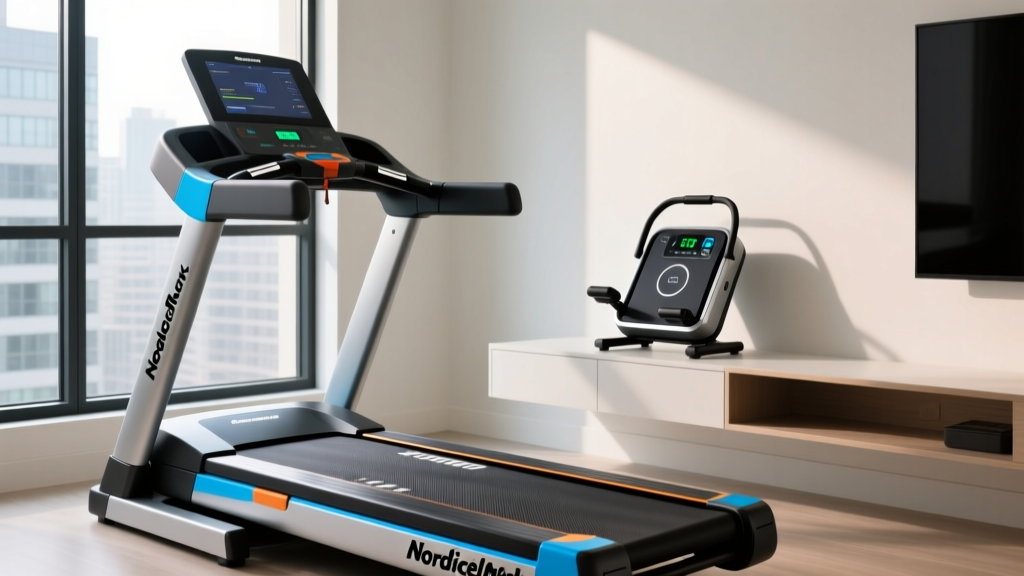
The ProForm Pro 1000 treadmill is a cornerstone of home cardio, celebrated for its reliable 3.0 CHP Mach Z motor, spacious 20-inch by 55-inch belt, and 12% incline capability. It is exceptional for Zone 2 incline walking and tempo runs. However, repetitive linear impact often leads to overuse injuries like shin splints, patellar tendinopathy, and hip flexor strain. Furthermore, treadmill running and walking heavily emphasize the anterior chain and calves while neglecting the posterior chain (glutes, hamstrings, and lats).
Enter the rowing machine. According to the U.S. Department of Health and Human Services, cross-training with varied aerobic modalities is critical for long-term joint health and cardiovascular adaptation. For dedicated ProForm Pro 1000 treadmill users, adding a rower provides a zero-impact, full-body stimulus that builds the exact back and hip strength needed to improve your running posture and power output.
Biomechanical Synergy
Treadmill (ProForm Pro 1000): 80% lower body, primarily sagittal plane, high-impact, anterior chain dominant.
Rowing Machine: 60% lower body, 30% core, 10% upper body, zero-impact, posterior chain dominant. Combining these two machines creates a perfectly balanced home gym ecosystem.
2026 Rowing Machine Buying Guide for Runners
When selecting a rower to complement your treadmill, you must choose between three primary resistance types. The 2026 market has stabilized in pricing, but the technological gap between entry-level and premium models remains vast.
| Model (2026) | Resistance Type | Price Range | Best For Treadmill Users |
|---|---|---|---|
| Concept2 RowErg | Air | $1,100 | Data-driven runners; exact metric tracking via PM5 monitor. |
| WaterRower Natural Oak | Water | $1,450 | Aesthetic home gyms; those who prefer the soothing sound of water over air noise. |
| NordicTrack RW200 | Magnetic | $899 | Quiet environments; iFIT integration to match your ProForm ecosystem. |
The Drag Factor vs. Damper Setting Trap
A common mistake for beginners buying an air rower is pushing the side damper lever to 10. Do not do this. The damper is like a bicycle gear, not a difficulty dial. A setting of 10 mimics rowing a heavy, slow wooden boat, which will destroy your lower back during long aerobic sessions. For aerobic cross-training that mimics the cardiovascular demand of a steady-state run on your ProForm Pro 1000, access the PM5 monitor's hidden 'Drag Factor' menu. Aim for a drag factor between 100 and 115 (usually a damper setting of 3 to 5). This mimics the sleek, fast feel of an Olympic racing shell and allows for higher stroke rates without muscular burnout.
Mastering the Technique: The 4-Phase Stroke
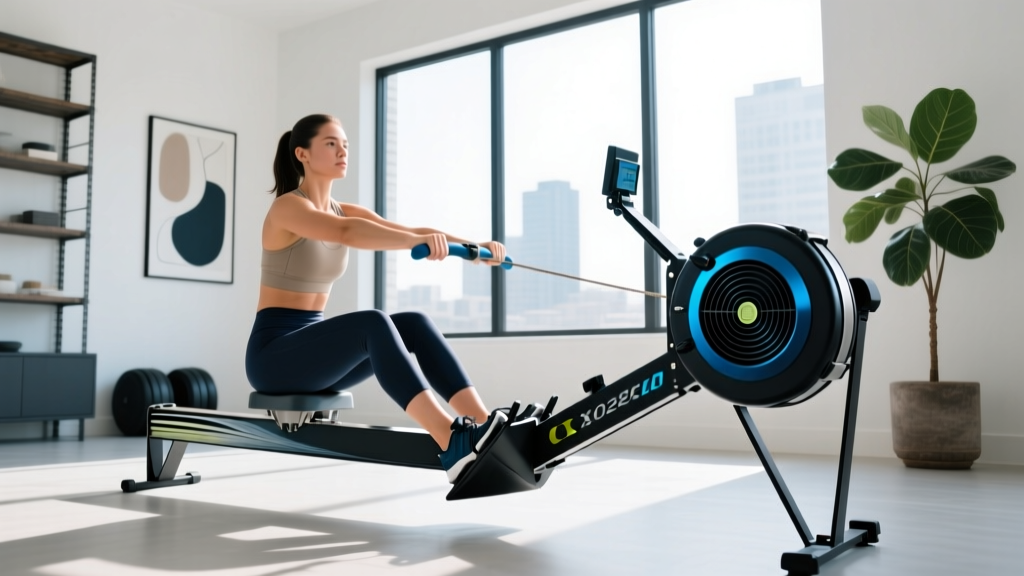
Rowing is not a pull; it is a push. To avoid injury and maximize cardiovascular output, you must adhere to the strict sequencing of the stroke. The Concept2 training methodology dictates a specific power distribution: 60% legs, 30% core hinge, 10% arms.
- The Catch: Shins are perfectly vertical (never past 90 degrees). Arms are straight, shoulders relaxed, and torso hinged forward to roughly the 1 o'clock position. Weight is on the balls of your feet.
- The Drive: Push explosively through the heels. Do not bend your arms yet. As the legs reach 75% extension, hinge the torso back to 11 o'clock. Finally, draw the handle to your lower ribs.
- The Finish: Legs are fully extended, torso leaning back slightly at 11 o'clock, handle resting lightly at the sternum, elbows drawn past the ribs. Wrists must remain flat.
- The Recovery: The reverse of the drive. Arms extend first, torso hinges forward to 1 o'clock, then the knees bend. The recovery should take exactly twice as long as the drive (a 2:1 ratio).
Expert Cue: Imagine you are doing a deadlift or a barbell clean. You would never pull the bar with your arms before your legs push the floor away. Apply this exact same kinetic chain to the rowing machine.
Troubleshooting Common Rowing Mistakes
Because treadmill users are accustomed to the continuous, lower-body-dominant strike of running, they often project these movement patterns onto the rower, leading to mechanical failure and pain. Use this troubleshooting matrix to diagnose your stroke.
| Mistake | Symptoms / Pain | Root Cause | The Fix |
|---|---|---|---|
| Shooting the Slide | Lower back pain; loss of power. | Hips rise before the handle moves; weak lat engagement. | Perform 'Pause Drills' at the catch. Engage lats to connect the handle to the hips before pushing. |
| Early Arm Pull | Bicep tendonitis; upper trap fatigue. | Bending elbows before legs are 50% extended. | Row with an open palm (no grip) for 5 minutes to force the legs to do the work. |
| Lumbar Flexion | Sharp pain in the L4/L5 spine area. | Rounding the lower back at the catch due to tight hamstrings. | Stop the slide short of full compression. Prioritize a flat back over reaching the shins to vertical. |
| Rushing the Slide | Spiking heart rate prematurely; breathlessness. | Recovery phase is as fast as the drive. | Count '1-2' on the recovery and '1' on the drive. Breathe in on the recovery, out on the drive. |
Foot Strap Placement Edge Case
Most users strap their feet in too high. The plastic strap should cross exactly at the flex point of your toes (the metatarsophalangeal joint), not the middle of your laces. If strapped too high, you will be unable to achieve proper plantar flexion at the finish, robbing you of 5-10% of your leg drive power and placing undue strain on the Achilles tendon.
Cross-Training Programming: Treadmill & Rower
To maximize cardiovascular health while mitigating impact injuries, structure your 2026 training week by alternating the biomechanical load between your ProForm Pro 1000 treadmill and your rowing machine.
- Monday (Aerobic Base): ProForm Pro 1000 Treadmill. 45 minutes at 10% incline, 3.0 - 3.5 mph. Keep heart rate in Zone 2 (65-75% of Max HR). This builds capillary density without impact.
- Tuesday (VO2 Max Intervals): Rowing Machine. 10-minute warmup. 8 x 500-meter sprints at 28-32 strokes per minute (SPM), with 2 minutes of active recovery rowing between sets. This targets the posterior chain and anaerobic threshold.
- Thursday (Tempo): ProForm Pro 1000 Treadmill. 30 minutes at 1% incline at a 'comfortably hard' pace (Zone 3/4).
- Saturday (Active Recovery / Flush): Rowing Machine. 30 minutes at a low drag factor (90-100), 18-20 SPM. Focus purely on stroke length and technique, flushing lactic acid from the legs post-run.
The 2026 Takeaway
Owning a high-quality treadmill like the ProForm Pro 1000 is an excellent investment for your cardiovascular baseline. However, longevity in fitness requires mechanical diversity. By investing in a quality rower, mastering the 60/30/10 power distribution, and rigorously troubleshooting your stroke mechanics, you will build a bulletproof posterior chain that makes you a faster, more resilient runner.
More gear to consider
All reviews
Beyond the Woman Running on Treadmill: 2026 Compact Cardio Trends

Under Desk Treadmill Review: Office Layout & Speed Chart

Is a Treadmill a Good Way to Lose Weight? The Noise Test
Air Bike vs Assault Bike Care: ProForm Carbon TL Folding Treadmill
2026 Rowing Machine Buying Guide: Beat the 45-Minute Treadmill