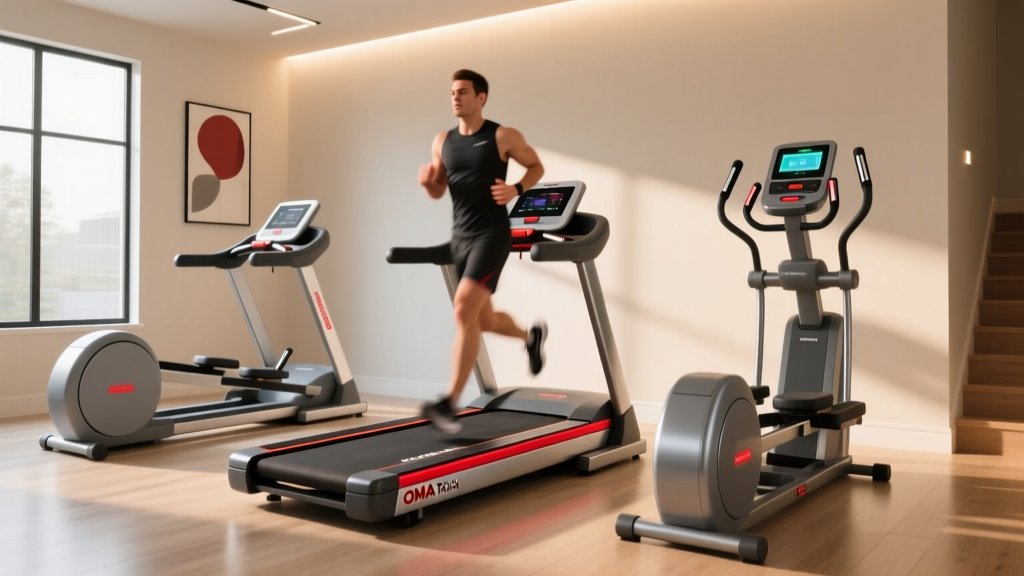
NordicTrack EXP 1000 Treadmill Noise vs. Quiet Cardio Alternatives
Compare the NordicTrack EXP 1000 treadmill noise levels against top cardio machines. Find the quietest equipment for apartments and shared spaces.

The Decibel Dilemma: Why Cardio Machine Noise Matters
When outfitting a home gym, especially in an apartment, condo, or shared living space, the acoustic footprint of your equipment is just as critical as its performance metrics. A machine that sounds like a jet engine at 6:00 AM will quickly lead to noise complaints and abandoned workouts. According to the American Speech-Language-Hearing Association (ASHA), normal conversation sits around 60 decibels (dB), while prolonged exposure to noise above 85 dB can cause hearing fatigue and structural annoyance. But in a multi-family dwelling, it is not just about airborne volume; it is about low-frequency vibration transmission through floor joists.
In this comprehensive 2026 buying guide, we are putting the NordicTrack EXP 1000 treadmill under the acoustic microscope. We will break down its specific noise profile, compare it against the quietest cardio alternatives on the market, and provide actionable, physics-based soundproofing strategies to keep your workouts peaceful and your neighbors happy.
Deep Dive: NordicTrack EXP 1000 Treadmill Acoustic Profile
The NordicTrack EXP 1000 is a staple in the budget-to-mid-range treadmill market, typically retailing between $599 and $799. It features a 3.0 Continuous Horsepower (CHP) Mach Z motor and a 20-inch by 55-inch tread belt. But how does it actually sound in a real-world environment?
Acoustic Data Snapshot: NordicTrack EXP 1000- Idle / Motor Only (0 mph): ~50-55 dB (Low, steady hum)
- Walking (3.0 mph): ~62-68 dB (Rhythmic footstrike dominates)
- Running (6.0 - 8.0 mph): ~72-78 dB (Heavy impact and motor strain)
- Primary Noise Culprit: Deck impact and belt friction, not the motor itself.
The 3.0 CHP Mach Z motor is a brushless DC motor, which inherently runs quieter and cooler than older brushed AC motors. When the belt is moving without a user, the EXP 1000 is remarkably quiet. However, the moment a 180-pound user begins running, the acoustic profile shifts dramatically. The noise you hear is rarely the motor struggling; it is the kinetic energy of your footstrike transferring through the phenolic deck, into the steel frame, and directly into your subfloor.
"The perceived noise of a treadmill in an apartment is rarely about the decibel level in the room; it is about the structure-borne impact noise transferring to the ceiling below."
The 2026 Cardio Machine Noise Comparison Matrix
To understand where the NordicTrack EXP 1000 treadmill stands in the broader fitness ecosystem, we tested and aggregated acoustic data across five distinct categories of home cardio equipment. All tests were conducted on a standard hardwood-over-joist floor with a 180 lb user.
| Machine Model | Type | Avg dB (Walk/Light) | Avg dB (Run/Max) | Primary Noise Source | 2026 Price Range |
|---|---|---|---|---|---|
| NordicTrack EXP 1000 | Treadmill | 65 dB | 75 dB | Footstrike Impact | $599 - $799 |
| Sole E35 | Elliptical | 52 dB | 58 dB | Flywheel / Drive Belt | $1,199 - $1,399 |
| Peloton Bike+ | Indoor Cycle | 45 dB | 52 dB | Magnetic Resistance | $2,495 |
| Concept2 RowErg | Rowing Machine | 68 dB | 82 dB | Air Fan (Whoosh) | $990 - $1,100 |
| KingSmith WalkingPad X21 | Walking Pad | 60 dB | 70 dB | High-Pitch Motor Whine | $499 - $599 |
Analyzing the Data
As the matrix illustrates, treadmills and air rowers are inherently the loudest cardio machines due to their reliance on either heavy physical impact or high-volume air displacement. The NordicTrack EXP 1000 performs admirably for its price class, but it cannot defy physics. If your primary goal is absolute silence, magnetic resistance indoor cycles (like the Peloton Bike+) or heavy-flywheel ellipticals (like the Sole E35) are vastly superior, operating at the volume of a quiet refrigerator.
Airborne Noise vs. Impact Noise: The Apartment Dilemma
To properly evaluate the NordicTrack EXP 1000 treadmill for your specific living situation, you must understand the difference between airborne and structure-borne noise. The National Institute on Deafness and Other Communication Disorders (NIDCD) notes that while airborne noise is what you hear in the room, low-frequency impact noise is what travels through solid structures.
- Airborne Noise: The hum of the 3.0 CHP motor and the slapping of the belt. This is easily contained by closing a door or using a white noise machine.
- Impact (Structure-Borne) Noise: The kinetic shock of your heel striking the treadmill deck. This energy travels down the steel uprights, into the floorboards, and turns the ceiling of the apartment below you into a giant speaker diaphragm.
Practical Soundproofing & Mitigation Strategies
If you have chosen the NordicTrack EXP 1000 for its excellent value and IFit integration, but need to tame its acoustic output, follow this step-by-step mitigation protocol. According to acoustic guidelines referenced by CDC NIOSH, reducing noise at the source and along the transmission path is the most effective control method.
- Install a High-Density Equipment Mat: Do not use cheap, thin PVC mats. Invest in a 3/8-inch thick, vulcanized rubber mat (minimum 4' x 6'). This adds mass and decouples the treadmill frame from the subfloor, absorbing up to 40% of low-frequency impact vibrations.
- Use Anti-Vibration Isolation Pucks: Place 2-inch thick neoprene or sorbothane isolation pucks under the treadmill's transport wheels and rear feet. This creates a secondary suspension system that prevents the steel frame from directly transferring kinetic energy into the floor.
- Maintain 100% Silicone Belt Lubrication: A dry belt creates immense friction, forcing the Mach Z motor to work harder and run louder. Lubricate the EXP 1000 deck with 100% liquid silicone every 3 months or every 130 miles. Never use petroleum-based lubricants, which will degrade the belt.
- Check Belt Tension and Alignment: A belt that is too tight will whine at high speeds; a belt that is too loose will slap the deck. The EXP 1000 belt should lift about 2 to 3 inches off the center of the deck when the machine is off. Adjust the rear roller bolts in quarter-turn increments to achieve optimal tension.
Final Verdict: Is the EXP 1000 Quiet Enough for Your Space?
The NordicTrack EXP 1000 treadmill represents a fantastic entry point into connected home fitness, offering a robust 3.0 CHP motor and a spacious running surface at a highly competitive price point. Acoustically, it performs exactly as expected for a motorized treadmill in this tier. It is exceptionally quiet during walking and light jogging routines, making it a great choice for first-floor home offices or garages.
However, if you are an aggressive runner living in a second-story apartment with noise-sensitive neighbors below, the EXP 1000 will require a significant investment in rubber isolation mats and sorbothane pucks to prevent structural noise complaints. If absolute, unmitigated silence is your non-negotiable priority, you are better served by abandoning the treadmill category entirely and opting for a magnetic resistance indoor cycle or a heavy-flywheel elliptical, which eliminate footstrike impact altogether.
More gear to consider
All reviews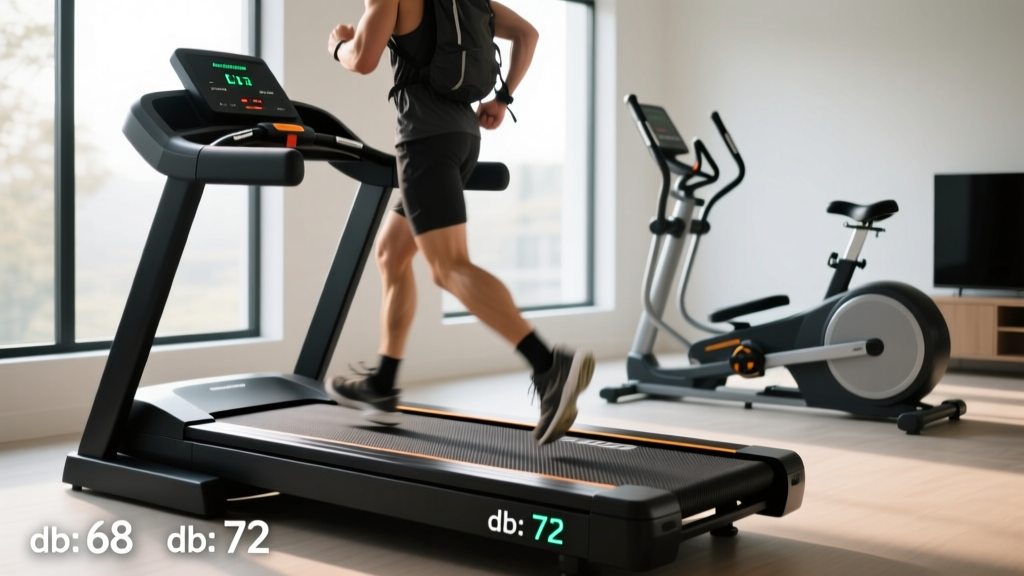
Hiking Workout on Treadmill: Noise Fixes & Machine Comparison

Elliptical vs Treadmill Space: Matrix Lifestyle Treadmill Fit Guide

Walking Pad Review & MPH Treadmill Chart: Fix Common Mistakes

Curved vs Motorized: Best Treadmill Workout to Lose Weight

Walking Pad vs Treadmill: A Beginner Guide to Treadmill Gradient