How to Maintain Loadable Dumbbells for Dumbbell Oblique Crunches
Learn essential maintenance care for loadable dumbbells with interchangeable plates to ensure safety during dynamic moves like dumbbell oblique crunches.

The Hidden Danger of Dynamic Core Work with Loadable Dumbbells
Loadable dumbbells with interchangeable plates are a cornerstone of the modern home gym, offering unparalleled weight progression and durability. However, their modular nature introduces specific mechanical vulnerabilities, particularly during asymmetrical, multi-planar exercises. While standard pressing or curling movements apply predictable vertical force, core-focused exercises introduce complex shear and rotational forces that can expose equipment failure modes.
According to facility maintenance guidelines emphasized by the National Strength and Conditioning Association (NSCA), modular fitness equipment requires rigorous, schedule-based inspection to prevent catastrophic failure. This is especially true when performing dumbbell oblique crunches (often executed as weighted lateral flexions or side bends). The pendulum-like motion and rotational torque generated during this exercise can gradually loosen poorly maintained collars, leading to shifting plates, altered centers of gravity, and severe injury risks.
⚠️ Safety Callout: Never perform dynamic, single-arm core movements with spinlock dumbbells if the plates exhibit even a millimeter of lateral play. The rotational torque of an oblique crunch can unscrew a dry or worn spinlock collar in under three repetitions.Biomechanical Stress: Why Oblique Crunches Test Your Gear
To understand the maintenance requirements, we must first analyze the physical demands of the exercise. When performing dumbbell oblique crunches, the lifter typically holds a single loadable dumbbell at their side or across their chest. The movement involves lateral flexion of the spine, engaging the internal and external obliques, as detailed by the American Council on Exercise (ACE).
Unlike a static hold, the crunching motion creates a dynamic pendulum effect. At the bottom of the eccentric phase, the dumbbell experiences a momentary increase in G-force. At the top of the concentric phase, the sudden deceleration sends a kinetic shockwave up the dumbbell sleeve. If the interchangeable plates are not perfectly flush, or if the collar mechanism lacks adequate friction, this repeated micro-shocking will compromise the lock.
Comparing Loadable Dumbbell Mechanisms
Not all loadable dumbbells are built the same. The maintenance protocol you follow must match your specific collar mechanism. Below is a breakdown of the most common systems on the market in 2026 and their inherent vulnerabilities during lateral core work.
| Collar Type | Popular 2026 Models | Torque Resistance | Primary Failure Mode |
|---|---|---|---|
| Spinlock (Threaded) | CAP Barbell Cast Iron, Yes4All | Low | Rotational unthreading during oblique swings |
| Spring Clip / Barbell Collar | Rogue Loadable Handles ($115/pair) | High | Spring fatigue and sleeve scratching |
| Lever-Lock / Quick-Release | Titan Fitness Loadable ($60/pair) | Medium-High | Dust/chalk jamming the lever hinge |
The 4-Step Maintenance Protocol for Interchangeable Plates
To ensure your equipment survives the rigors of weighted core training, implement this bi-weekly maintenance routine. This protocol focuses on preserving the exact tolerances required to keep plates locked tightly together.
Step 1: Sleeve and Thread Debridement
Chalk, sweat, and microscopic metal shavings accumulate on dumbbell sleeves and inside threaded collars. This buildup prevents plates from sitting flush, creating a "wobble gap" that amplifies kinetic shock during oblique crunches.
- For Threaded Spinlocks: Use a stiff nylon bristle brush (never steel, which damages the threads) dipped in 90% isopropyl alcohol. Scrub the male threads on the handle and the female threads inside the star nut.
- For Smooth Sleeves (Spring/Lever): Wipe the sleeve down with a microfiber cloth and a mild degreaser. Ensure the surface is completely devoid of rust or pitting, which can tear the inner lining of spring collars.
Step 2: Precision Lubrication
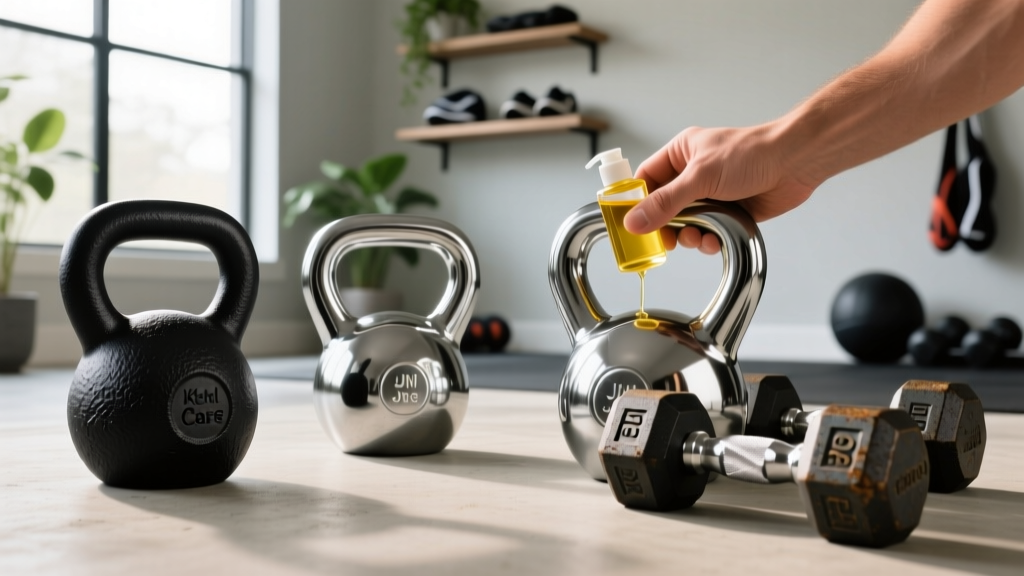
Friction is the enemy of smooth loading, but the wrong lubricant will attract gym dust and create a grinding paste. Avoid standard WD-40, which leaves a sticky residue.
- Apply a single drop of PTFE-based dry lubricant (such as Finish Line Dry Bike Lube) or White Lithium Grease to spinlock threads.
- Thread the collar on and off the handle three times to distribute the lubricant evenly.
- Wipe away any excess. The threads should feel smooth, not wet.
Step 3: Plate Edge Deburring
Cast iron and steel interchangeable plates often develop "burrs" or rolled edges from being dropped or slammed together. If the inner rim of a plate is burred, it will not sit flush against the adjacent plate. During a dumbbell oblique crunch, this microscopic gap allows the plates to shift, creating a clanking sound and transferring destructive force to the collar. Use a flat metal file or 120-grit sandpaper to smooth the inner and outer rims of your plates bi-annually.
Step 4: Collar Tension Calibration
For lever-lock and quick-release collars, the tension hinge can loosen over time. Use a standard hex key or flathead screwdriver (depending on the manufacturer's hardware) to tighten the pivot bolt on the lever mechanism. The lever should require firm, deliberate thumb pressure to snap into the locked position.
💡 Pro Tip: If you are using Rogue Loadable Dumbbell Handles with standard barbell spring clips, replace the spring clips every 18 months. The metal fatigue from repeated compression reduces their clamping force by up to 22% over time, making them unsafe for dynamic lateral movements.The Pre-Workout "Shake Test" for Core Exercises
Because dumbbell oblique crunches place unique stress on the equipment, a visual inspection is not enough. Before beginning your core circuit, perform the Shake Test:
- Load the dumbbell to your target working weight (e.g., 35 lbs).
- Secure the collars using your standard tightening method.
- Hold the dumbbell handle horizontally with one hand.
- Vigorously shake the dumbbell laterally and vertically for 5 seconds, simulating the deceleration phase of an oblique crunch.
- Listen and feel for any "clicking" or shifting. If the plates move even a fraction of a millimeter, unseat the collar, repack the plates tightly by hand, and re-secure.
When to Replace: Spotting Critical Wear and Tear
Maintenance can extend the life of your loadable dumbbells for decades, but certain failure modes require immediate part replacement. Ignoring these signs during high-torque exercises is a leading cause of home gym accidents.
- Stripped Spinlock Threads: If the star nut crosses-threads or requires excessive force to turn past the mid-point of the sleeve, the threads are stripped. Action: Replace the handle immediately (Cost: $15 - $25).
- Bent Sleeves: If a loadable handle has been dropped heavily, the sleeve may bend. This prevents plates from sliding on fully, leaving a dangerous gap. Action: Roll the empty handle on a flat glass table; if it wobbles, retire it.
- Cracked Cast Iron Plates: Micro-fractures around the center hole of cast iron plates can cause the plate to shatter under the lateral G-force of a weighted crunch. Action: Inspect the center ring of older plates annually and discard any with visible hairline cracks.
Frequently Asked Questions
Can I use bumper plates on loadable dumbbell handles for oblique crunches?
While you can use 10lb or 15lb fractional bumper plates on loadable dumbbell handles with 2-inch Olympic sleeves, it is not recommended for oblique crunches. The wide profile of bumper plates shifts the center of mass further away from your body, drastically increasing the rotational torque on the wrist and the shear force on the dumbbell collar. Stick to calibrated steel or cast iron plates for dense, secure loading during core work.
How tight should a spinlock collar be for lateral movements?
Hand-tightening is insufficient for dynamic movements. After threading the spinlock nut until it contacts the plate, grip the collar and give it an additional quarter-turn using a rubber mallet or the palm of your hand to seat it firmly. Never use a metal wrench, as this can warp the star nut and strip the handle threads.
Are adjustable dumbbells (like Bowflex or Nuobell) safer for oblique crunches than loadable handles?
Dial-adjustable dumbbells (like the Bowflex SelectTech 552) utilize internal locking mechanisms that are generally secure for lateral flexion. However, they are highly susceptible to damage if dropped or slammed. Loadable dumbbells with steel sleeves and spring collars (like the Rogue Loadable Handles) remain the gold standard for longevity and raw durability, provided the maintenance protocols outlined above are strictly followed.
More gear to consider
All reviews
Olympic vs Standard Plates Guide + Good Dumbbell Exercises for Chest

Dumbbell Glute Kickbacks: Rubber Hex vs Urethane 2026 Market Trends

Dumbbell Lake Layout: Olympic vs Standard Plate Rack Setup

Seated Dumbbell Shrugs Muscles Worked: Neoprene Home Gym Setup

Beyond the Best Beginner Dumbbell Workout: Barbell Knurling & Weight