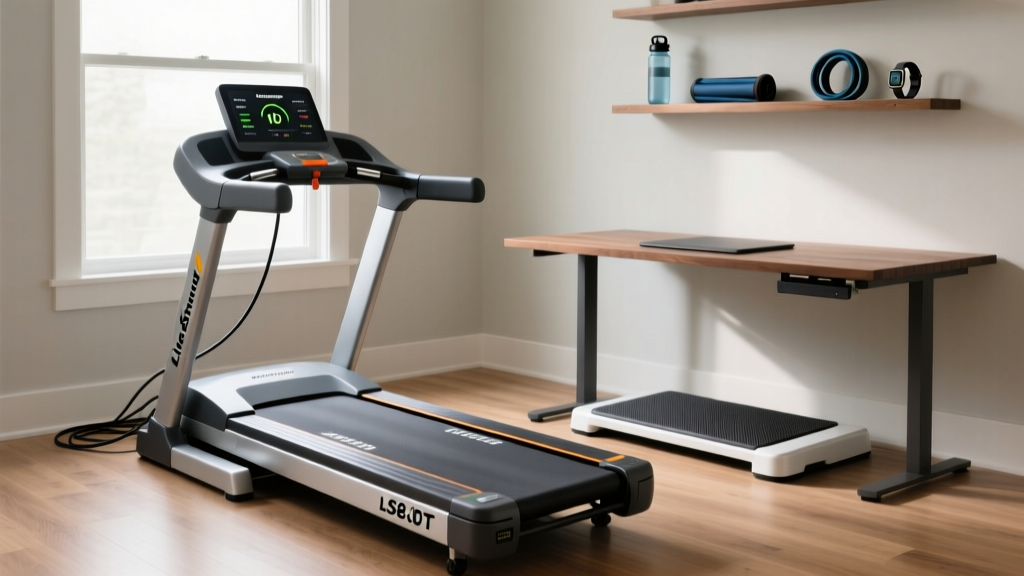
LiveStrong LS8.0T Treadmill Setup & Walking Pad Comparison
Complete setup walkthrough for the LiveStrong LS8.0T treadmill, plus a detailed comparison against under-desk walking pads for home cardio.

The Home Cardio Dilemma: Full-Size vs. Walking Pads
As remote work and hybrid schedules solidify in 2026, the demand for home cardio equipment has bifurcated into two distinct camps: ultra-compact under-desk walking pads and traditional, full-size treadmills. While walking pads offer unparalleled convenience for low-intensity steady-state (LISS) movement, they often fall short for users seeking structured, high-intensity, or incline-based training. This brings us to the LiveStrong LS8.0T treadmill, a robust mid-tier machine designed for serious home athletes.
In this comprehensive guide, we will walk through the complete setup and installation of the LiveStrong LS8.0T treadmill, while simultaneously comparing its footprint, biomechanical advantages, and long-term reliability against standard walking pads. Whether you are upgrading from a folding pad or deciding between the two, this walkthrough will provide the technical depth you need to make an informed decision.
Footprint and Assembly Reality Check
Before unboxing, it is critical to understand the spatial and temporal investment required for a full-size treadmill compared to a walking pad. A standard walking pad (such as the Kingsmith WalkingPad R2 or Urevo Strol 2E) requires virtually zero assembly and can be slid under a sofa when not in use. The LiveStrong LS8.0T, however, is a permanent fixture that demands dedicated floor space and a methodical installation process.
| Specification | LiveStrong LS8.0T Treadmill | Standard Under-Desk Walking Pad |
|---|---|---|
| Shipping Weight | 185 lbs (Requires 2 people) | 55–70 lbs (1 person) |
| Assembly Time | 60–90 Minutes | 0–5 Minutes (Unfold & Plug) |
| Belt Dimensions | 20' x 55' (Accommodates running) | 15' x 43' (Walking only) |
| Motor Output | 3.0 CHP Continuous Duty | 1.5 HP Peak (0.75 CHP) |
| Incline Capability | 0% – 12% Motorized | None (Fixed flat) |
Complete Setup and Installation Walkthrough: LiveStrong LS8.0T
Installing a heavy-duty treadmill is not just about tightening bolts; it is about ensuring structural integrity and electronic safety. Follow this step-by-step walkthrough to assemble your LiveStrong LS8.0T treadmill correctly on the first try.
Step 1: Base Positioning and Leveling
Do not assemble the treadmill in the center of the room and attempt to move it later. Position the pre-assembled deck base exactly where you intend to use it, ensuring there is at least 24 inches of clearance on both sides and 78 inches behind the machine for safety fall-offs.
- Use a carpenter's level across the width of the deck.
- Adjust the four adjustable leveling feet at the base of the deck until the bubble is perfectly centered. This prevents uneven belt wear and motor strain over time.
Step 2: Upright Mast and Wire Routing (Critical Step)
This is where 90% of DIY installation failures occur. The LiveStrong LS8.0T features internal data cables that run from the lower motor controller up through the upright masts to the console.
- Align the Left Upright: With a helper supporting the mast, align the bolt holes on the left upright base. Insert the provided M10x60 bolts but do not fully tighten them yet. Leave them 20% loose to allow for micro-adjustments.
- Route the Data Cable: Carefully feed the console data wire through the hollow mast. Ensure the wire is not pinched between the metal bracket and the bolt shaft. A pinched wire will result in a blank console or erratic speed readings.
- Connect the Pins: Push the plastic connectors together until you hear a definitive 'click'. Wrap the connection in a small piece of electrical tape to prevent vibration-induced disconnection over months of use.
- Repeat and Tighten: Attach the right upright, connect the crossbar, and only then use the included 17mm wrench to fully torque all upright bolts to the manufacturer's specification (approx. 35 Nm).
Step 3: Console Mounting and Handlebar Assembly
Mount the console onto the crossbar using the four M8x25 Phillips-head screws. Attach the side handlebars, ensuring the heart-rate monitor contact pads are facing inward. Connect the secondary pulse-grip wires to the back of the console before pushing the console flush against the mounting bracket.
Step 4: Belt Tension and Alignment Check
Out of the box, the running belt may sit slightly off-center due to shipping vibrations. Plug the machine in, insert the magnetic safety key, and start the belt at 2.0 MPH.
- If the belt drifts to the left, use the included Allen key to turn the left rear roller bolt clockwise by exactly one-quarter turn.
- Allow the belt to run for 60 seconds to track the adjustment before making further tweaks.
Safety Protocols: Full-Size vs. Walking Pads
One of the most significant advantages of the LiveStrong LS8.0T over a walking pad is integrated safety hardware. According to the U.S. Consumer Product Safety Commission (CPSC), treadmill-related injuries often stem from falls and entanglement. Walking pads rely entirely on a handheld remote or smartphone app to stop the belt, which is useless if you lose your balance and drop the remote.
The LiveStrong LS8.0T utilizes a magnetic safety tether. You clip the lanyard to your shirt; if you drift too far back on the deck, the magnet pulls from the console, instantly cutting power to the motor and engaging the mechanical brake. Furthermore, the extended 55-inch deck and full-length handrails provide a psychological and physical safety net that a 43-inch handle-less walking pad simply cannot replicate during high-speed intervals.
Biomechanics and Motor Thermodynamics
Why choose a heavy, complex machine over a sleek walking pad? The answer lies in biomechanics and motor thermodynamics. The Centers for Disease Control and Prevention (CDC) recommends a mix of moderate and vigorous aerobic activity for optimal cardiovascular health. Walking pads are strictly limited to moderate activity (typically capping at 3.5 to 4.0 MPH).
The Stride Length Factor
For any user over 5'8', a 43-inch walking pad forces an unnatural, shortened gait when attempting a brisk walk or jog. This altered biomechanics can lead to hip flexor strain and lower back discomfort. The LiveStrong LS8.0T's 55-inch belt length allows for a full, natural stride extension, engaging the glutes and hamstrings properly.
Motor Heat Dissipation
Walking pads utilize small, fan-less motors (usually 1.5 HP peak) hidden beneath a thin deck. When used for more than 45 continuous minutes, these motors generate immense heat, triggering thermal shutdowns or degrading the internal windings. The LiveStrong LS8.0T's 3.0 CHP (Continuous Horsepower) motor features a dedicated internal cooling fan and a heavy-duty aluminum heat sink, allowing it to sustain 8.0 MPH for over two hours without thermal throttling.
Maintenance Realities
Owning a full-size treadmill requires a maintenance schedule that walking pad users can largely ignore (until the walking pad breaks and must be entirely replaced).
- Lubrication: The LS8.0T requires 100% silicone treadmill lube applied under the belt every 150 miles or every 3 months. Walking pads often use pre-lubricated belts that cannot be easily serviced by the user.
- Debris Management: Because the LS8.0T sits closer to the ground at the front deck, pet hair and dust can be sucked into the motor hood. Vacuuming the motor compartment every 6 months is mandatory to prevent static buildup and board failure.
Expert Verdict: Which Should You Choose?
If your primary goal is to increase your daily NEAT (Non-Exercise Activity Thermogenesis) while answering emails, and you live in a small apartment, a walking pad is a pragmatic choice. However, if you are committed to structured cardiovascular training, interval running, incline walking, and require a machine that accommodates your natural stride and weight safely, the LiveStrong LS8.0T treadmill is vastly superior. The 90-minute installation walkthrough detailed above is a small price to pay for a machine that will deliver reliable, biomechanically sound cardio for years to come.
More gear to consider
All reviews
Under Desk Treadmill Care: Good Treadmill Speed for Weight Loss

NordicTrack T8 5s Treadmill vs Stationary Bike Types: Maintenance

Expert 3G Cardio Pro Runner Treadmill Review for Small Spaces

NordicTrack Commercial 2450 Treadmill NTL19125.2 vs Portable Cardio

Starting on a Treadmill: 2026 Head-to-Head Comparison
